


A hospital will ask your name more times in a day than your own mother does, and no, it isn’t because they forgot. You give it at the desk, you give it again when the band goes on your wrist, then the nurse with the blood tubes wants it, then the one with the little paper cup of pills, then the porter who’s wheeling you down to X-ray wants it too, and by then you’re half tempted to say it before they ask just to save everyone the time. Go ahead and say it. They’ll still check the band.
See, the reason is fairly simple once somebody explains it. There could be a man two doors down with your name. Not likely, but possible, and if there is, the only thing standing between you and his insulin is somebody bothering to ask for a second detail, usually your date of birth, and actually looking at the answer.
Hospitals ask for two identifiers, name plus date of birth as a rule, before any test, medication or procedure, because mixing up patients happens often, gets caught late, and once in a while kills someone. A safety group that collects hospital reports counted more than 7,600 wrong-patient events in just 32 weeks, and two of them ended in a death.
How Often Staff Get The Wrong Patient
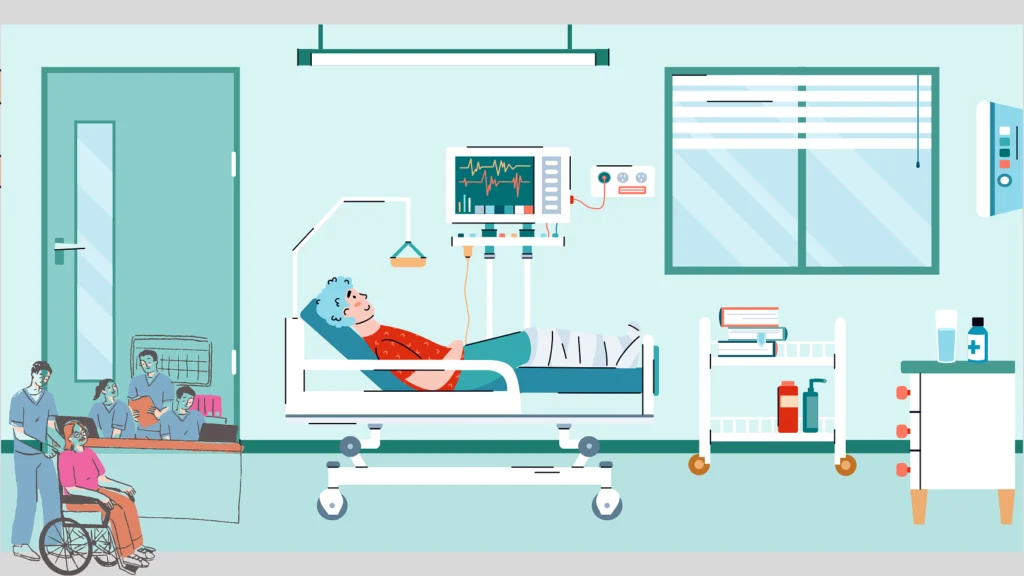
ECRI is a nonprofit that hospitals send their incident reports to, and a few years back it went through more than 7,600 wrong-patient events from a 32-week stretch. Most of them, nine in ten or so, got caught before anything reached the patient. That’s the good news. The rest didn’t. Around 143 people needed treatment for harm that shouldn’t have happened, one person was left with permanent damage, two needed somebody to step in to keep them alive, and two died. In both deaths the slip was in the paperwork, not in anybody’s hands.
You might expect most of these to happen at the bedside, and some do, but look at where they actually pile up:
- Around 12 percent at the front desk or in scheduling, where a patient gets booked under somebody else’s record or ends up with two charts
- Around 36 percent in the lab, pathology and imaging, where a sample or a scan gets labeled for the wrong person
- Around 22 percent during treatment, so medications, procedures, transfusions
- Roughly 15 percent involving the wristband itself, missing or wrong or simply never read
And the slips themselves are nothing dramatic. Somebody types an order into the chart one tab over from where they meant to. Somebody gives the pill and then scans the band instead of the other way round. A heart monitor gets hooked up to a new patient and keeps the old patient’s details. A letter clearing a patient for surgery turns out to be about another patient with a name one letter off.
That last kind, the paperwork kind, is why so many medical forms want details you’d think were obvious. Even the money side works like this. If you’ve ever paid for a treatment out of a health savings account, you may have had to get your doctor to write what HealthEquity’s guide calls a letter of medical necessity, and the guide spells out which expenses require an LMN and what has to be on it: your name, the diagnosis or treatment, how long it runs, the provider’s signature, and it only holds for twelve months before you need a fresh one. Fussy, yes. But a letter that doesn’t say who it’s for can be stapled to anyone’s claim, and an administrator who has seen that happen would tell you the fussiness is doing a job.
Why They Want Two Things And Not Just Your Name
The Joint Commission, the body that accredits most US hospitals, has had patient identification sitting at the top of its National Patient Safety Goals for years. Two identifiers minimum before any care, treatment or service. Your bed number doesn’t qualify, because beds change. Your face doesn’t either, because the staff see a few hundred faces a week and they all blur.
So why two? Because one fails quietly. The nurse holding the right chart and standing at the wrong bed has no way of knowing it until a second fact won’t line up, and the second identifier is there purely to supply that fact. It doesn’t need to be clever. It needs to be different from the first one and asked for every single time, including the nine hundred and ninety-nine times it turns out not to matter, because nobody can tell in advance which time is the thousandth.
Babies Need A Different System
Now, babies can’t tell you their name, they look alike to anybody who isn’t their parent, and for years a lot of them went in the chart as “Baby Boy Smith,” which on a busy ward might describe three children at once. After reports of procedures done on the wrong baby, and at least one case of a mother’s expressed milk being fed to another woman’s child, the Joint Commission added a separate newborn identification requirement from 2019. So now it’s the mother’s full name plus the baby’s sex, “Smith, Judy Girl,” bands on two parts of the body, barcodes on the bands, and a sign on the ward when two babies have names that sound alike.
Labor and delivery is also where a missed check tends to do the most lasting harm, and where a family later finds out just how much the hospital’s own notes matter. Say a fetal heart tracing went unwatched for twenty minutes, or a nurse’s worry took an hour to reach the attending doctor, or forceps were pulled harder than they should have been, or a newborn’s jaundice was left until it reached the brain. A birth malpractice lawyer in San Jose would go looking for exactly those gaps in the chart and hold them up against what a reasonably careful provider in the Bay Area would have done. In California a family has, in most cases, until the child turns eight to bring that kind of claim, or just six months to give notice if it was a public hospital. And whatever the lawyer can show depends on what was written down at the time, so the documentation rules are doing double duty: protecting the baby on the day, and keeping a record of it afterward.
On a maternity ward the identification checks and the notes that go with them are the baby’s protection on the day and the only evidence of what happened if something goes wrong later.
What The Quiet Moment Before Surgery Is For
If you’ve had an operation you might remember the room going still just before they started, somebody reading your name and the procedure and the side off a sheet, and everyone in scrubs saying yes. That’s the time-out. It’s one of three stops on the World Health Organization’s surgical checklist, nineteen questions all told, asked before you go under, before the first cut, and before you leave the room.
They tried the checklist in eight hospitals in eight cities, some well off, some not, and published the results in the New England Journal of Medicine in 2009. Deaths after surgery dropped from 1.5 percent to 0.8 percent. Major complications dropped from 11 percent to 7 percent. No new drug. No new machine. People just said out loud what they’d assumed someone else had taken care of: had the antibiotic gone in, was blood on hand, did the sponge count match, was it the left knee.
You can be part of that too, if you like. Watch the site being marked and speak up if it’s the wrong leg. Say your full name and what you’re there for, even when the surgeon plainly knows. And if what’s said in the room doesn’t match what you were told in the clinic, that’s the moment to say so, not in the recovery bay.
Why They Scan Your Wristband Before Every Pill
Medication mistakes are the biggest single group of hospital errors, and a good share of them are identification mistakes underneath: the right drug to the wrong person, or the right person at a dose that was written for somebody twice their size. Scanning the band and the vial before the medicine goes in, not after, is the machine’s way of asking your name again. When the scan gets skipped, maybe the scanner’s in another room, maybe you were asleep, the error rate goes back up, and plenty of hospitals now log a skipped scan as an incident even when nothing happened.
At home there’s no scanner, so the leaflet in the box has to do that job, and knowing what “common” and “rare” mean on a medication leaflet is how you’d catch a pharmacy mix-up on the first dose instead of the fourth.
What You Can Do From The Bed
You can’t run the hospital’s safety system for them, but you can make sure you’re not the hole in it:
- Say your full name and date of birth each time, and don’t just nod when somebody says “You’re Mr. Johnson, right?”
- Read your wristband when it goes on; a wrong birth date takes a minute to fix now and causes trouble later
- Before any medication, ask what it is and what it’s for
- Before surgery, say the procedure and the side out loud
- Bring a written list of your medications and allergies and hand it over rather than reciting from memory
Some of that is the plain advice about preventive care and regular checkups, which really comes down to being a known patient with an up-to-date record rather than a stranger with a thin chart. And if you’re coming back from something that already went wrong, a crash, a bad stay, the first month after an accident has its own small checks worth keeping.

