


Tuesday. In bed 11:40, up 6:10, awake twice. Two coffees before ten. Rice and dal at lunch, nothing green. Walked to the bus and back. Headache from about three.
An entry can be as plain as this one. Five lines take a couple of minutes to write, and after a few weeks they hold more about a person’s health than most people could say from memory. “Book of life” sounds grand. In practice it’s a cheap notebook kept by the bed.
People Who Wrote Down Their Food Every Day Lost Twice As Much Weight
The best-known evidence comes from a Kaiser Permanente study of nearly 1,700 adults, published in the American Journal of Preventive Medicine in 2008. Everyone in it followed the same diet, exercised for half an hour a day and went to weekly group sessions. After six months the average loss was about 13 pounds, but those who kept a daily food record lost twice as much as those who kept none.
How often people filled in the diary turned out to be one of the two best predictors of weight lost, the other being how many support sessions they attended. Seeing “biscuits, 4” in your own handwriting seems to do something a vague intention can’t.
It’s a weight study and shouldn’t be stretched much further. Still, doctors ask for the same kind of daily record when the problem is sleep or blood pressure.
Sleep, Blood Pressure And Food Are The Three Things Worth Recording
Sleep Goes In Twice, Before Bed And After Waking
The sleep diary from the National Heart, Lung, and Blood Institute is filled in at both ends of the night. It asks for how long and how well a person slept, plus naps, caffeine and alcohol, medicines, exercise, and how sleepy the day felt.
Blood Pressure Needs Two Readings, About A Minute Apart
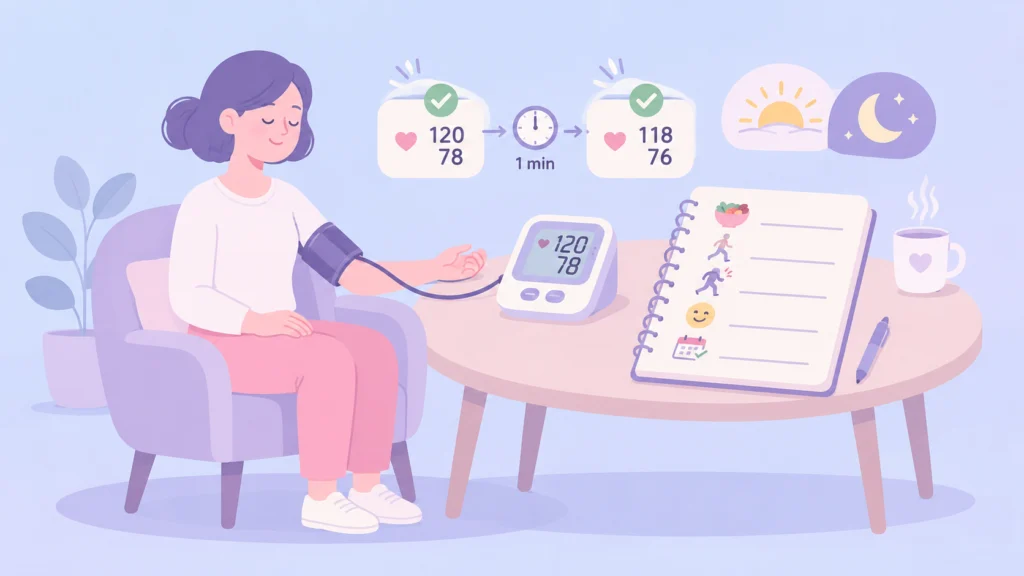
For anyone told to watch their pressure, the American Heart Association’s home log sets out the routine. Sit quietly for five minutes with both feet on the floor and the arm resting at heart level, then take two readings about a minute apart. Do it once in the morning before medication and again before bed.
The Rest Fits In Five Short Lines
- What was eaten, in plain words, with no calorie counts.
- Minutes walked or exercised.
- Any pain, headache or stomach trouble, and roughly when.
- Mood, in one word.
- What kind of day it was: the shift worked, a money worry, a bad commute.
A plain food list is enough to show gaps, such as where fruit fits on days with no real meal plan.
Some Of What The Diary Shows Was Never A Personal Choice

Read back a month of entries and the pattern often has little to do with willpower. Short sleep might line up with night shifts, or the meals with nothing fresh in them might cluster in the week before payday.
The World Health Organization calls these the social determinants of health, meaning the conditions people are born, grow, live, work and age in. Housing, education and job opportunities are on its list, and WHO says these conditions can outweigh genetics or access to health care in shaping how healthy someone is.
A notebook can’t change a rota or a rent bill, obviously. Its use here is narrower: it shows which problems are habits and which are circumstances, so effort goes to the ones that can move.
Take The Diary To The Doctor, Because Both Official Logs Say To Bring It
The sleep diary and the blood pressure log end on the same instruction, which is to bring the pages to the appointment. A doctor with a few weeks of written entries has far more to go on than “tired lately”.
Written records also make preventive care easier to act on, since small changes show up on paper early. Often the first sign is ordinary, like getting out of breath on the stairs before the scale has moved.
A diary is a record, though, and it can’t diagnose anything. Chest pain, very high readings or a symptom that keeps coming back need a professional, whatever the notebook says.
Apps do all of this with charts. Paper is probably still the better choice for most people, mainly because a notebook on the pillow is harder to ignore than a notification, and it has never asked anyone to upgrade to premium.

