


Somewhere north of 150 named chiropractic techniques exist. Most chiropractors use maybe five or six of them, and nearly every clinic website will explain why the ones they use happen to be the good ones.
I want to get my irritation out of the way early, because it colors the rest of this. The marketing in this field is relentless about technique superiority, and the profession’s own research does not back it up. A survey published in Chiropractic & Manual Therapies pointed out that the low force methods everyone advertises as gentler have no clinical evidence showing they are actually safer than the standard forceful ones. They feel gentler. That is a different claim.
So read the list below as a menu of what an appointment will feel like. Not a ranking.
Diversified
The workhorse. The American Chiropractic Association puts usage around 95% of clinics, though that number probably absorbs some practitioners who think they are doing something else.
A quick manual thrust, short distance, delivered by hand. It makes the popping sound, which is gas coming out of solution in the joint fluid and has nothing to do with anything going back into place. I mention that because a surprising number of people believe the noise is the point, and then feel shortchanged when an adjustment is quiet.
Used everywhere on the spine, for most ordinary mechanical complaints.
Gonstead
The one with homework.
Gonstead practitioners do a long assessment before touching you: X-rays, palpation, visual analysis, and a heat-sensing instrument called a Nervoscope that reads temperature differences alongside the spine. Then they adjust one segment at a time, with very little of the twisting motion people associate with chiropractic.
Fans of it tend to be people who disliked feeling like their whole spine got cracked at once. It takes longer and usually involves imaging, which some people want and some people would rather avoid.
Thompson Drop-Table
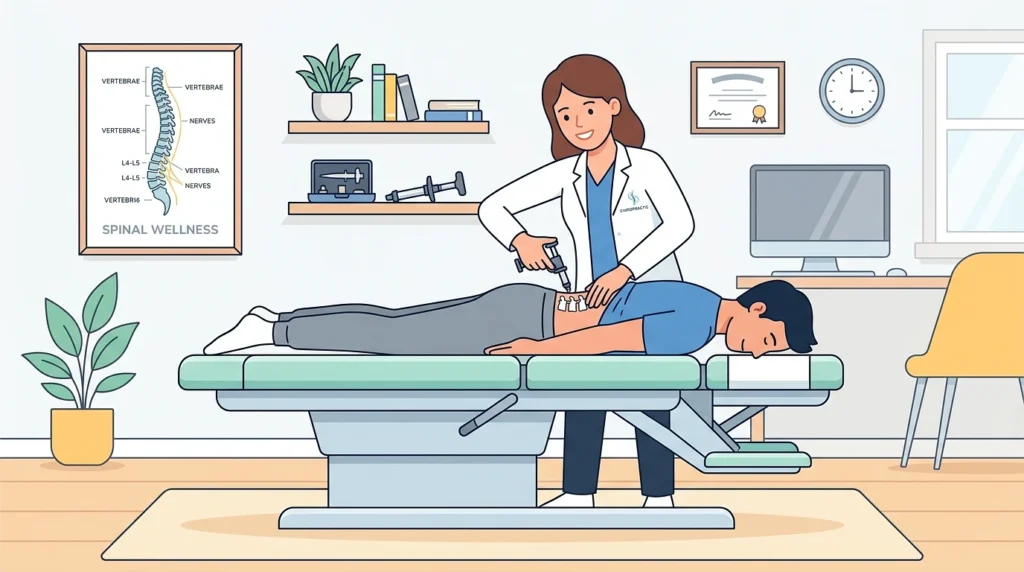
The table does part of the work. Sections of it are cocked to drop a short distance under the thrust, so the practitioner supplies less force and the momentum handles the rest.
Shows up mostly in lumbar and pelvic work. If you have ever been on a chiropractic table that made a loud mechanical clunk under you, that was this.
Activator
A handheld spring-loaded instrument that delivers a fast, low force impulse to one spot. No twisting, no popping, no dramatic positioning.
The speed is the mechanism. It moves faster than your muscles can brace against it.
This is what to ask for if manual adjusting makes you tense up, and I would say that to anyone with osteoporosis, anyone elderly, anyone who has had a bad experience previously. The survey data shows it gets used a lot in the neck and much less in the lower back.
Flexion Distraction
A table with independently moving sections that stretches and flexes the spine rhythmically. No thrust at all.
This is the one with the clearest condition-specific rationale behind it. Usage data shows it climbing sharply in the lumbar spine for disc problems with nerve involvement, including lumbar disc syndrome with radiculopathy and both central and lateral canal stenosis. It lowers pressure inside the disc without any sudden movement.
Most people find it genuinely pleasant, which is not something you can say about much of this list.
Spinal Mobilization
Slow passive movement inside the joint’s normal range. No thrust, no noise.
There is a point buried in the neck pain literature that I think deserves more airtime than it gets: manipulation and mobilization appear to produce similar results for neck training, and mobilization carries less risk of serious adverse events. A Manitoba government literature review concluded that this makes mobilization the safer choice for the cervical spine.
If your neck is the problem and the idea of it being twisted worries you, that is a legitimate thing to raise.
The Stuff That Comes With The Adjustment
Soft tissue work, exercise prescription, and sometimes mechanical decompression. The survey data lists soft tissue therapy and exercise among the most commonly used interventions across every region of the spine.
Take the exercises seriously. They have better long-term evidence than the adjustments do for persistent back pain, and the chiropractor who spends ten minutes teaching you something to do at home is giving you the more durable half of the visit.
What Any of This is Actually Good For
Guidelines are fairly supportive. A review of clinical practice guideline recommendations found 90% favored spinal manipulation for low back pain and all of them favored it for neck pain, with recent support for tension-type and cervicogenic headaches too.
The trial evidence underneath is thinner than that endorsement suggests.
- Chronic low back pain: a Cochrane review of 26 trials, 6,070 people, found high quality evidence of a small short-term improvement in pain and function compared with other treatments.
- Acute low back pain: a separate Cochrane review found low to very low quality evidence, with manipulation performing no better than inert treatment, sham manipulation, or ordinary medical care.
- Neck pain: a 2023 meta-analysis of 28 trials rated the supporting evidence as very low certainty, with side effects limited to transient soreness.
Small effects, uneven quality, genuinely helpful for some people. That is where the research sits, and anyone quoting you a success rate percentage for a specific technique is quoting something I could not find in any database.
The Neck Conversation
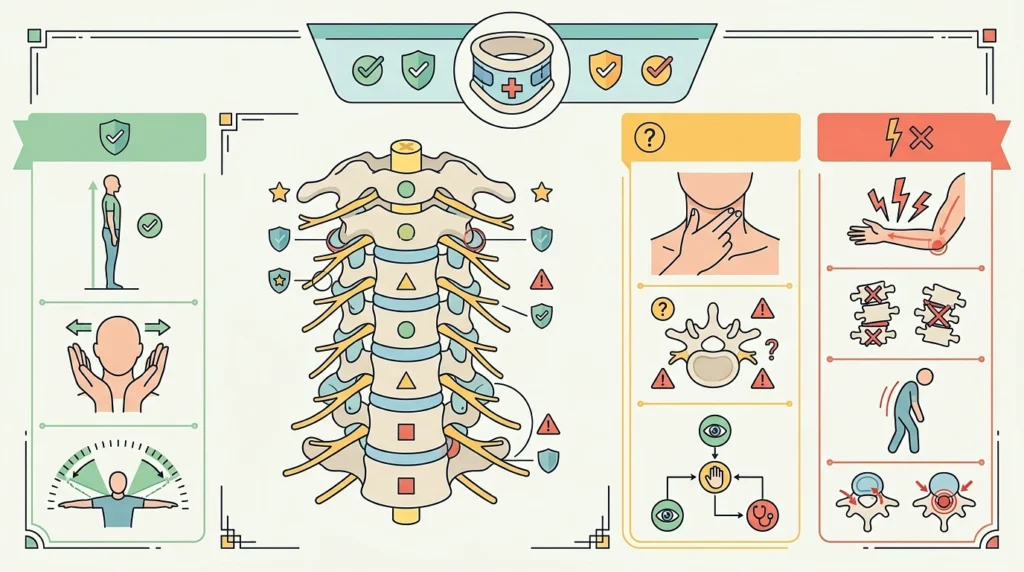
Everything above is fairly low stakes. This part is not.
Cervical manipulation has been associated with cervical artery dissection, a tear in a neck artery that can cause a stroke. NCCIH’s position is that these events are rare, that researchers genuinely disagree about whether manipulation causes them or whether people with early dissection symptoms seek out manipulation, and that patients should be told about it regardless. Sudden neck movements in sports and even violent coughing carry similar associations.
Things to disclose before anyone touches your spine
- Osteoporosis or thin bones.
- Blood thinners or a bleeding disorder.
- Any history of stroke, TIA, or vascular disease.
- Recent car accidents or falls.
- Rheumatoid arthritis, particularly if it affects the upper neck.
- Cancer history, especially anything involving bone.
- Unexplained weight loss, fevers, or pain that wakes you at night.
That last one is not chiropractic territory at all. Night pain and weight loss together belong in a doctor’s office first.
After a neck adjustment
Sudden severe headache, neck pain unlike your usual pain, dizziness, vision changes, or slurred speech means emergency care. Not a follow-up call. Emergency care.
Picking Someone
Ask which techniques they use and why they would pick one for your particular back. Specific answers are good. Answers about their method being superior to other methods are marketing.
Say out loud if the manual stuff frightens you. Low force options exist, they perform comparably for a lot of conditions, and there is no reason to lie rigid on a table dreading the next movement.
And I would be cautious about long prepaid packages sold at the first appointment, before anyone knows whether you respond to treatment. Three to six visits with a reassessment is a normal way to start. Twenty four visits paid upfront is a business model.
If six weeks in nothing has shifted, tell your GP what you have tried. Back pain that ignores treatment sometimes needs a different investigation entirely, and the chiropractor is not the person who orders that.

