


As parents, we keep an eye out for sniffles, fevers and growth spurts. One of the most important parts of a child’s development often slips past us, though. Roughly one in five Australian children has an undetected vision problem at any given time. Because up to 80 percent of classroom learning is processed visually, even a minor uncorrected issue can quietly interfere with how a child learns.
Kids rarely have the words for what’s happening, either. Their eyes’ lenses are far more flexible than an adult’s, which means they can force themselves to focus for short periods. That masks the underlying problem and creates serious visual fatigue at the same time.
Why Catching Vision Problems Early Matters
Children don’t usually complain about blurry text because they assume everyone sees the world the way they do. The frustration of straining to see often comes out as behaviour instead. Clinical experts note that conditions like accommodation insufficiency get misdiagnosed as attention deficits or learning difficulties. That misdiagnosis adds stress for the child and the parents both and tends to push families towards interventions that don’t address what’s actually happening.
A full assessment before primary school is the standard recommendation. For families in Victoria, scheduling a routine check-up with a kids optometrist Melbourne gives a documented baseline before classroom demands ramp up. Early intervention means corrective measures can be put in place quickly, so the child can focus on the lesson instead of squinting at the whiteboard.
The Five Silent Signs to Watch for
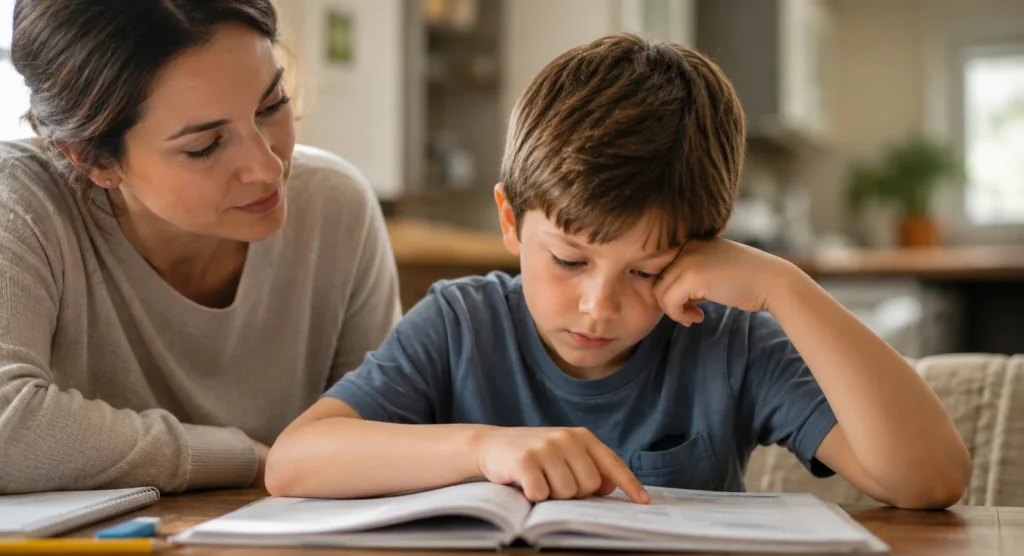
Since children won’t usually tell you their vision is blurry, parents have to learn to read the physical and behavioural clues. If your child shows any of the habits below, it might be time to book an eye exam.
- Frequent eye rubbing. All children rub their eyes when tired. Doing it during a puzzle or while watching television is a much stronger signal of eye strain.
- Tilting the head or covering one eye. Kids instinctively adjust posture or close their weaker eye to eliminate double vision and improve focus.
- Losing their place while reading. Skipping lines or using a finger to track words long after they should have mastered independent reading, can point to ocular motor dysfunction.
- Sudden resistance to homework. If a previously eager learner starts avoiding reading or throwing tantrums at homework time, they may be trying to escape the physical discomfort of focusing.
- Evening tension headaches. A child’s flexible eyes work overtime to compensate for poor vision throughout the school day. The muscle fatigue that builds up often shows up as a frontal headache by the late afternoon.
What Screen Time is Doing to Children’s Eyes
Beyond genetic factors, modern lifestyle habits are reshaping paediatric eye health. Recent Australian data shows that primary school students average over six hours of daily screen time, while secondary students spend upwards of nine hours on digital devices. The shift to digital learning and entertainment means growing eyes are under more strain than ever before.
The link between heavy screen use and myopia in children is now well-established. Optometry Australia’s 2024 Position Statement on Myopia Management notes that even low to moderate amounts of myopia increase the risk of eye disease two to ten-fold and that no level of myopia is considered safe. Australian schoolchildren studies have shown myopia prevalence rising across primary school ages, with prolonged near-work and reduced outdoor time recurring as the most consistent environmental drivers.
Steps That Actually Protect Growing Eyes

Optometrists strongly recommend the 20-20-20 rule. Every 20 minutes spent looking at a screen, your child should look at something at least six metres away for a full 20 seconds. The pause relaxes the focusing muscles and prevents the small daily strains from stacking up.
Balancing screen time with outdoor activity matters too. Spending at least two hours outside each day exposes a child’s eyes to natural light, which research links to healthier eye growth and a lower rate of myopia. Outdoor breaks help in the obvious ways as well, especially since untreated digital eye strain and evening headaches can disrupt a child’s sleep routine.
Learning to recognise the silent signs of visual discomfort and managing daily screen habits, gives you a way to protect your child’s vision before the problem grows. Children rarely complain about blurry text. The early signs almost always come from behaviour rather than from words.

