


Jess: ok the villa in Destin is $2,860 for the weekend Jess: split six ways that’s $476 each Mia: plus flights? Jess: plus flights Jess: hello?
Seen by all. No replies for 41 minutes.
Every one of those six women can afford to type a sentence. What none of them can afford, socially, is to be the first one who says the number out loud, and so the chat goes quiet, somebody eventually types “sounds fun!!”, and three months later two of them are paying off a weekend they resented on a credit card. I have watched this exact movie play out in my own group chats more times than I want to admit, and the research says it is playing in yours too. So let’s go through the seven conversations, one at a time, with the receipts attached.
1. Have The Money Talk Before Anything Gets Booked
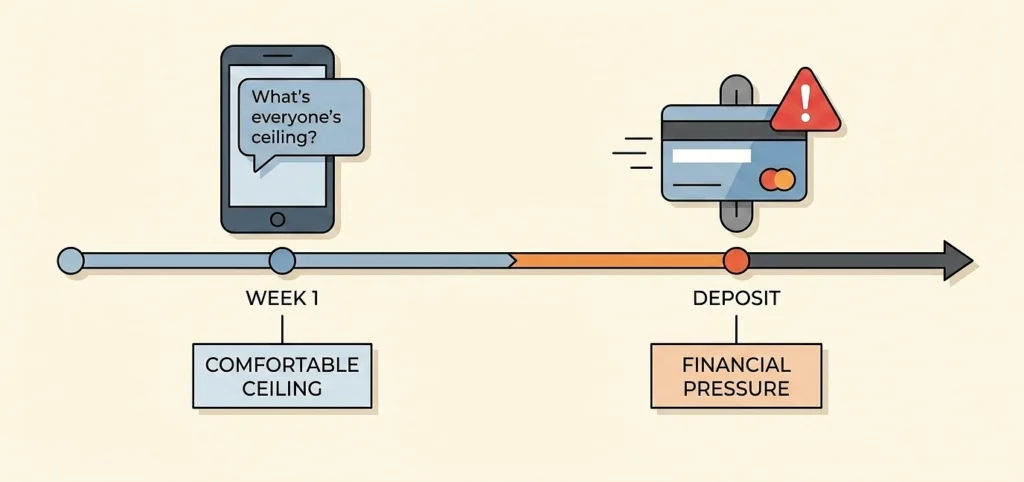
Timing beats courage here, and I mean that practically. The moment a villa deposit goes down, the conversation stops being “what can we all spend” and becomes “who is ruining the plan,” and those are two completely different rooms to be standing in.
The pressure people feel is not imaginary. In a Credit Karma survey of young adults covered by Forbes, 56% said they feel obligated to attend weddings and the events around them even when they cannot afford to, and 38% of Gen Z and millennial guests had taken on actual debt to show up. Debt. For someone else’s party. When the plan is already booked and paid, saying “that’s too rich for me” feels like betrayal, so people swipe the card instead, and that survey is what the swiping looks like at scale.
The fix costs one text sent early “before we book anything, what’s everyone’s comfortable ceiling for this?” Ask it in the first week of planning and it reads as organized. Ask it after the deposit and it reads as a problem.
2. Say Your Number Out Loud, Because The Silence Is The Expensive Part
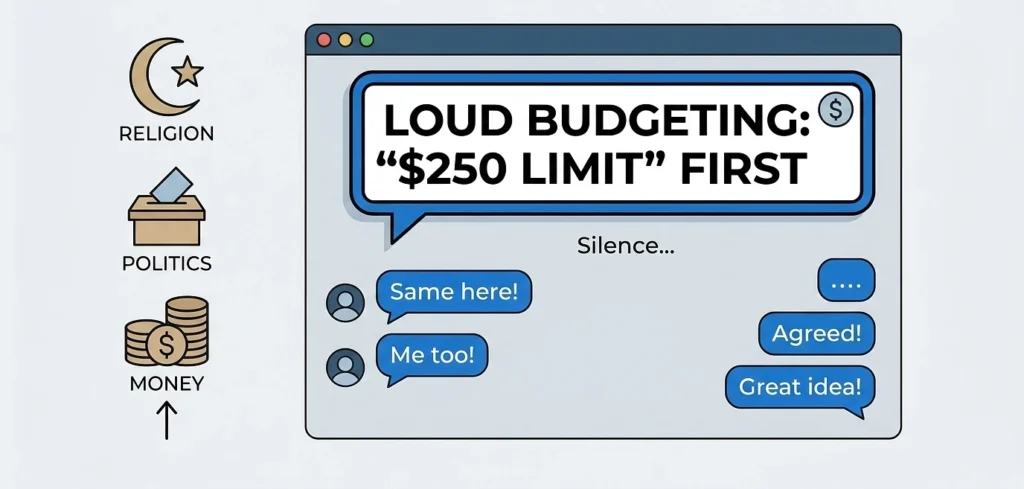
Why does that group chat go quiet for 41 minutes? Because Americans genuinely find money harder to discuss than almost anything. Bankrate’s Financial Taboos Survey found 61% of US adults are uncomfortable talking about their bank balances with family or close friends, while only 24% feel that way about politics and 18% about religion. Read that again. Your friends would rather debate an election at dinner than tell you what they can spend on your bachelorette. Wells Fargo’s money study found the same shape: money ranks harder to talk about than religion, politics, or even death.
And look, I get the instinct. Naming your limit feels like announcing your salary. But here’s what actually happens when one person goes first, and I’ve seen it live: the number lands, there’s a beat, and then two other people say “honestly, same.” One stated budget gives everybody else permission. The younger crowd even coined a name for doing this on purpose, loud budgeting, saying your limit proudly instead of inventing a scheduling conflict, and honestly it’s the most useful thing to come out of a trend cycle in years. The first number spoken in a group sets everyone free. Somebody has to be first. Might as well be you.
3. Equal Split Is Not Automatically The Fair Split
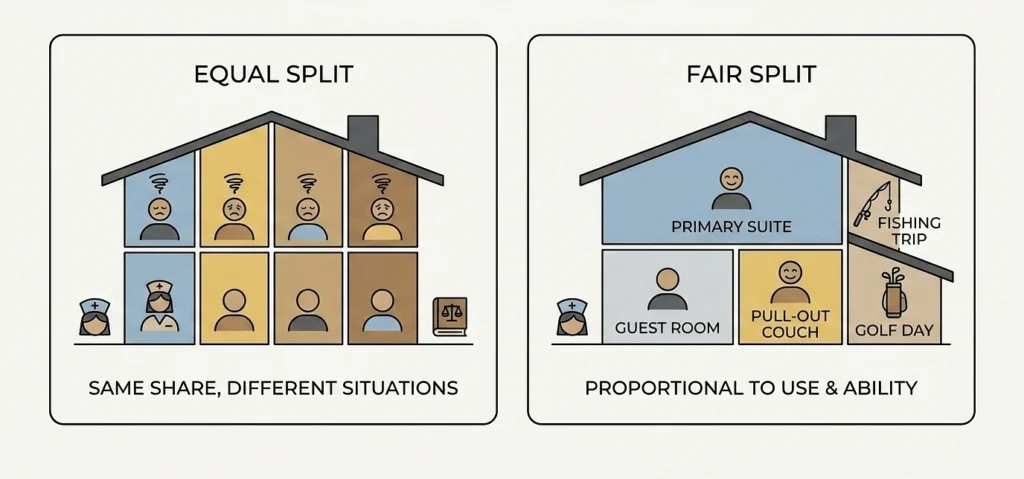
Picture the actual trip for a second. Six people in that Destin villa. One flew in from Atlanta for $89. One flew from Seattle for $460. One is a nurse, one just made partner at a law firm, one is finishing grad school on loans. And the plan says divide everything by six.
Even-split math is clean and it quietly punishes whoever earns the least, which is usually the person least able to say so. There are decent alternatives that groups use all the time once somebody suggests them:
- Split shared fixed costs like the house evenly, but let everyone book their own travel and pick their own comfort level on flights.
- Tier the rooms. The couple taking the primary suite with the bathroom pays more than the friend on the pull-out, and everybody knows it’s fair.
- Let the group cover the essentials together and make the extras opt-in, so the deep sea fishing charter is for the four who actually want it, not a tax on the two who don’t.
Nobody needs a spreadsheet degree for any of this. The group needs one person willing to say “even split doesn’t feel right for this one” before the money moves.
4. Write The Plan Down Where Everyone Can See It
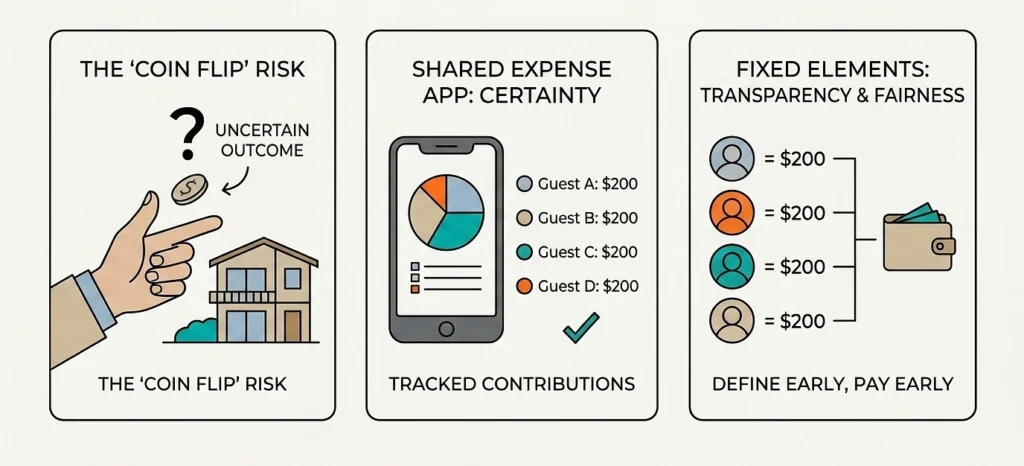
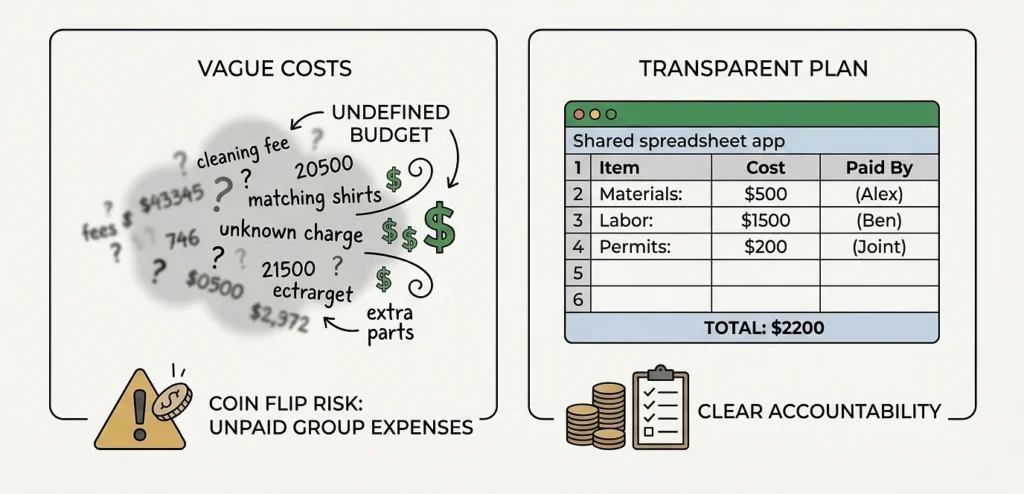
Vague costs grow. “It’ll probably be like 300 each” becomes 495 by the time the cleaning fee, the boat day, and the matching shirts show up, and every add-on gets approved by the loudest person in the chat while everyone else stays polite. A shared doc or an expense app kills that drift, because a number in writing is a number someone can react to before it’s spent.
The stakes of getting this wrong are measurable, by the way. In Bankrate’s earlier taboos research, 55% of people who covered a group expense expecting repayment had it end badly, losing the money, hurting the relationship, or both. More than half. That stat has lived rent free in my head since I read it, because it means fronting the villa for your friends is closer to a coin flip than a favor. Transparency tools exist so no one person is ever the group’s bank. Use them.
5. Decide Early Who Pays For The Guest Of Honor
This one starts fights on its own, so give it its own conversation. Tradition says the group covers the bride or the birthday person, and when the party was dinner and a bar tab, fine. But the party stopped being dinner years ago. Trustpilot’s research put the average cost of attending a single bachelor or bachelorette at $1,326, and found 32% of Americans would think twice about attending at all if it also meant covering the celebrant’s share. People in that survey were pretty clear about where they draw lines: if the guest of honor is making the itinerary fancy, a strong majority feel the guest of honor should be helping pay for the fancy.
There’s no universal right answer, and that’s exactly the point. The group covering the bride’s dinner in Key West is lovely. The group absorbing her flights, suite, jet ski rental, and a curated welcome basket is a decision, and it deserves to be made out loud rather than assumed by whoever built the Canva itinerary.
6. It’s Allowed To Be A No
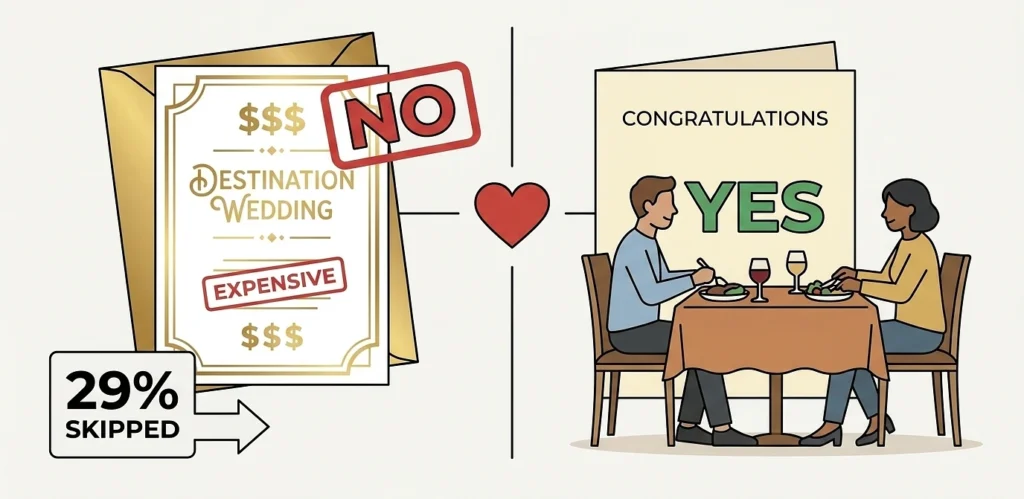
Can you decline your college roommate’s destination wedding and keep the friendship? The honest answer is usually yes, and the way you do it matters more than the fact of it.
The numbers on this are wilder than people think. A LendingTree-era wave of surveys found guests attending multiple weddings a year at several hundred dollars each, The Knot pegs the average cost of attending one wedding at $610 before the shower and the bachelorette even enter the picture, and one recent survey found 29% of Americans have flat out skipped a wedding because it cost too much, with more than half saying weddings have become unaffordable for guests generally. You are not the only one doing this math. Half the room is doing it.
Now the uncomfortable part, because I promised receipts and not comfort in that same Credit Karma research, 42% of respondents said they’d lost a friend over not being able to afford a destination wedding. That number makes me genuinely angry at nobody in particular, because it means two people who liked each other let a resort’s pricing end the relationship. Decline warmly and early, send a gift and a real note, plan a dinner with the couple after the honeymoon. The friends worth keeping accept a warm no. And a friendship that dies because you couldn’t swing $2,000 for Cabo was being billed monthly anyway.
7. Settle Up Fast, Then Actually Talk About How It Went
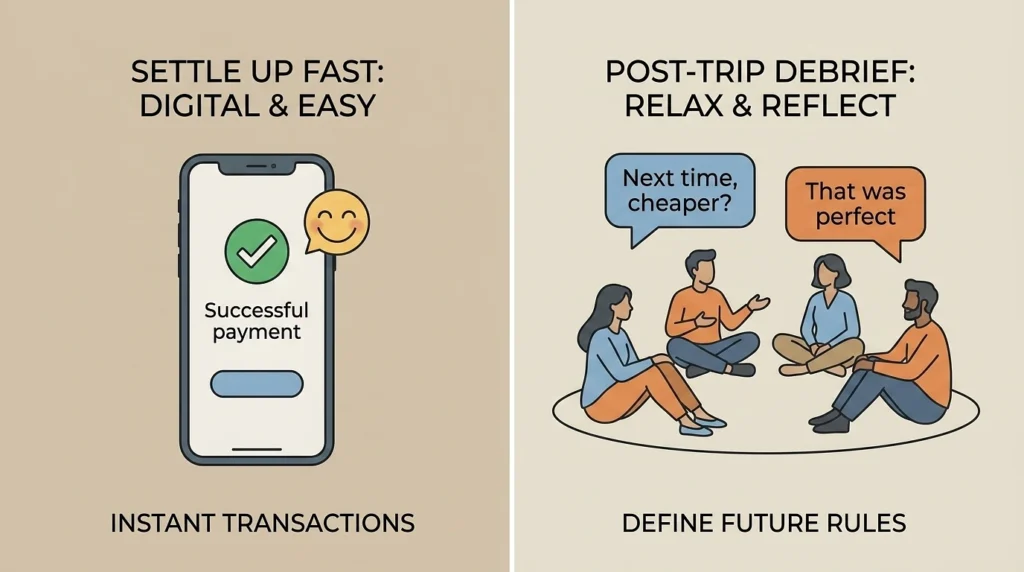
The trip ends, everyone flies home, and the Venmo requests trickle out over three weeks while the goodwill evaporates. Old group debts are relationship acid. Whatever is owed, request it within a couple of days while the sunburn is still fresh and everyone remembers what the charge was for, and pay what you owe the same way.
Then do the thing almost no group does: thirty seconds of debrief. “That felt like the right amount to spend” or “next one, can we go cheaper?” said out loud, once, while it’s easy. Groups that never have this conversation just repeat the expensive version until somebody quietly stops coming, and y’all, that’s how a friend group loses people without one single fight ever happening. The money conversation nobody wants is so much smaller than the silence everybody defaults to. Jess’s group chat, for the record, eventually talked it through, dropped to a cheaper house, and one of the six sat the weekend out with zero drama. The trip was great. She came to the next one.

