


So you’re picturing the first session and you’re bracing for it, the couch, the box of tissues, somebody finally saying out loud who ruined what. What actually happens surprises people. The first question isn’t even about your fights. You’re both sitting there a little farther apart than you do at home and living and the therapist asks something more like, what was it like when you two first met. Half the couples in that room haven’t told that story in years, and telling it changes the temperature before anyone gets near the word problem. Then comes the second question. What made you call now. Not what’s wrong in general, but what happened that made this the week.
That opening is pretty standard across the field and it’s on purpose. The therapist isn’t collecting ammunition to rule on who’s right. They’re hunting for the pattern, the loop you two run that neither of you can see from inside it, and the story of how you started plus the story of what broke are the two ends of that thread.
The First Few Sessions Are An Assessment, And One Of You Will Probably Cry In The Individual One
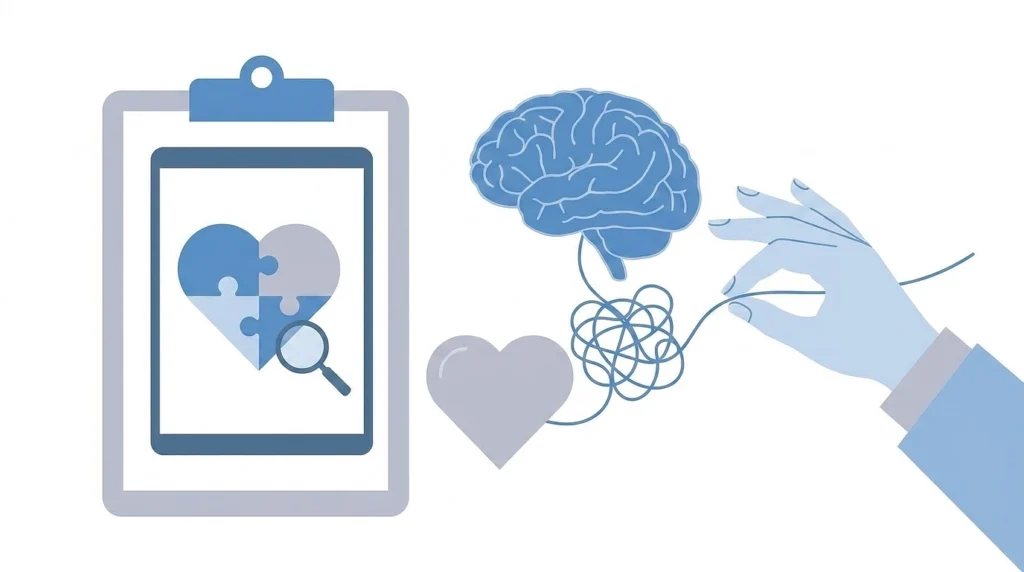
Most of the structured approaches open the same general way. One joint session covering the history and what brought you in, then usually a one-on-one with each partner where the therapist hears the version you each soften in front of the other, then a feedback session where they lay out what they’re seeing. The Gottman Method makes it formal, joint and individual interviews plus a long questionnaire called the Relationship Checkup before treatment even starts, and emotionally focused therapy runs a similar arc with more attention on the attachment stuff underneath the arguments. Either way, the first two to four sessions are diagnosis rather than treatment, and couples who quit at session two because nothing changed yet walked out during the X-ray.
About the fears, since the fears are what keep people out of the room for years. The therapist will not referee. A good one dodges the who’s-right question so consistently it gets almost funny. Nobody gets ambushed, the individual sessions aren’t depositions, and a decent therapist tells you upfront how they handle secrets shared one-on-one. Nobody makes you perform vulnerability on day one either. The exercises come later, after the map exists.
One exception belongs right here and not in the fine print. Where there’s ongoing violence or fear between partners, joint sessions are generally not recommended, because the room isn’t safe for honesty. Therapists screen for exactly this in those individual sessions, quietly and on purpose, and they’ll steer toward individual support instead when it’s there.
Seven In Ten Distressed Couples Recover, And Almost Everyone Shows Up Six Years Late
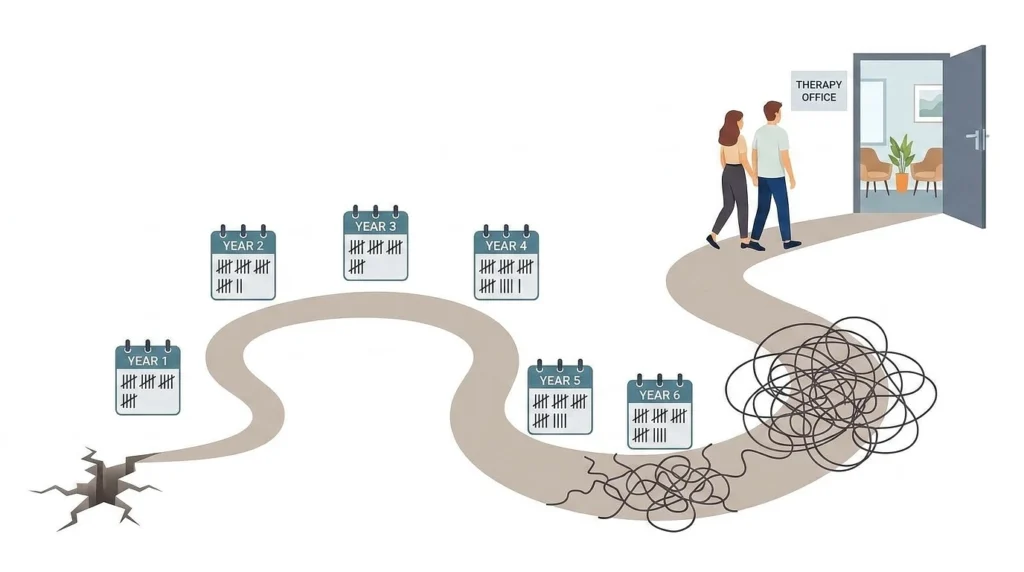
The evidence is better than people expect. The landmark review of emotionally focused therapy by Johnson, Hunsley, Greenberg and Schindler, published in Clinical Psychology: Science and Practice, found seventy to seventy-five percent of distressed couples moved all the way to recovery, with around ninety percent showing measurable improvement, and the gains were still holding two years after therapy ended. A 2013 meta-analysis by Wiebe and Johnson in Family Process backed the same pattern across decades of studies. The Gottman Method has its own research base built on decades of watching what actually predicts relationships surviving.
Worth an asterisk, though. Those numbers describe couples who engaged, showed up consistently, did the homework between sessions. Therapy attended under sufferance measures differently, which matters for the last section of this article.
Here’s the stat that genuinely gets me. Gottman’s research puts the average gap between problems starting and couples actually seeking help at six years. Six years of the same fight metastasizing, of contempt and stonewalling hardening from incidents into habits, and then a couple walks in asking a therapist to reverse all of it in twelve sessions. A lot of the “couples therapy didn’t work for us” stories out there are really “we came in year seven” stories.
It Runs $100 To $300 A Session And Insurance Mostly Won’t Touch It
The 2026 picture is consistent across the cost surveys. Without insurance you’re looking at a hundred to three hundred dollars a session, most couples land somewhere in the hundred to two hundred band, and big-city specialists in the evidence-based models charge two-fifty and up. Most couples do somewhere between eight and twenty sessions, so a typical twelve-session run comes out around twelve hundred to three thousand dollars out of pocket. By the way, ask whether the quote is for a 50-minute hour or a longer couples session, because plenty of therapists run 75 or 90 minutes for two people and price accordingly, and that detail changes the math more than the sticker rate does.
Why won’t insurance pay for it?
Because “relationship problems” is not a billable medical diagnosis. Coverage usually only exists when one partner has a diagnosed condition like depression or anxiety or PTSD and the sessions get billed as treatment for that condition with the partner present, in which case copays run twenty to eighty dollars. When that doesn’t apply you’re private pay. And watch out for plans that advertise couples counseling covered, because that often means only that a spouse is allowed to sit in the room during individual treatment, which is a different product wearing the same name.
The workarounds are real and weirdly underused. Sliding scale fees exist at a huge number of practices and almost nobody asks, with nonprofit and training clinics going as low as fifteen to fifty a session. Employee assistance programs through work often include three to six free counseling sessions and plenty cover couples work. HSA and FSA money is usable for therapy, which works out to roughly a twenty to thirty-five percent discount in pre-tax terms. The online couples platforms run sixty-five to a hundred a week, and a study of over a thousand couples found outcomes comparable to in-person.
Against all that, one comparison worth doing coldly. The average contested divorce costs multiples of the most expensive therapy course on this page. Nobody should stay married on accounting grounds, but the “we can’t afford therapy” math rarely survives a look at the alternative’s invoice.
If Only One Of You Wants To Go, Start Anyway, Just Skip The Dragging
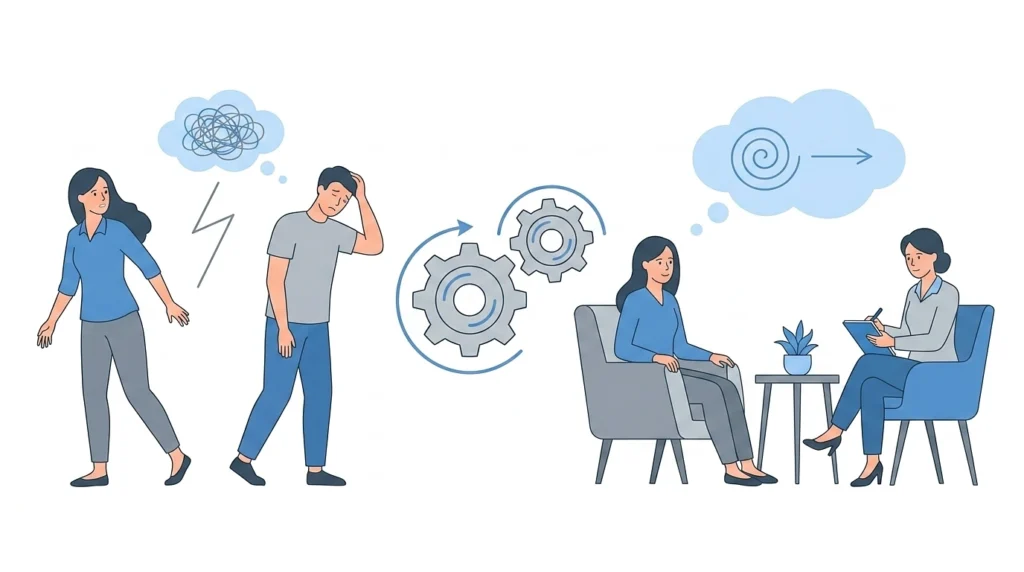
The reluctant-partner problem kills more first sessions than money does.
Dragging an unwilling partner into weekly therapy tends to go badly, and the outcome research quietly agrees, since those strong success rates describe engaged couples. Somebody attending as a hostage often spends the sessions proving the therapy wrong. So the move isn’t winning the argument about therapy, it’s changing what you’re asking for.
There’s a short format built for exactly this split, developed at the University of Minnesota. Discernment counseling is one to five sessions where the goal isn’t fixing the relationship, it’s deciding, with help, whether to try. The leaning-out partner isn’t asked to commit to changing anything, only to getting clear, which is a dramatically easier yes. Plenty of couples exit it into real therapy. Some exit it into a kinder ending.
And if even that’s a no, go alone. Individual therapy aimed at the relationship still changes the relationship, because a pattern needs two participants and you’re one of them. Your half of the loop, your reactions, your triggers, the way you escalate or go quiet, all of that is workable solo, and couples therapists will tell you straight that one person changing their steps changes the dance. There’s a quieter payoff too. A partner who watches therapy visibly helping you eventually asks about it, and that conversation goes very differently than the one that starts with we need counseling.
The couch is cheaper than the wait, and the first session is gentler than the fear. Most couples didn’t need both people enthusiastically on board. They needed one of them to book it.
References and further reading
- Johnson SM, Hunsley J, Greenberg L, Schindler D. “Emotionally Focused Couples Therapy: Status and Challenges.” Clinical Psychology: Science and Practice, 1999. Summary via Sentio Counseling Center
- Wiebe SA, Johnson SM. “A Review of the Research in Emotionally Focused Therapy for Couples.” Family Process, 2013.
- The Gottman Institute. “The Effectiveness of the Gottman Method: Research.”
- BuzzRx. “Couples Therapy Costs: What Insurance Covers,” February 2026.

