


If your shop front still has single pane glass in it, you have two problems and they are the same sheet of glass. It leaks heat all winter because one layer of glass barely insulates anything, and it gives up in one hit if someone decides they want in. Commercial glazing solved both of these a long time ago, laminated glass on the security side and sealed double glazed units on the insulation side, and the rest of this is the detail on how much each problem is costing you and what the fix runs.
Single Glazing and the Heating Bill
Glass is a bad insulator. A single pane comes in around R 1, and a sealed double glazed unit with a Low E coating gets up to R 3 or R 5 depending on the spec, so the old glass is letting through three to five times the heat. And a storefront feels this more than a house does, because a house is a brick wall with a few windows in it but a shop is basically a glass wall with a door, so whatever the glass wastes the whole building wastes.
The studies on home and living moving from single glazing to modern sealed units put the cut in heat loss through the glass at around 74 percent, and the heating and cooling load for the whole premises usually drops somewhere between 20 and 30%. That second number is the one that shows up on the bill.
And then there is the fog. Warm inside air lands on the cold single pane every winter morning and condenses, and a shop window covered in condensation until midday is a window display no customer can see. Sealed units keep the inside face of the glass warm enough that the fog mostly stops. Owners with old glass tend to complain about the fog before they complain about the bill, probably because the fog is there every morning and the bill only comes once a month.
What Happens When Someone Hits It
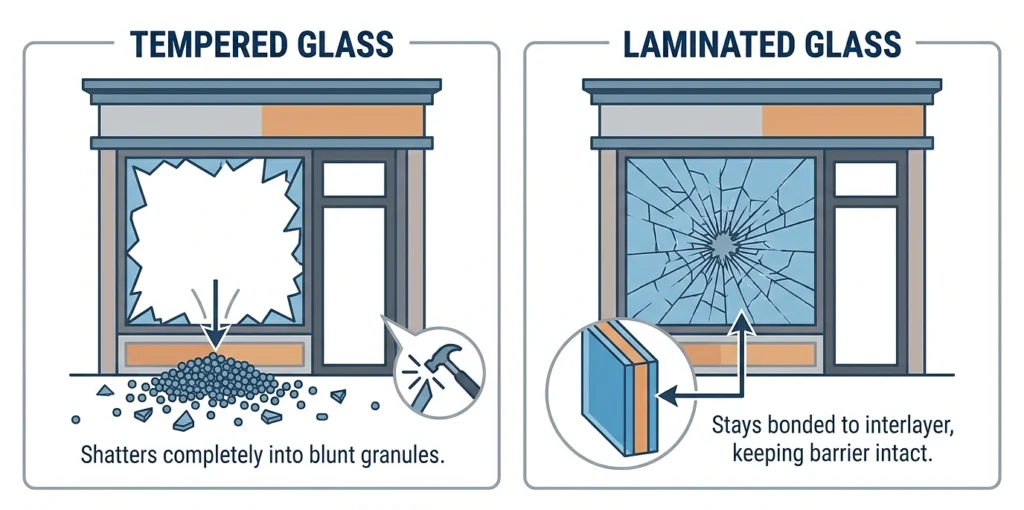
Most commercial burglaries are smash and grab. Something heavy goes through the front glass, a quick grab, and out, and the lock on the door never comes into it, so the glass is the security system whether anyone planned it that way or not.
Single glazed storefronts are usually tempered glass. Tempering makes the pane about four to five times stronger than plain glass, and when it does break it crumbles into small blunt granules instead of long shards for safety management, which is why the building codes require it in storefronts and doors, because falling glass in a shopping street should not cut people. But once it breaks, the whole panel goes at the same moment and the opening is completely clear, and that is the standard glass sitting in most storefronts fitted over the last few decades.
Laminated glass takes the same hit differently. It is two layers of glass bonded on a plastic interlayer, the same build as a car windshield, and when it breaks the pieces stay stuck to the interlayer and the panel stays in the frame. Hit it again and it cracks more and it still stays in the frame. A burglar standing on a lit street hammering on glass that will not open usually gives up, and that is why jewelry stores, pharmacies and shops on exposed corners spec laminated, and why insurers keep nudging everyone else the same direction.
The interlayer does one more useful thing, it damps sound, and laminated or double glazed units can take 20 to 30 decibels of street noise off what reaches the inside. For a cafe or a clinic on a busy road the staff usually notice the quiet before anyone notices the heating.
What the Better Glass Costs
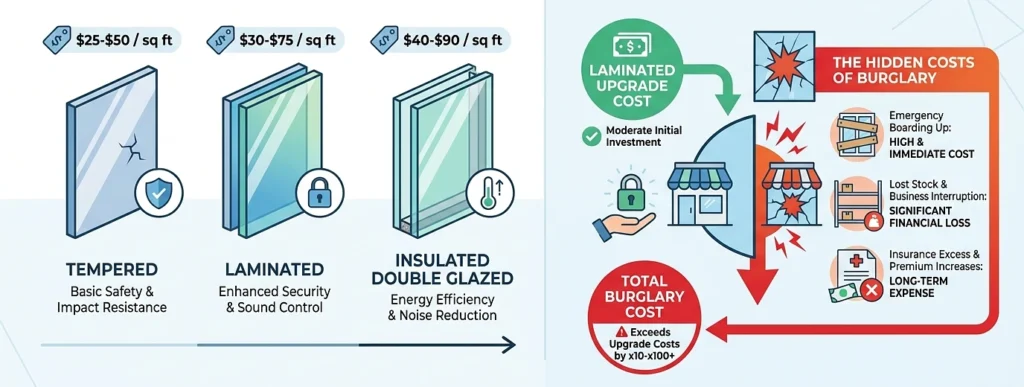
- Tempered storefront glass runs about $25 to $50 per square foot.
- Laminated comes in around $30 to $75 per square foot, so the security upgrade adds somewhere between a quarter and 60 percent on top of tempered.
- Sealed insulated units land around $40 to $90 per square foot, and a Low E coating adds another 10 to 20 percent.
- A single panel swap in a sound aluminum frame usually totals between five hundred dollars and four grand depending on the glass and the panel size.
The sealed units last twenty years or more, though the edge seal can eventually fail and let moisture in between the panes, and a fogged sealed unit gets replaced as a whole unit, so ask the installer what the warranty covers on the sealed unit itself and not just on the fitting work.
And laminated makes more sense when you put the price next to the cost of a burglary instead of next to the tempered quote, because after a break in the glass gets paid for again anyway, plus a few hundred dollars of emergency board up, plus the insurance excess, plus whatever stock left through the hole. If the budget will not stretch to laminated right now, security film applied to the existing glass runs about $7 to $12 per square foot and gives some of the same holding effect while you save up for the proper thing.
The Cases Where Old Glass Is Fine
Like for like repairs in an old frame, interior glass partitions, heritage frontages where the regulations block changes, and units inside covered malls that never touch outside weather. In those spots single glazing is a reasonable call and there is no point paying for thermal performance the location does not need.
An external storefront on a normal street is a different case. The single pane loses on insulation by a factor of three or more and it loses on security every time, and those are the two jobs the glass has. Most owners end up doing the upgrade after a burglary or after one bad winter bill, so if you are pricing it now, get the laminated quote and the insulated unit quote at the same time as the basic tempered one, because the gap between them is usually smaller than people expect.

