


A few years back the Realtors’ association in the US asked its agents a simple question about 11 common outdoor jobs, which was roughly this: if a seller did this job, how much of what they spent would they get back at the sale? The answers are in the NAR outdoor features report, and the one that gets quoted is the lawn. Basic lawn care, a few hundred dollars, came back at more than double what it cost. An in ground pool, $90,000 of it, came back at about half. Hmm, so the mowing beat the pool by a mile, and that is the report in one line.
The same thing shows up in the other big yearly survey, Zonda’s Cost vs Value, which prices a couple of dozen jobs across US cities every year and asks agents the same question. Cheap, visible from the road, done properly: those come back. Expensive, round the back, for your own enjoyment: those mostly do not.
So the 5 below are the ones the street can see, none of them is a pool, and 4 of the 5 come in under $15,000. A couple of them also take something off the power bill while the house is still yours, which is a bonus a buyer never pays for but you do get.
One thing to say before the list. The percentages in those 2 reports are national averages and they move every year. A hot suburb will beat them and a slow one will not, so they are read here as an order of things, not a promise to the dollar.
1. A New Garage Door
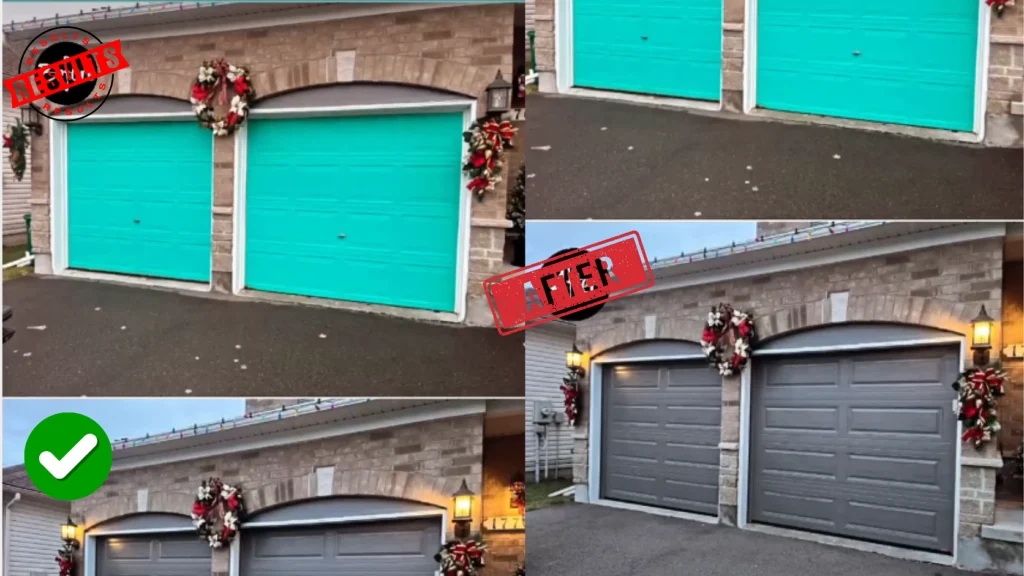
Every year for a while now the garage door has come out on top of the Zonda list, and in the 2025 figures it is the top of only 3 jobs on there that agents reckon bring back more than twice what they cost. Read that again, because it is a strange result for a garage door. The door they price is nothing special either, a 16 by 7 foot steel sectional with foam inside it, a row of windows in the top panel and new tracks, which is the middle of the range at any garage door place and runs somewhere around $4,500 to $4,700 put in.
The reason it works is the size of the thing. On a normal suburban house the garage door is about a third of the front, and a dented 1990s panel door with the paint gone chalky drags the rest of the house down with it no matter what has been spent on the garden. Swap it and the house reads 10 years newer from the road, and nothing else changed.
A couple of points from people who have done it. The fancy versions, the timber look steel and the carriage house style, cost a good deal more and do not come back any better, so the plain door is the one. The motor can stay if it works. And the color has to agree with the front door and the trim, because a bright white garage door on a house with cream window frames is a $4,500 mistake, so stand across the street and look at all 3 together before the order goes in.
If the house has a carport and no garage, this item becomes the carport roof, which is number 3.
2. A Steel Front Door, And The 20 Seconds Of Path Before It
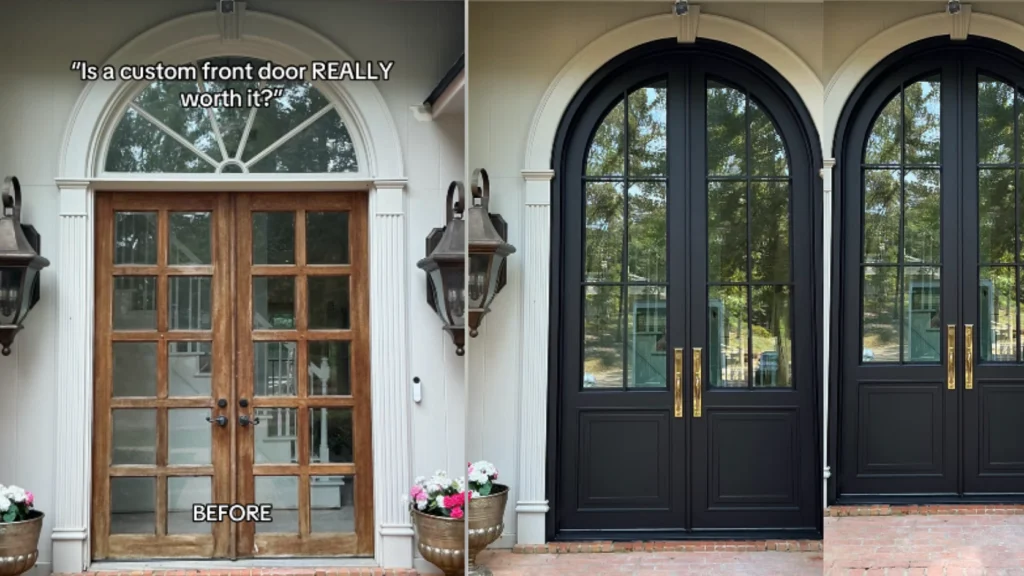
Second on the Zonda list is the front door, and it has to be a steel one to get the number. Not because steel is better than fiberglass or timber, it is not, but because the figure is a ratio and the steel door is the cheap one, about $2,400 fitted for a 20 gauge door with a half glass panel and a new lock, old frame out and new frame in. Agents put it at about double its cost back, same as the garage door, and together the 2 doors are under $7,500.
The path matters more than the door, though, and this part is not in either report. A buyer gets out of the car and walks to the front door, and that walk takes about 20 seconds, and by the time the agent has the key in they have already decided how they feel about the house. In those 20 seconds they have seen the drive, the path, the step and the door. Nothing else.
- Path edges cut, weeds out of the joints, any paver that has lifted put back level.
- The step swept and pressure washed once if it is concrete.
- House numbers that can be read, a porch light that works, a doormat that is not falling apart.
- The door itself painted or replaced, with a handle that matches the garage door’s if there is one.
All of that bar the door is a Saturday and under $300, and it is the kind of small job that saves a big one later, the same way the preventative maintenance jobs that save thousands do. The door is the only line that needs a tradesman.
3. A Roof Over The Patio Or The Car
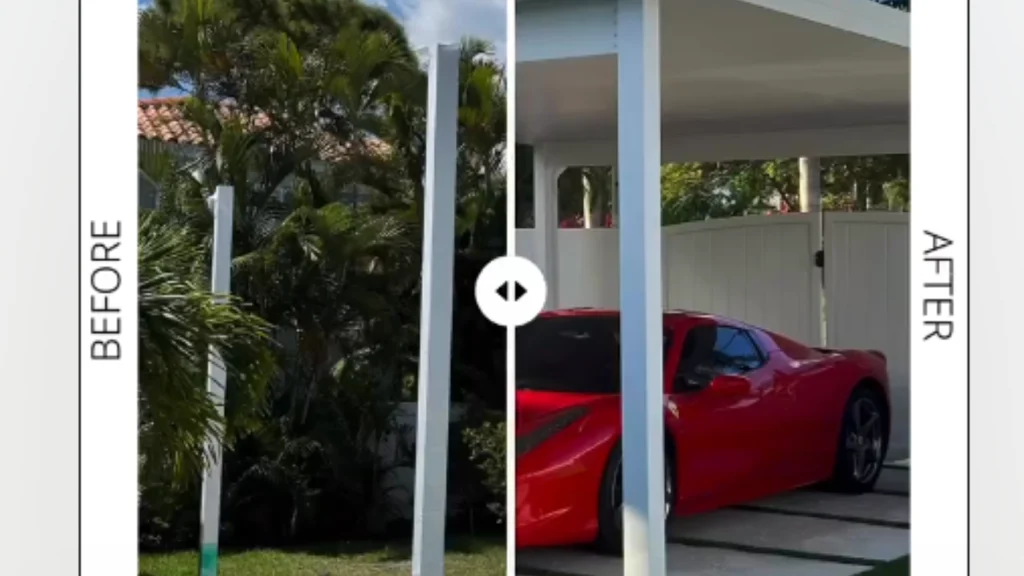
Most people’s first thought for the backyard is a deck, and a deck is fine. Zonda has a wood one coming back at close to what it cost, and composite a little under, which is respectable and nowhere near the 2 doors. What has crept up over the last few years, especially anywhere hot, is a roof. A patio with a roof on it gets used most of the year where an open one gets used in the good months, and a carport with a solid roof keeps a car out of hail and sun, and in hail country buyers now ask about that the way buyers elsewhere ask about a garage.
The awkward part is that this is 3 different jobs sold under 1 name, and the prices are miles apart.
A Pergola With Open Rafters
Posts, beams and rafters with no roofing on top, timber or powder coated steel. It gives shade in stripes and something for a vine to climb, and in rain it does nothing at all. Cheapest of the 3 by a long way, and the NAR report prices the new patio under it at around $10,500 but not the pergola itself.
A Roofed Patio
The same frame with a solid or polycarbonate roof, gutters, and a downpipe that has to go into the stormwater properly. This is the one that works as an extra room, and it is where the money sits, usually $15,000 to $30,000 depending on the span and the roofing.
A Carport
Structurally the same thing built over the drive instead of the back door. In Australian suburbs it is the most common of the 3 because a lot of the housing there was built with no garage, and the companies that put up carport roofing in Cranbourne and places like it generally quote pergolas, patio roofs and carports as one trade, by the square meter of roof, because to them it is the same frame with a different thing parked under it.
The roofed patio is the one a buyer prices as living space, so it is the one with the value in it. The open pergola is a garden feature and the carport is a repair bill avoided, and both are worth more to live with than to sell.
Anyone building a proper outdoor room rather than just a roof will want the order of decisions, slab first, then power and water, then the roof, then furniture, and that order is laid out in planning an outdoor living area from scratch. The roof is step 2 on that list, and it is the step most people do first.
4. The Yard Kept Up, And 2 Trees On The West Side
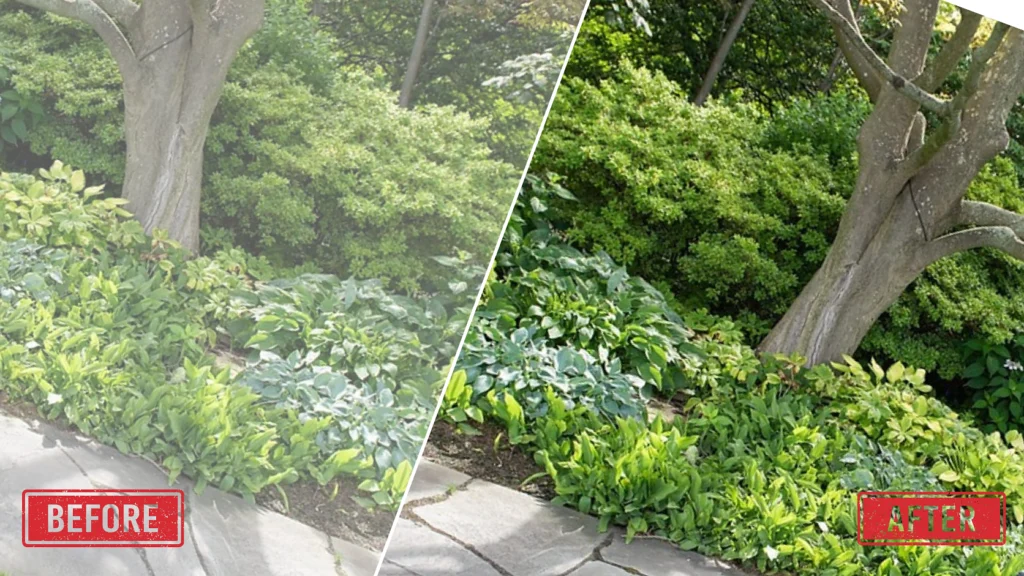
This one has the best numbers of the 5 and gets the least attention. In the NAR survey the agents put plain landscape maintenance, meaning beds mulched, edges cut, dead stuff out, at a bit over its full cost back, and a general landscape upgrade at about its full cost back, and those are 2 of only 4 things on their list that get to 100 percent at all. The $415 lawn service is the one that doubled. So a few thousand dollars on the garden being kept, not redesigned, is worth more at sale than the $90,000 pool, which is a result that still surprises people when they hear it.
The bit that is not in the survey is what trees do to the bills while you still live there. The Department of Energy’s landscaping for shade page says trees placed right can knock about 6 degrees Fahrenheit off the air around a house and that an air conditioner sitting in shade runs noticeably more efficiently than one in the sun. The EPA’s heat island work has shaded pavement and walls running tens of degrees cooler than the same surface in full sun. A deciduous tree on the west side shades the wall and the windows in summer, drops its leaves and lets the winter sun in, and that is the one piece of garden that pays twice.
- Two trees, west and southwest of the house, planted far enough out that the roots clear the slab and the crown will not touch the roof in 20 years.
- Beds mulched and edged, which is most of what the survey means by maintenance.
- Anything dead or dying taken out, since a half dead shrub by the front door says the whole house has been let go.
- Lawn cut and edged in the week before any photos are taken.
Trees take 5 to 10 years to shade a roof, so the ones planted this year are a 2030s benefit, which is the argument for planting them now and not the month before listing. Keep anything with a big root run away from pavers and pipes, and keep canopies off the pool fence, because leaf drop on wet decking is a slip and roots under the coping lift it, both of which come up in the pool deck safety piece.
5. Stone To The Sill Line, Or New Siding If The Old Has Gone
The third of the 3 jobs that Zonda has coming back at more than double is manufactured stone veneer, and it is the one on the list that catches people out. The job they price is about 300 square feet of it across the bottom third of the street facing wall, in place of vinyl siding there, with the sills and trim done to match, at around $11,700 all in. The look is the one on half the new builds in any suburb, stone up to the window sills and a lighter cladding above, and that is the point. Buyers have spent 10 years looking at new builds with that detail and they now read it as the mark of a well built house, whether it is or not.
Above the stone, the cladding itself is on the list too. New fiber cement siding comes back at a bit over its cost and vinyl at just under, so a house with tired walls gets most or all of a recladding back, and fiber cement is also the material the insurers like in fire prone places, which is becoming a bigger deal each year.
On a house whose front is still in fair condition, stone to the bottom third is the single best return on the whole exterior. On a house whose cladding has gone, the siding comes first, because stone glued to a failing wall fails with it.
The age of the house decides this one. A 1920s weatherboard with its original boards wants repairing and painting, not cladding over, because that detail is what a buyer of that house is paying for. A 1990s brick veneer or a 2000s builder’s special has nothing like that to lose, and stone to the sill line is what it has been missing.
Paint is not on the Zonda list because it counts as maintenance rather than a job, but it comes back at about its cost in nearly every market, and if there is only money for one thing on the walls, it is a coat of paint in a color that agrees with the roof.
The Order To Do Them, And What To Check On Your Own Street
The 3 backyard things people most want to build are the 3 the agents rated lowest for getting money back. The pool, a fire pit and landscape lighting all came in around half their cost, and in the same survey the people who built them were the happiest of anyone. So build the fire pit for the 10 years of using it, and go in knowing it is a cost and not an investment.
The order for the 5 is roughly the list, with the trees moved to the front.
- Year 1: the trees in the first autumn possible, the beds and the path done, and both doors.
- Year 2: the roof over the patio or the car, with the drainage done the right way, since it needs a permit and a contractor and a few months.
- Year 3, or when a sale is in sight: stone or new siding, and paint.
At national average prices that comes to somewhere between $45,000 and $60,000 across the 3 years, and the first 2 years of it is under $12,000, which is the part most households can do without borrowing. The same habit of pricing the full list before the first dollar goes out is in these everyday habits for the rising cost of living, and a garage door is no different from a grocery bill in that respect.
One last check before any of it. Drive the street the house will be sold against and count which of the 5 the neighbors have already done, because a buyer comparing houses does exactly that, the way a serious home buyer’s checklist works through a shortlist. If every house on the block already has a new garage door, yours only brings the house level with them, and the money is better spent on the one item the block is missing.

