


Key takeaways:
- Freezing ruins insulin permanently, and it’s the danger people miss. Everyone warns about heat; almost nobody warns that the airplane cargo hold, a winter coat pocket, or an ice pack can freeze insulin and destroy it for good.
- Never pack insulin in checked luggage. The hold isn’t temperature-controlled and can freeze it. Insulin goes in your carry-on, always.
- Don’t let insulin touch ice or a frozen gel pack directly. That freezes it. Use an insulated case designed for medication, not a cooler full of ice.
- Storage numbers: refrigerated 36-46°F (2-8°C) unopened; in-use insulin is fine at room temp up to 86°F (30°C) for about 28 days.
- TSA lets you bring insulin and supplies through security in your carry-on, exempt from liquid limits. Declare it.
- Crossing time zones changes your insulin timing. Traveling east shortens your day, west lengthens it, plan this with your doctor before you go.
Traveling with diabetes is completely doable, and don’t let anyone tell you otherwise. But the standard advice, “plan ahead, pack extra, stay active,” is so vague it’s nearly useless, and it skips the specific mistakes that actually wreck a trip. The worst of them ruin your insulin silently, so you don’t find out until you inject a dose that no longer works and your blood sugar climbs for no apparent reason. So here are the five that matter, with the concrete details the gentle version leaves out.
1. Assuming Heat Is The Only Threat To Your Insulin
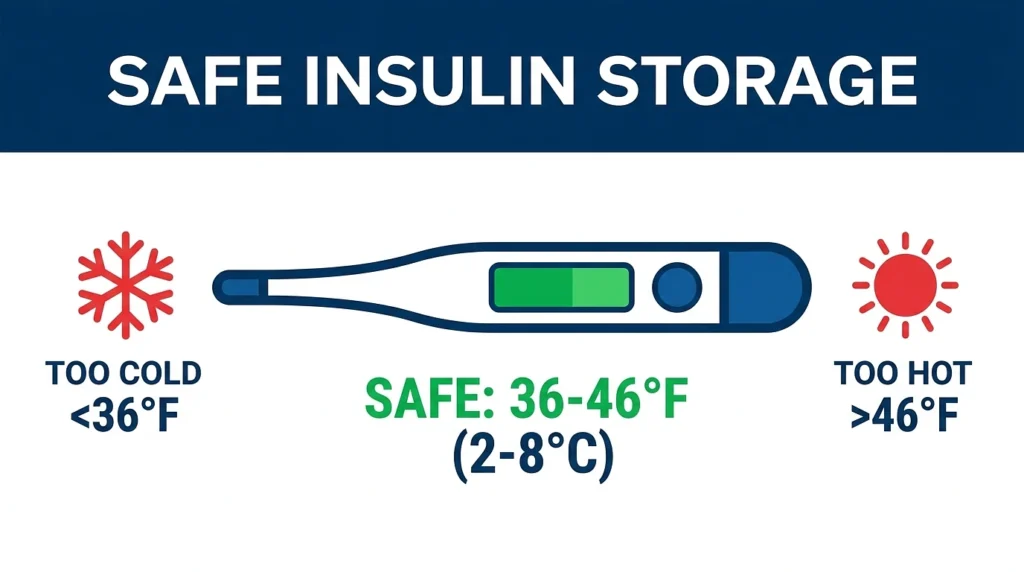
Everyone with diabetes has heard “don’t let your insulin get hot.” True, but it’s half the warning, and the missing half is the one that catches people. Freezing destroys insulin just as completely as heat, and unlike heat damage, it’s total and irreversible.
Here’s the science that makes this non-negotiable. Insulin is a protein, and proteins denature, permanently unravel, at temperature extremes in both directions. The FDA is blunt about it: do not use insulin that has been frozen, full stop, even once thawed. Freezing changes the protein structure in a way that can’t be undone, and a frozen-then-thawed vial may look fine while being useless.
The reason this is the “nobody warns you” mistake is that the freezing risks are sneaky. A winter coat pocket on a ski trip can drop below freezing. A car left overnight in the cold. And the big one for travelers, coming up in mistake #4. The storage target is 36-46°F (2-8°C) refrigerated before use, and once you’re using it, room temperature up to about 86°F (30°C) is fine for roughly 28 days. A tell-tale sign of freeze damage: clumps or small white particles or strings that won’t dissolve when you gently mix it. If you see that, the insulin is done.
2. Packing Insulin In Checked Luggage
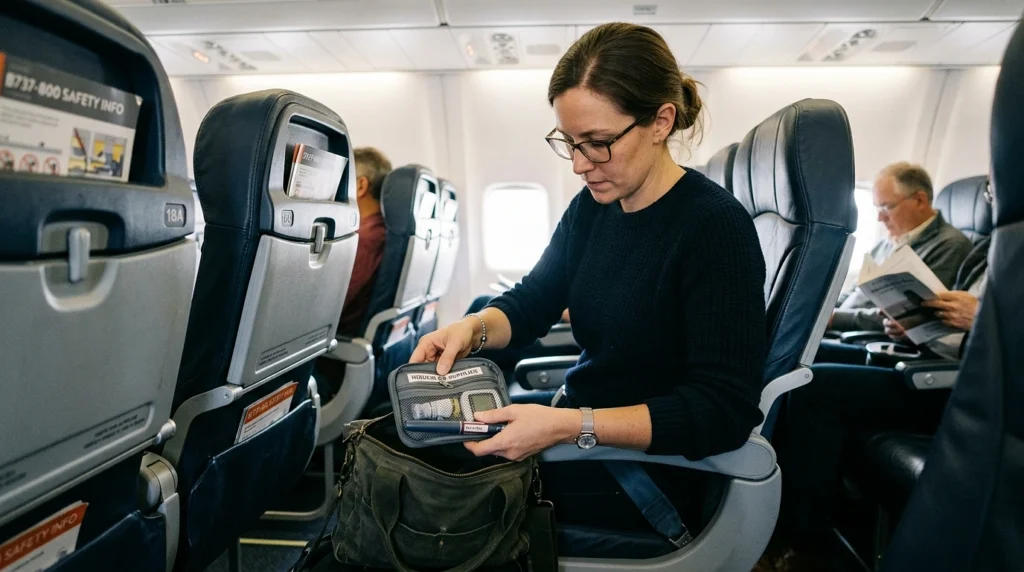
This one follows directly, and it’s the single most common insulin-ruining travel mistake. Never put insulin in a bag that gets checked into the airplane’s cargo hold.
People assume the danger is the hold getting hot, and it can. But the bigger, less-known problem is that the cargo hold is not temperature-controlled and can drop below freezing at altitude, which, per mistake #1, permanently destroys your insulin. So you could arrive at your destination, pull out your carefully packed supply, and have a suitcase full of denatured, useless medication, with a pharmacy hunt in an unfamiliar city ahead of you.
The rule is simple and absolute: insulin, glucose meter, test strips, and all your critical supplies go in your carry-on, where the cabin stays temperature-controlled and where you can reach them. And pack more than you think you need, enough for the trip plus several days, in case of delays, because a lost checked bag is survivable but a missed insulin dose is not. Distributing backup supplies across your carry-on and a companion’s bag is smart insurance.
3. Cooling Insulin The Wrong Way, With Ice
Now the mistake that comes from doing the right thing badly. You know insulin needs to stay cool in the heat, so you pack it in a cooler with ice or a frozen gel pack. And you just froze your insulin.
Insulin should never be in direct contact with ice or a frozen gel pack, because that contact can freeze it and ruin it, the exact outcome you were trying to prevent. The FDA’s own emergency guidance says if you’re using ice to keep insulin cool, make sure the insulin doesn’t actually freeze against it.
The right tool is an insulated medication travel case designed to hold insulin in its safe range without freezing it, several types exist, from gel-pack cases (with a barrier so the insulin isn’t touching the frozen pack) to evaporative-cooling cases that need only water to devices that regulate temperature electronically. The category matters more than the brand: you want something that keeps insulin cool without letting it hit freezing, not a lunchbox full of ice cubes.
4. Ignoring What Time Zones Do To Your Dosing Schedule
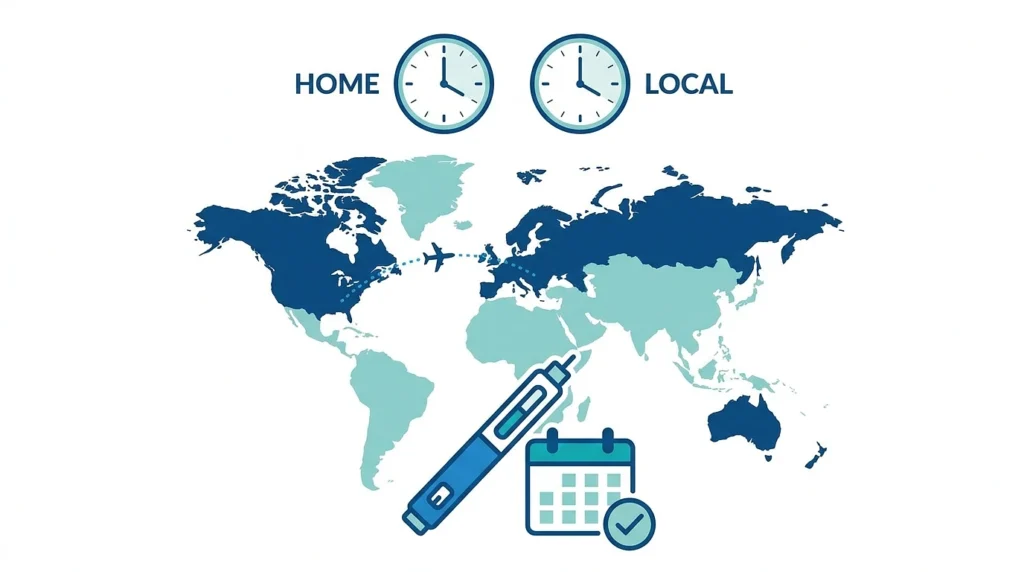
Insulin timing is built around your day, and crossing time zones stretches or compresses your day, which quietly throws off the schedule. This is where people either double up or leave gaps without realizing it.
The direction matters. Traveling east shortens your day, meaning less time between doses, and you may need less basal insulin or a compressed schedule. Traveling west lengthens your day, adding hours, which can mean an extra dose or adjusted timing to cover the gap. Get it wrong in either direction and your blood sugar can swing.
Because the specifics depend on your exact regimen, whether you’re on a pump, long-acting insulin, or multiple daily injections, and on how many zones you’re crossing, this is the number-one thing to plan with your doctor before you travel. Ask them specifically how to adjust your timing for your route, and a practical tip many endocrinologists give: keep one watch or your phone on your home time zone during the transition so you can track when your last dose really was, rather than getting confused by local clocks.
5. Not Planning For Lows On The Road, And Skipping The Doctor Visit
The last cluster is about the everyday management that travel disrupts, and the stakes here are hypoglycemia, low blood sugar, which is an immediate danger in a way that mildly high sugar isn’t.
Travel throws off the routine your blood sugar depends on: delayed meals, unfamiliar food with unpredictable carbs, long stretches of sitting, then sudden bursts of walking around a new city. Any of that can send you low. So the essentials:
- Carry fast-acting glucose at all times, glucose tabs, juice, candy, in your bag and your pocket, not in a suitcase. A low can hit on the plane, in a taxi, mid-hike, anywhere.
- Pack more snacks than you expect to need, for flight delays and missed meals, because “I’ll just grab something” fails exactly when you’re stuck somewhere without options.
- Keep moving to manage highs, since long flights and car rides raise blood sugar; short walks and leg movement help your body use glucose.
- Carry a doctor’s note and your prescriptions, which smooths airport screening and matters enormously if you need to replace supplies abroad.
And the one the source articles bury at the end that should be near the front: see your doctor before a big trip. Not as a formality, they’ll adjust your medication schedule for time zones, make sure you have enough supply, and flag anything specific to your regimen. On the TSA front, for peace of mind: you’re allowed to bring insulin, syringes, pumps, and glucose supplies through security in your carry-on, they’re exempt from the liquid limits, and it helps to simply tell the officer you have diabetes and are carrying supplies.

