


So you are the one holding the camera at every family thing, and you already know the curse. Fifteen people lined up. Everyone finally looking the same direction. And in the shot that should have been the keeper, somebody’s eyes are shut. There is an actual formula for beating this, and it won an actual prize. Take the number of people in the photo and divide by three. That is how many shots you need.
Back in 2006 a woman named Nic Svenson at Australia’s CSIRO got fed up with blinked group photos and started counting spoiled frames. She realized she would need around two hundred data points before she could say anything defensible, so she complained to a physicist colleague, Piers Barnes, who told her you do not need data, we can model it. The result got immortalized with the Ig Nobel Prize in mathematics. Groups under twenty in decent light, people divided by three. Bad light, divide by two instead, because slower shutters spend more time open and catch more mid blink faces.
The physics underneath is kind of sweet. A person posing for a photo is blinking about ten times a minute, each blink lasts around a quarter second, and blinks are independent, meaning your cousin’s eyelids do not consult anyone else’s. Stack those odds across fifteen faces and a clean frame stops being luck. It becomes a number you can plan around. There is an old camera patent that puts the everyday version plainly, at any given moment roughly five percent of a posing group is mid blink, which is why a photo of forty people reliably has two or three sets of closed eyes in it somewhere.
So the first fix is not software bug. It is arithmetic while you are still standing there. Burst mode, or three to five deliberate frames a couple seconds apart, and the formula quietly hands you the raw material for everything else in this article.
The Blink Swap, Two Seconds Of Editing Photographers Have Done Since Film
The trick itself, and the reason it sits comfortably on the fix side of the line.
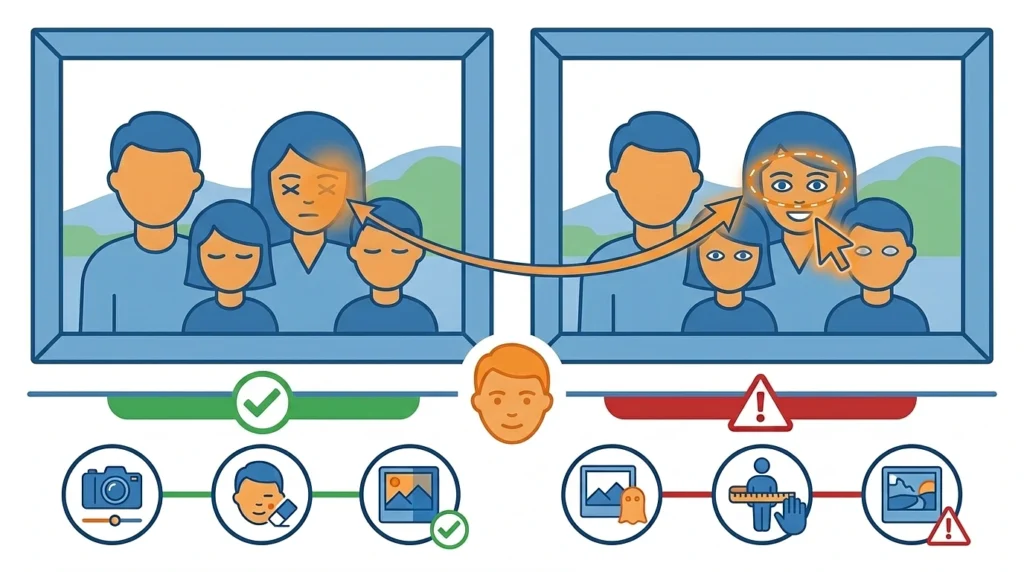
You shot five frames of the same fifteen people in the same pose in the same light, ten seconds apart at most. Frame two is the keeper. Great expressions, everyone relaxed, except your uncle’s eyes are shut. Frame four is worse overall but his eyes are open. So you take frame two, select the little region around his eyes or his whole face out of frame four, and blend it across. Same person. Same moment for all practical purposes. And same light, which is the entire technical secret, because matching light means matching shadows and no one can spot the seam. Every serious editing tool does this now with layer masking, and your phone is already doing a version of it on its own, since the computational modes are picking best faces across a burst before you ever see the image and never ask you first. Which sounds invasive, and ok, it mostly is fine, because it is your own photo roll and the same ten seconds of the same afternoon.
Why does this feel fine when other edits feel like lying?
Sit with that one a second. Your gut already knows, and the professional standards agree with your gut. The swap does not change what happened. Those fifteen people stood there together with their eyes open inside the same ten seconds, and the finished composite shows a true event assembled from two slices of it. No one looking at that photo believes anything false about the afternoon.
Which is exactly where the line lives.
News Agencies Wrote The Fix Versus Fake Line Down Decades Ago, And It Is Worth Borrowing
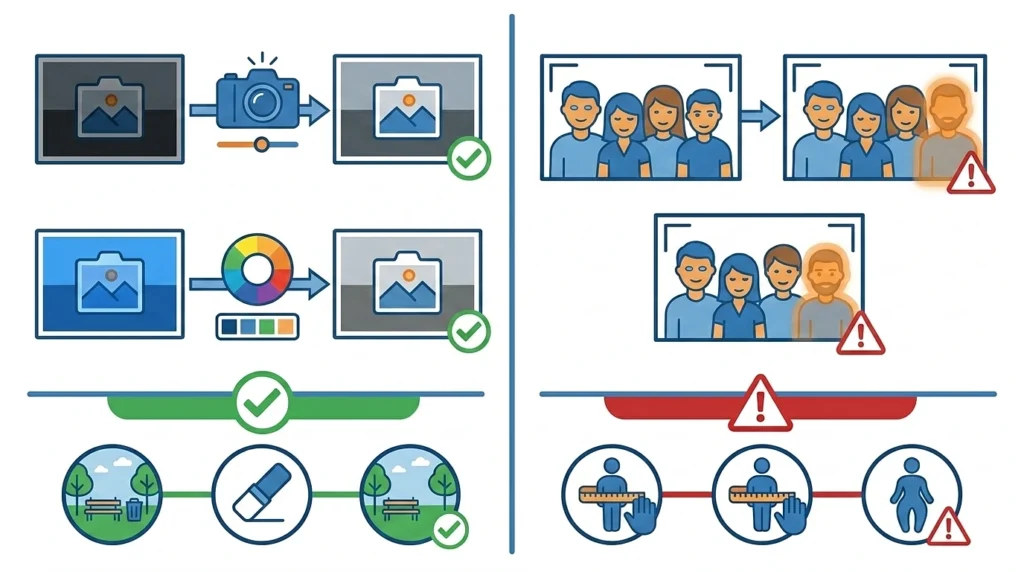
When the Associated Press went digital in 1990, its executive photo editor put out a policy that still reads like scripture in the field, the AP does not alter photographs, and the content of a photography will never be changed or manipulated in any way. The photojournalists’ association code says the same thing longer. Editing has to maintain the integrity of the image’s content and context, and it can never mislead viewers or misrepresent subjects. Getty’s version allows red eye removal and dust cleanup while banning the extreme stuff. Different wordings, one shared idea. Adjusting how a real moment looks is fine. Changing what the moment was, never.
For family use, the split works out like this:
- Fixes change the presentation of a real moment. Exposure, color, cropping, pulling a trash can out of the background, the blink swap between near identical frames, cleaning up a temporary blemish. The event survives the edit intact.
- Fakes change the record of what happened. Adding a person who missed the photo, deleting an ex, swapping in a smile from a different day, slimming somebody’s body, compositing people into a place they never stood. Now the photo testifies to something false.
The Wire Services Enforce This Line With Careers, Which Tells You How Seriously To Take It
Brian Walski got fired from the LA Times in 2003 for merging two Iraq War frames into one better composition. An AP freelancer lost his contract and his entire archive for cloning dust over his own shadow, his own shadow, in a soccer photo. And in 2024 the AP, Reuters, Getty and AFP all issued kill notices on a photo of the Princess of Wales and her kids over editing inconsistencies. Even a family portrait counts as a document once it enters the record, and the wire services are treating it exactly that way.
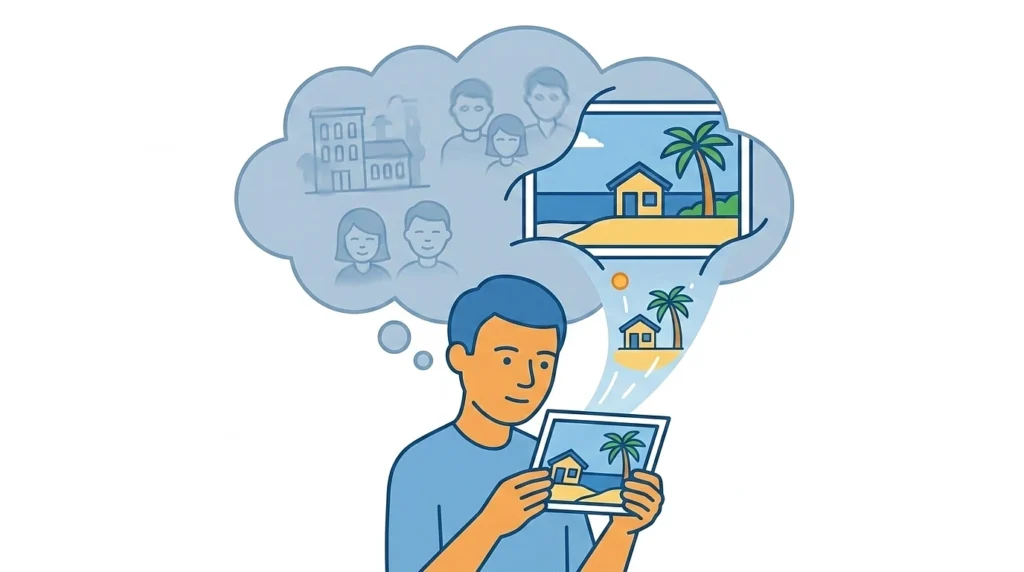
Now, you are not a wire service. Your cousin’s graduation photo is not evidence in the historical record, so the strict rules do not bind you. But there is real research on why the fake category deserves more caution than casual editing culture gives it. Elizabeth Loftus, the leading memory researcher in psychology, ran a study where people viewed doctored photos of real public events and afterward remembered those events as bigger and more violent than they actually were. Altered photos do not only misrepresent the past. They overwrite people’s memories of it. The grandparent looking at the family photo in twenty years will not remember that Uncle Dan got added in later. The photo will be the memory. That is not an argument against ever compositing a missing relative into a reunion shot, families are doing that lovingly all the time. It is an argument for doing it knowingly, and maybe writing it on the back of the print.
When To Ask First, Because The Face You Are Editing Is Not Yours
The technical side of editing got easy. The manners never got the upgrade, so this is the etiquette I go by, learned mostly through other people’s arguments.
Fixing your own face in a group shot needs no one’s permission. Fixing somebody else’s is where the asking starts, and the threshold sits lower than people assume. Smoothing another adult’s skin, whitening their teeth, trimming their body, all of it sends a message they never agreed to receive, which is that you looked at them and saw something to correct. More than one friendship has taken real damage from a helpfully slimmed arm. The blink swap and a stray hair fix live at the harmless end. Anything that edits who somebody is rather than what the camera caught, ask. And ask before posting, not after the tag notification does it for you.
Photos from weddings and funerals deserve one extra beat of care, because those become the record of a day people lean on. And photos with somebody who has since died sit in their own category entirely. Editing those, even gently, means editing someone’s last pictures of a person. Some families want the blink fixed. Some want the blink, because that was him, mid laugh, eyes shut, the way he actually was. You cannot know which family you are dealing with without asking, and finding out costs one sentence.
The formula gets you clean frames, the swap rescues the near misses, the wire service line tells you which edits keep the photo honest. The asking is the one part no software will ever do for you.