


A collision with a commercial truck is rarely a routine traffic claim. The size, weight, operating demands, and business structure behind an 18-wheeler or delivery truck can turn one moment on the road into a detailed investigation involving records, regulations, insurers, and several potentially responsible parties. Road conditions can complicate any crash, much like the factors discussed in how poor highway maintenance and potholes cause motorcycle crashes, but truck cases introduce additional layers that ordinary car accident claims often lack.
In a typical car crash, the investigation may focus mainly on the two drivers, their vehicles, insurance coverage, and the police report. A truck accident can require a broader review of the driver’s conduct, the trucking company’s policies, vehicle maintenance, cargo loading, dispatch instructions, electronic data, and compliance with commercial transportation rules. That difference is why prompt, organized action can matter so much.
More Parties May Be Involved

A passenger-car collision often involves one or two vehicle owners. By contrast, commercial trucking operations are frequently divided among separate businesses. The truck driver may work for a carrier, while the tractor is owned by another company, the trailer is leased from another business, and the cargo is loaded by a warehouse or shipper.
Potentially relevant parties can include:
- The truck driver.
- The motor carrier or employer.
- The truck or trailer owner.
- A maintenance or repair contractor.
- A cargo loader, shipper, or freight broker.
- A manufacturer of a defective truck part or safety system.
- A government entity or road contractor, when dangerous roadway conditions played a role.
Determining which party had control over the driver, vehicle, cargo, or safety process can take time. Each business may also have its own insurer, legal team, documents, and explanation of what happened.
Truck Cases Depend on a Much Larger Evidence Trail
After a car crash, evidence may consist of photographs, repair estimates, witness statements, phone records, and the accident report. Those items matter in truck cases as well, but commercial vehicles may generate an additional collection of operational records.
For example, investigators may seek electronic logging device data, GPS location history, engine control module information, dashcam footage, dispatch messages, inspection reports, maintenance invoices, driver qualification files, training materials, bills of lading, and cargo securement records. The federal government’s large-truck and bus crash data also illustrate that commercial-vehicle crash reporting uses distinct definitions and data systems rather than a single, simple record.
These records can help establish a timeline. They may show where the truck traveled, when it stopped, whether inspections were documented, what the driver was assigned to do, and whether the vehicle showed signs of mechanical trouble. However, records must be interpreted carefully. A data point alone does not automatically establish fault.
The First 72 Hours Can Be Especially Important
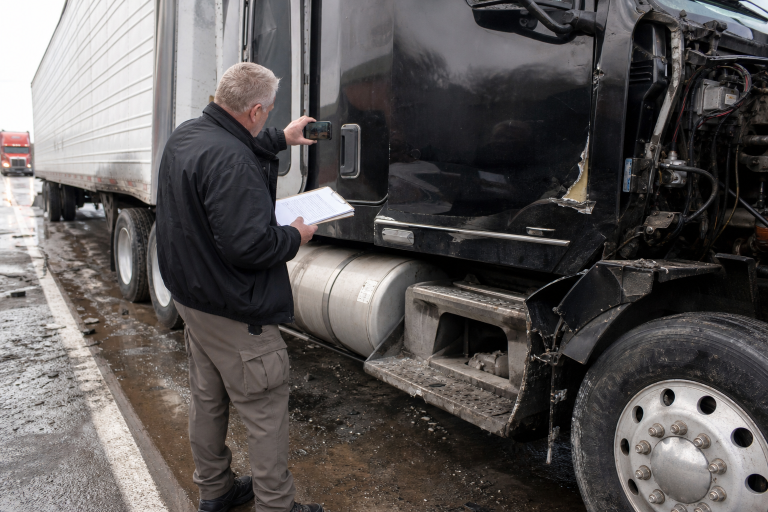
Important evidence can change rapidly after a truck collision. A carrier may need to move the truck, deliver the freight, arrange repairs, or return equipment to service. Nearby security video may be routinely deleted. Skid marks can fade, debris can be cleared, witnesses can become difficult to locate, and damaged personal property may be discarded.
Practical steps after a truck crash
- Prioritize safety, call 911 when needed, and move away from traffic or hazardous cargo if it is safe to do so.
- Seek medical evaluation and follow all treatment instructions.
- Photograph vehicles, road markings, debris, weather conditions, company names, trailer numbers, and visible damage when it is safe.
- Get the police report number, responding agency information, and witness contact details.
- Keep damaged items, photographs, videos, repair estimates, medical bills, and insurance communications in one secure folder.
Medical documentation is equally important because collision injuries may not be fully apparent in the first few hours. Headaches, dizziness, confusion, sleep problems, neck pain, and back pain can emerge later. The symptoms of mild traumatic brain injury and concussion can appear immediately or develop over hours or days, which is one reason prompt medical follow-up can protect both health and an accurate record.
Commercial Drivers and Carriers May Be Subject to Safety Rules
Most drivers must follow traffic laws, but commercial drivers and motor carriers may also be subject to additional federal or state requirements. Depending on the operation, those rules can address driver qualifications, hours of service, drug and alcohol testing, vehicle inspections, maintenance, cargo securement, and recordkeeping.
A truck accident investigation may, therefore, ask questions that would not normally arise after a standard car accident. Was the driver properly qualified? Were required inspections completed? Did the carrier have a safe hiring and training process? Was the driver within permitted driving hours? Was the load balanced and secured? Were known mechanical problems corrected?
These questions should not be answered through assumptions at the crash scene. They require reliable records, qualified analysis, and a careful review of the specific circumstances.
Injuries and Financial Losses Can Be More Extensive
Commercial trucks have far greater mass than passenger vehicles, so the physical forces involved in a collision can be severe. Victims may face emergency treatment, surgery, rehabilitation, time away from work, reduced mobility, and lasting changes to daily life. The vehicle damage may also be substantial, especially in underride, rollover, jackknife, or multiple-vehicle crashes.
That can make damages more complicated to calculate. A complete assessment may need to account for current medical bills, future care, lost income, reduced earning ability, transportation needs, property loss, and the personal impact of ongoing pain or disability. A quick estimate immediately after the crash may not capture the full picture.
Insurance Discussions May Be More Complicated
Truck crashes can involve commercial insurance policies with higher limits and several layers of coverage. That does not mean every claim will be straightforward or quickly resolved. Different insurers may disagree about responsibility, policy language, vehicle ownership, cargo operations, or the extent of injuries.
It is generally wise to report the crash to your own insurer as required by your policy, provide accurate basic facts, and save every letter, email, claim number, estimate, and settlement document. Avoid guessing about fault, minimizing symptoms, or signing broad releases before understanding what they cover.
Why Organization Matters
A personal crash file can make a difficult situation easier to manage. Keep a dated timeline of symptoms, appointments, missed work, calls with insurers, repair updates, and new information. Store copies of medical records, receipts, prescriptions, photographs, witness information, and the police report in more than one location.
Truck accident cases are more complex because they combine a serious roadway event with a commercial operation. Safety and medical care come first. After that, clear reporting, timely documentation, and preservation of available evidence can make it easier to understand what happened and evaluate the options ahead.

