


Which costs you more, ordering a dumpster that’s too big or one that’s too small?
Neither. The expensive mistake is ordering by volume when your debris is heavy, and it beats both sizing errors combined.
A 20-yard dumpster loaded with roofing shingles can blow past its weight cap at half full. A 40-yard filled with concrete hits its limit at roughly a quarter full. The container had plenty of room left, and the bill still grew by hundreds, because roll-off dumpsters carry two limits, cubic yards and tons, and only one of them is printed in big numbers on the ad. That’s tip two, and it’s the one that pays for reading this. Tips one and three are cheaper lessons but they’re the ones people trip on first, so let’s take them in order.
A Kitchen Remodel Fits In A 15-Yard, And Most Homeowners Order A Size Up Anyway
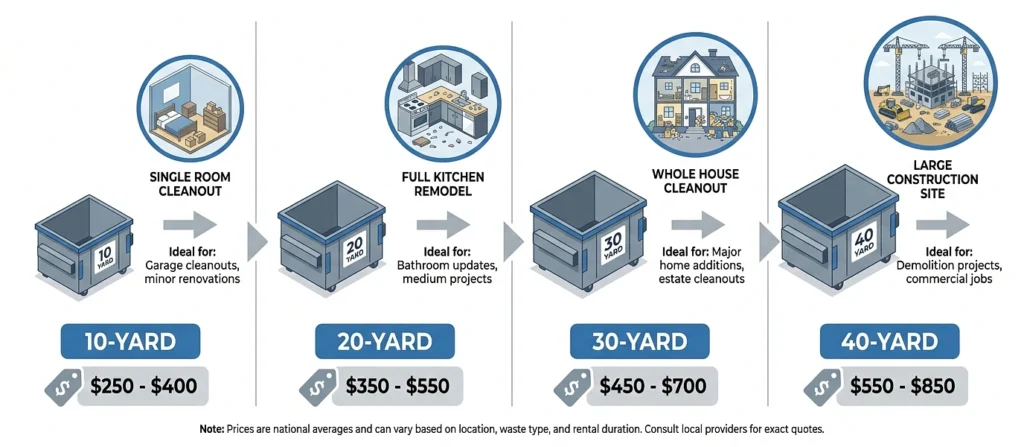
Here’s the 2026 national pricing picture, drawn from Angi’s cost data and corroborated across rental industry guides. The national average for a standard 7-day rental sits around $385, and by size it breaks out roughly like this:
- 10-yard, $250 to $400. About three pickup truck loads. Garage cleanout, single-room renovation, a landscaping weekend.
- 20-yard, $350 to $550. The most popular size, includes around 3 to 4 tons of disposal. Full kitchen or bath gut, flooring removal across a house, roofing on a modest home and living.
- 30-yard, $450 to $700. Whole-home cleanouts, additions, larger demo.
- 40-yard, $550 to $850. Major construction and commercial jobs, and honestly bigger than most homeowners ever need.
The classic residential mistake runs in one direction. People order a 20 because it “sounds safer,” then it leaves at 40 percent full, and one regional hauler’s blunt version of this is worth quoting in spirit: a standard kitchen renovation fits in a 15-yard, a whole-bathroom gut fits in a 15-yard, and the size-up instinct is pure nerves. The size-down mistake is rarer but uglier, because running out of room means paying a second delivery and haul, which usually costs more than the size jump would have.
Two cheap insurance moves. Describe the actual project to the rental company and let them size it, since they’ve seen a thousand kitchens and you’ve demoed one. And if you’re genuinely between sizes with light debris, take the bigger one, since the price step between sizes is small next to a second haul. Notice the qualifier though. Light debris. Which brings us to the trap.
The Weight Limit Is Where The Industry Makes Its Margin, And Heavy Debris Triggers It Fast
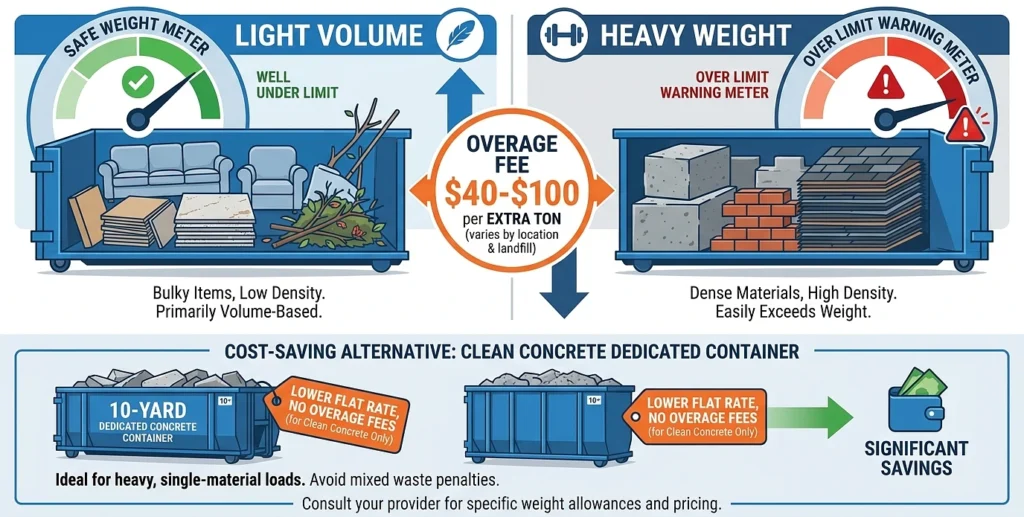
Every rental includes a weight allowance, typically 1 to 4 tons depending on size, and exceeding it costs $40 to $200 per extra ton depending on region and company, with $40 to $100 the common band. Landfills charge by the ton, usually $20 to $60, the hauler passes it through with a markup, and one Massachusetts operator says the quiet part plainly: the overage fee is where national outfits make their money, and they price the first week low knowing renovation debris weighs more than people think.
So the money question before any rental is not how much space your debris takes. It’s what your debris is made of.
Light materials, and volume is your only worry furniture, cabinets, drywall in normal quantities, yard brush, general cleanout junk. Heavy materials, and weight is the whole game: concrete, brick, dirt, tile, plaster, and above all roofing shingles, which are the most common homeowner ambush because a roof’s worth looks so compact. Shingle loads routinely land in the $400 to $700 range for a 20-yard precisely because they ride the cap.
For genuinely heavy jobs, ask about a dedicated heavy-debris container. Many companies run 10-yard “clean concrete” or dirt boxes with flat pricing, because a clean single-material load can go to a recycler instead of a landfill, and that routing is cheaper for everyone. Mixing a layer of concrete into a general 20-yard load is the worst of both worlds, you pay mixed-waste rates on the heaviest thing in the box.
And get the two numbers in writing before the truck comes: the included tonnage, and the per-ton overage rate. A company that hesitates on either has answered a different question.
The Permit Rule Is Simple: Your Driveway Needs Nothing, The Street Needs City Paperwork
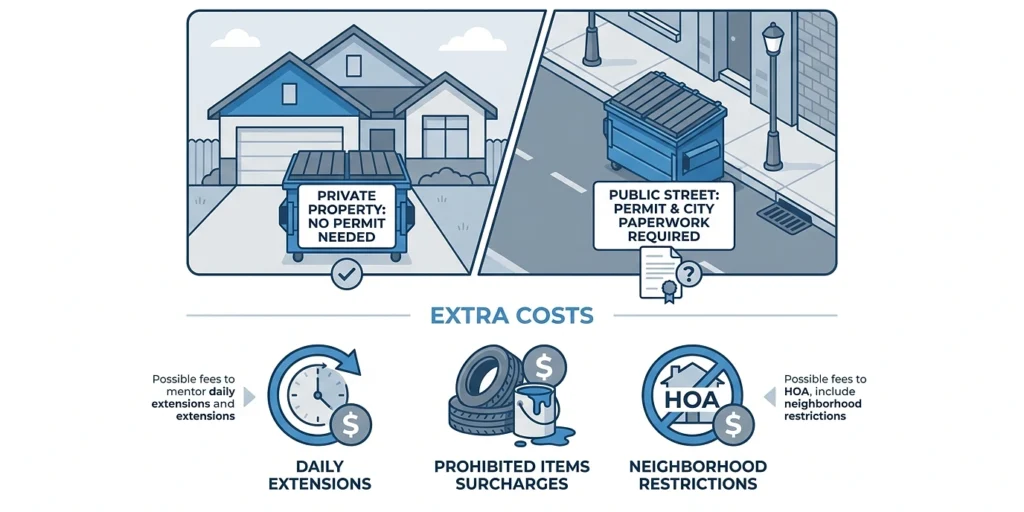
Where the dumpster sits determines whether the government gets involved.
On your own property, driveway or yard, no permit in the overwhelming majority of US cities. On a public street or right-of-way, most cities require a temporary placement permit, typically $25 to $100 and up, arranged through the city’s public works or permitting office, sometimes with rules about reflective markers, distance from hydrants and corners, and a maximum number of days. Rental companies know the local drill and many will pull the permit for you for a small fee, which is usually worth it the first time.
Three fine-print items catch people:
- A construction permit is not a dumpster permit. Having the renovation itself permitted doesn’t cover street placement of the container. Separate paperwork, separate fee.
- HOAs are their own jurisdiction. Plenty of associations restrict container placement or duration even on your own driveway, and an HOA fine arrives faster than a city one.
- The clock and the extras run quietly. Standard rentals run 7 to 14 days, extensions cost $5 to $25 a day, and prohibited items, tires, mattresses, paint, refrigerant appliances, carry per-item surcharges of $25 to $150. None of it is ruinous alone. All of it together is how a $385 rental becomes a $600 invoice.
The pattern across all three tips is the same one, and it’s mildly infuriating once you see it. The advertised price answers the question nobody’s project actually asks, what an empty box costs for a week. The real bill gets decided by the questions on the work order: what the debris weighs, where the box sits, how long it stays. Ask those three out loud before booking, get the answers in writing, and the dumpster becomes the one part of a renovation that costs exactly what it said it would.

