


A lawn mower is one of the most dangerous tools the average homeowner uses on a regular basis, and almost nobody treats it that way. The Consumer Product Safety Commission tracks somewhere around 80,000 ER visits a year in the US from lawn mower injuries. A meaningful share of those are finger amputations, foot injuries, and burns. The injuries cluster in predictable ways too. People reaching under the deck to clear a clog while the blade is still spinning. People slipping on wet grass while pulling a walk-behind mower across a slope. Kids backed over by ride-on mowers that didn’t have a working operator-presence cutoff. Most of the serious injuries aren’t unusual edge cases. They’re the same handful of failure modes happening to different people every weekend.
The safety advice you’ll find in most articles on this topic is fine but it’s also generic.
Wear closed-toe shoes. Don’t mow in shorts. Pick up sticks before you start. All true and all sitting in the same shape across every safety article ever written. What’s worth talking about, and what almost nobody does, is the part where the type of mower you own changes the risk profile of the activity completely. Walk-behind, ride-on, and robotic mowers are not the same product with different drivetrains. They have different injury patterns, different things that go wrong, and different things you need to pay attention to.
Walk-Behind Mowers: The Foot and Hand Problem
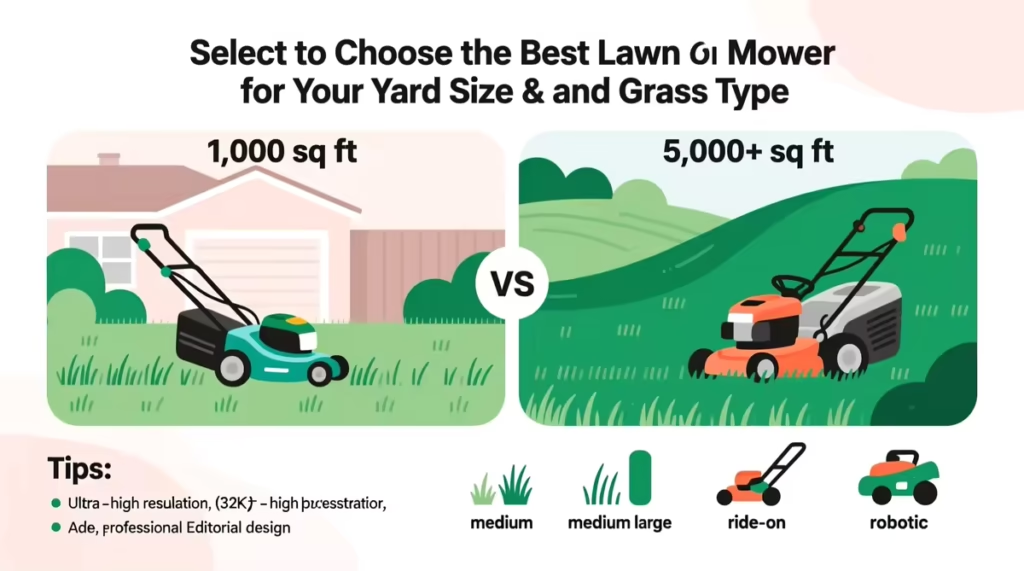
The walk-behind mower is the entry-level mower for most homeowners and it’s also the one responsible for the largest share of serious injuries by category. The reason is structural. The blade is spinning at roughly 3,000 RPM about an inch below your toes, and the only thing standing between your foot and that blade is the deck and your own attention.
The two most common ways people get hurt with a walk-behind:
Slipping on wet grass while mowing across a slope, where the mower keeps moving forward and the person’s foot slides under the deck. This is the injury that ends weekends. The cut from a mower blade at full speed through a sneaker is not a minor laceration. It’s usually a multi-toe amputation.
Reaching under the mower to clear a clog or grass buildup while the engine is running or while the blade is still spinning down. People do this constantly. The blade can spin for several seconds after the engine cuts. A reflexive grab into the discharge chute or under the deck is how a lot of finger injuries happen. The official advice (kill the engine, disconnect the spark plug or remove the battery, then clear the clog) is correct and routinely ignored because people are in a hurry and the grass jam is right there.
Walk-behind mowers also have the highest noise exposure of the three categories. Sustained use without hearing protection is associated with real long-term hearing loss. Most people skip the earplugs because the mow takes 45 minutes and it doesn’t feel worth it. Compounded over years it adds up.
Ride-On Mowers: The Rollover and Backup Problem
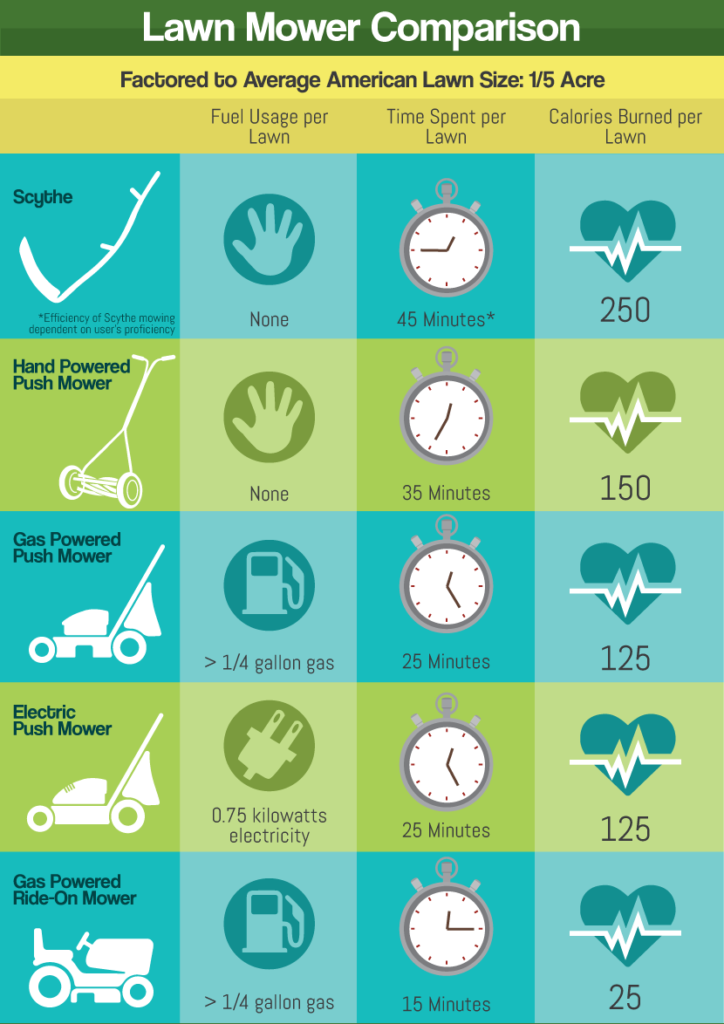
Ride-on mowers fix the foot-near-blade problem but they introduce two new categories of risk that are arguably worse.
Rollovers on slopes are the most serious. A ride-on mower with a high center of gravity that goes sideways across a steep slope can tip, and the operator usually ends up under the mower with a spinning blade still attached. This is the injury that kills people, not just wounds them. The safety guidance for ride-on mowers (go up and down slopes, never across) exists specifically because of this failure mode, and people still mow sideways because it feels more efficient.
Backing over children is the second category, and it’s particularly bad because most cases involve very young kids (under five) who wander into the path of a mower being reversed by a family member who didn’t realize they were there. Newer ride-on mowers have safety features that prevent the blade from operating in reverse without an explicit override, but older units don’t. If you own an older ride-on mower and there are small kids in the yard, this is the single most important thing to be aware of.
Robotic Mowers: A Different Risk Profile Entirely
Robotic mowers shift the safety equation in a way that’s easy to undersell. The person is no longer in the loop during cutting. That removes the entire category of “foot under deck” and “hand into clog” and “rollover under operator” injuries, because there’s no operator. The mower runs while you’re inside the house drinking coffee.
What replaces those risks is a smaller set of concerns. Children or pets walking onto the lawn while the mower is operating. Boundary errors where the mower leaves its mapped area. Damage to objects (garden hoses, toys, garden beds) that the mower doesn’t recognize. The better robotic mowers handle most of these well now. Sunseeker and other modern brands have moved beyond the simple boundary-wire models of a few years ago to systems that use LiDAR and vision-based obstacle detection. The robotic mowers in this category can identify and avoid obstacles dynamically, stop if they detect a person or animal in their path, and operate within defined zones without relying entirely on a buried perimeter wire.
This doesn’t mean robotic mowers are zero-risk. The blades still spin and still cut. Kids should not be playing around an active robotic mower any more than they should be playing around a ride-on. Pets should be inside during operation, especially on the first few runs before you’ve confirmed how the mower responds to a moving animal. The mower should be supervised during its initial mapping runs and any time you’ve changed something about the yard layout.
But the injury frequency and severity numbers for robotic mowers are dramatically lower than for the other two categories, and that’s the underrated piece of the safety conversation. Removing the human from the cutting deck is the single biggest safety variable available.
What Actually Reduces Risk

If you’re trying to think clearly about lawn mower safety, the question to start with isn’t “which safety habits should I adopt.” It’s “what type of mower am I using, and what does that mean for the risks I’m exposing myself to.”
For walk-behind mowers, the discipline that matters most is the hard rule about clearing clogs only after killing the engine and disconnecting power. Most serious hand injuries trace back to violations of this single rule.
For ride-on mowers, the two non-negotiables are mowing slopes in the right direction (up and down for ride-ons, the opposite of walk-behinds) and never operating in reverse without confirming what’s behind you.
For robotic mowers, the discipline is around scheduling. Don’t run the mower when kids or pets might be on the lawn unsupervised, and check the operating area periodically the way you’d check a dishwasher cycle.
The right kind of attention beats the generic kind every time. Most safety articles don’t help with that because they treat all mowers as interchangeable. They aren’t.

