


The towels stay dry for days. Hair gets washed in the kitchen sink, or not at all, and the same cardigan shows up three visits running. Families tend to put it down to stubbornness or a bad week. Often it’s something more specific: bathing has become hard, and for most older people it’s the first daily task to go.
That matters for more than hygiene. Get help into the bathroom early, and the rest of the day, the walk to the shops, lunch with friends, cooking dinner, tends to stay independent for longer. Leave it, and the research suggests other tasks start slipping not long after.
Bathing Is Usually The First Daily Task Older Adults Lose
Out of the six basic activities of daily living (bathing, dressing, eating, toileting, walking and getting in and out of a bed or chair), bathing is the one that breaks down first for most people. In The 90+ Study, which followed people aged 90 and over, bathing disability had the highest yearly incidence of any daily activity, at 14.9%, more than double the rate for walking.
It’s not hard to see why. A shower looks like one task, but it’s a dozen small ones strung together: stepping over the tub edge, standing on a wet floor, bending to wash the feet, reaching the back, turning the taps, getting out, drying off, dressing while still damp. Each one asks for balance, grip and a bit of planning, and a decline in any single one stops the whole thing.
The bigger worry is what follows. Geriatrician Thomas Gill’s team at Yale tracked people over 70 with monthly check-ins for years, and those who developed a bathing disability were five times more likely to lose another daily activity the very next month. In the same group, persistent bathing disability showed up in 52% of people who later moved into a nursing home long term, against 33% of those who didn’t.
The Early Signs Are Small Changes Families Tend To Miss
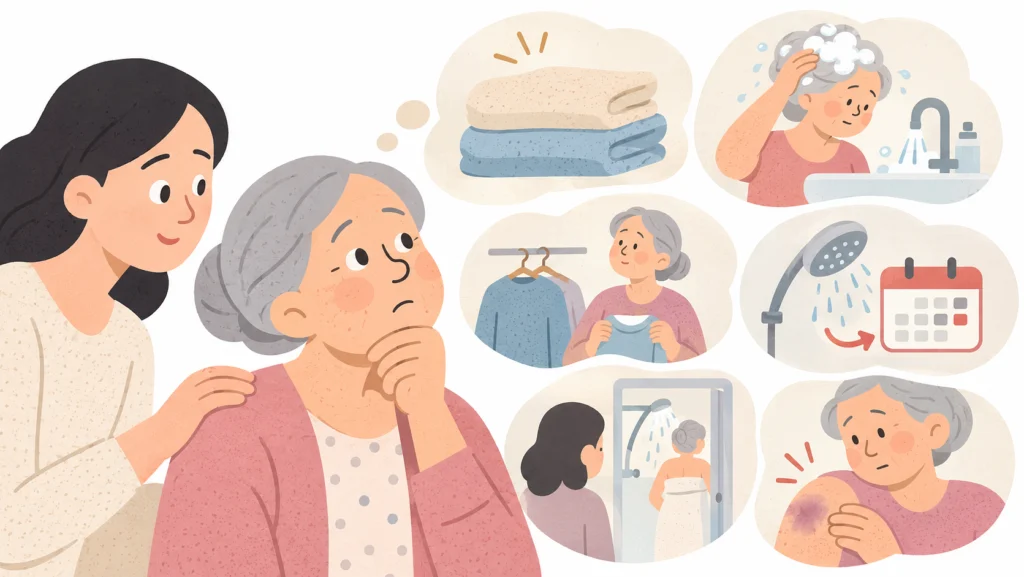
Older people rarely announce it. A study from Gill’s group on the perspectives of older persons on bathing found that many quietly change how they bathe well before they’d score as disabled on a standard assessment, so the usual checklists can miss the best window for help. What families tend to notice instead:
- bath towels that are always dry and folded.
- hair washed at the sink, or a sudden switch to dry shampoo.
- the same clothes worn over several days.
- a daily shower turning into a weekly bath, or a wash at the basin.
- showering only when someone else is in the house.
- a new bruise on a hip or arm with a vague story attached.
None of these proves anything on its own. Two or three together usually mean the shower has started to feel risky.
The Shower Is Where Bathroom Injuries Climb With Age
The fear has a basis. The CDC’s study of nonfatal bathroom injuries estimated 234,094 bathroom injuries treated in US emergency departments in a single year, and 81% of them were falls. Injuries in or around the tub or shower rose from 49.7 per 100,000 people aged 15 to 24 to 200.2 per 100,000 among people 85 and over.
The direction of travel is the detail to notice. Getting out of the tub or shower was a common trigger, while only 2.2% of injuries happened while getting in. Out is the dangerous part: wet feet, a raised edge and a hand reaching for the towel rail instead of a grab bar. That’s exactly the moment a carer standing just outside the curtain is there for.
Support At Shower Time Keeps The Rest Of The Day Independent
This is where at-home support does its most useful work, and it’s a smaller ask than most families expect. Plenty of older people don’t need someone around all day. They need someone for forty-five minutes, two or three mornings a week, at the one task that’s become unsafe.
A typical visit goes something like this. The carer checks the water temperature, sets up the shower chair and hand-held shower, and stays close while the person washes whatever they can reach on their own. Feet, back and hair get help. Then comes the careful bit, getting out and dried, followed by dressing, with the person picking the clothes. The aim is help with the hard parts, not taking over, because doing the parts they still can is what keeps those parts working.
The payoff shows up outside the bathroom. Someone who knows Tuesday and Friday mornings are covered stops avoiding the shower, stops skipping the bowls club because their hair isn’t done, and stops quietly turning down lunch invitations. In the UK study on bathing adaptations, older adults who had an accessible shower fitted described a new sense of freedom and less fear of falling, and a later follow-up found those gains still there up to 28 months on.
Dignity is what people worry about most, and fair enough. It helps to ask for the same carer at the same time each week, a towel kept over the lap on the shower chair, and the older person, not the carer, deciding the order of things. Small requests. Any decent provider will agree to them.
Simple Bathroom Changes Make Each Visit Safer
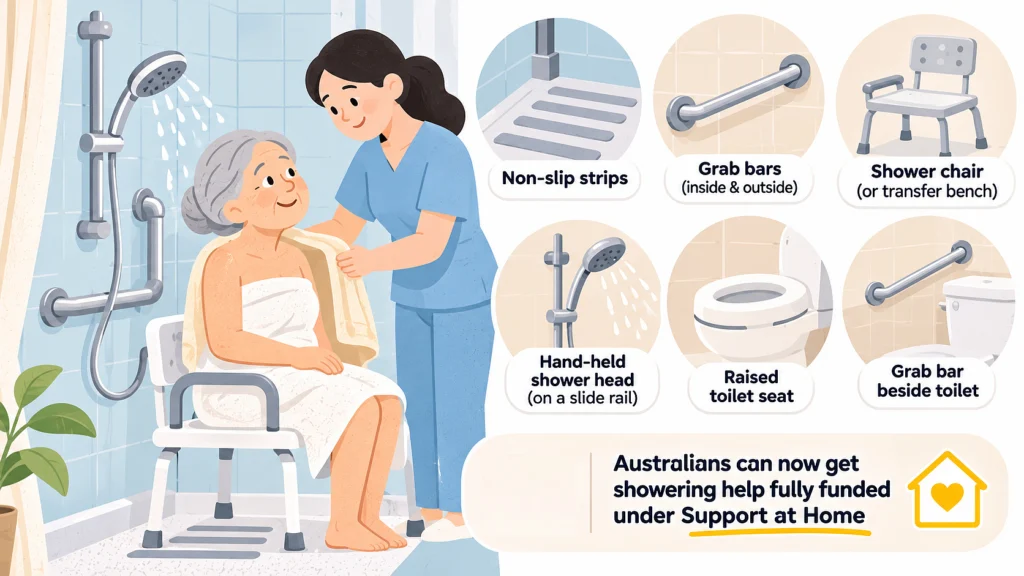
The CDC points to non-slip strips in the tub or shower and grab bars inside and outside it, plus another grab bar beside the toilet. Most occupational therapists add a couple more:
- a shower chair or tub transfer bench.
- a hand-held shower head on a slide rail.
- a raised toilet seat where getting up is a struggle.
An occupational therapist can visit and say which of these fit the room. Folding a quick bathroom check into regular preventative home maintenance tips catches loose rails and worn mats before they cause trouble.
Australians Can Now Get Showering Help Fully Funded Under Support At Home
For families in Australia, the funding side changed recently. The Support at Home program replaced Home Care Packages in November 2025, and from 1 October 2026, personal care such as showering, dressing and continence support is fully government funded for anyone approved for that service in their support plan. Put simply, help with the shower no longer carries an out-of-pocket contribution.
Getting it starts with My Aged Care, by phone on 1800 200 422 or through the online eligibility check, then an assessment, then choosing a provider. Families arranging home care in Brisbane can ask providers up front whether they can offer the same morning carer for showering each week, since that one detail matters more than most of what’s in the brochure. The older Commonwealth Home Support Programme still runs separately and isn’t due to fold into Support at Home before July 2027.
Adult Children Shouldn’t Be The Default Bathing Help
Families often fill the gap themselves, and with bathing that tends to go badly. Helping a parent shower flips a lifelong relationship, embarrasses both sides and puts an untrained person in the riskiest spot in the house. It also stacks on top of everything else a family carer already does, and the strain of that load shows up clearly in research on caregiver burnout among people juggling a job and an aging parent.
A paid carer for showering frees a daughter or son to just be family again. It also puts a trained pair of eyes on skin, feet and balance every week, the kind of small, regular check that preventive care depends on.
Most families wait for the fall before calling anyone. The dry towels showed up months earlier, and that was the better time to act.

