


Start with the part nobody selling you a “pore-minimizing” anything wants to say out loud. You cannot shrink a pore. Not with a toner, not with cold water, not with a charcoal strip that rips out the top of a blackhead and leaves the rest sitting there. Pores don’t have muscles. They can’t clench shut and they can’t be trained smaller, and roughly fifty to seventy percent of the pore size you’ve got was decided by your genes before you ever bought a single product.
So if the goal in your head is “make my pores disappear,” that goal is going to keep costing you money and disappointing you. But there’s a better goal, and it’s genuinely reachable. You can make pores look considerably smaller by changing the three things that make them look bigger in the first place: how much oil is sitting in them, how much dead skin is clogging them, and how much collagen is holding the skin around them taut. That’s the whole game, and here’s how to actually play it, roughly in order of what gives you the most for your effort.
First, Understand Why A Pore Looks Big, Because That Points Straight At The Fix
A pore looks large for a few specific reasons, and once you know them the solutions stop being random.
Oil is the main one. The sebaceous gland at the bottom of the pore pumps out sebum, and when a lot of it pools in the opening, it stretches the pore wider. That’s why oily skin reads as more pored, the pores are doing more work and getting stretched more. Then there’s clogging, where oil mixes with dead skin cells and the compacted plug physically props the pore open, which is also why a blackhead makes a pore look huge, it’s literally wedged open. And the slow one, the one people miss, is collagen. The skin around each pore is held firm by collagen and elastin, and as that support breaks down, from aging and especially from sun, the pore loses its scaffolding and sags wider.
Notice that all three of those are things you can influence. None of them is the pore’s actual diameter, which you can’t. That distinction is the entire reason this article isn’t hopeless.
Sunscreen Is The Pore Treatment Nobody Markets As One
This is the one that feels least related and matters most over time, so it goes near the top.
Sun damage is a direct cause of pores looking worse, because UV breaks down exactly the collagen and elastin that keep the skin around a pore tight. Lose that support and pores slacken and spread. There’s a well-known randomized trial out of Australia showing daily sunscreen use measurably slowed skin aging over four and a half years compared to occasional use, and preserved skin structure is preserved pore support. So the unglamorous truth is that the SPF you’re wearing for wrinkles and skin cancer is also quietly the best long-term thing you’re doing for your pores, and it never gets sold that way because “prevents future sag” is a harder pitch than “tightens now.”
Retinoids Are The Single Most Proven Thing You Can Put On
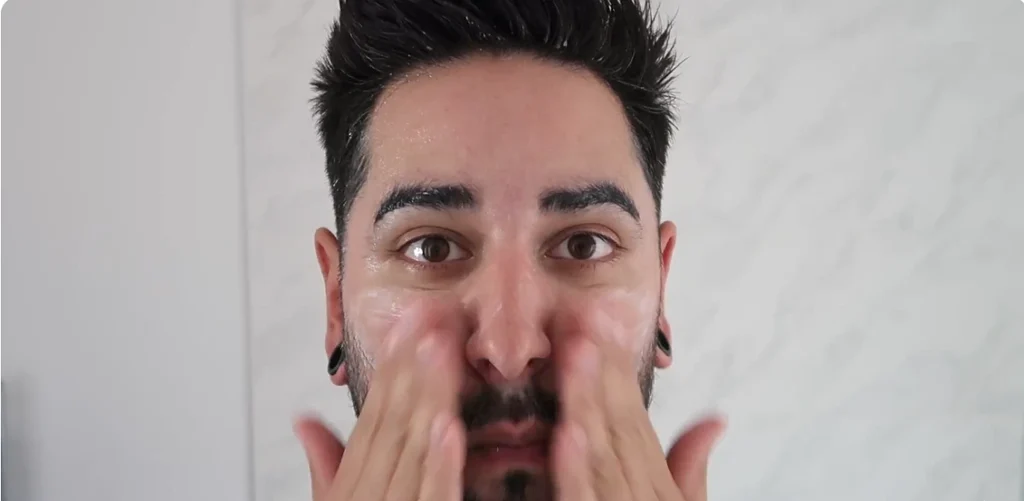
If you want one active with the most research behind it for pore appearance, it’s retinoids, the vitamin A family, retinol on the shelf and tretinoin or tazarotene on prescription.
They work two ways at once, which is why they’re the heavy hitter. They speed up cell turnover, which clears the congestion out of the pore canal so it isn’t propped open, and they stimulate new collagen in the surrounding skin, which firms up that slackened scaffolding. And the numbers here are real, not vibes. In an 84-day study, 0.2% retinol reduced pore dilation by around thirty percent and prescription tretinoin by closer to thirty-eight percent, with the over-the-counter retinol causing notably less irritation, which honestly makes it the more practical pick for most people who aren’t going to tolerate the strong stuff daily. A separate 24-week trial in 568 patients found tazarotene significantly reduced apparent pore size alongside improving fine lines.
The catch, and it’s a real one, is time. This is a months thing, not a weekends thing. Six months of consistent use does more than any single fortnight ever will, and people quit at week three because nothing dramatic happened, which is the whole reason they stay stuck.
Niacinamide Handles The Oil Side
If retinoids attack the collagen and congestion angle, niacinamide, which is vitamin B3, comes at pores from the oil-production side, and the two pair well because they don’t fight each other.
It helps regulate how much sebum your skin pumps out, and less oil pooling means less stretched-open pore, plus it firms the skin barrier a little. A detailed review of niacinamide’s skin effects lays out how it supports the extracellular matrix and barrier, and the general clinical picture lands on a two to five percent concentration reducing sebum and visible pore size over roughly eight to twelve weeks. It’s also gentle, which matters, because you can run it alongside a retinoid without your face falling apart, and it’s usually cheap. Good value, low drama, works slowly. That’s the honest summary.
Salicylic Acid Gets Inside The Pore In A Way Other Acids Can’t
For unclogging specifically, salicylic acid has a property that makes it the right tool: it’s oil-soluble.
Most exfoliating acids, the glycolic and lactic ones, work on the surface, and they’re genuinely useful for smoothing the texture that catches light and makes pores more obvious. But salicylic acid, because it dissolves in oil, actually penetrates down into the greasy environment of the follicle and loosens the plug of dead cells and sebum that’s physically stretching the pore open from the inside. That’s why it’s the go-to for oily and blackhead-prone skin. Two or three uses a week is plenty for most people, and going harder mostly just irritates skin, which makes pores look worse, not better.
The Mistakes That Actively Make It Worse
A few habits undo all of the above, and they’re common because they feel productive.
Scrubbing hard is the big one. Aggressive physical scrubs and over-exfoliating irritate and inflame the skin, and inflamed skin makes pores more prominent, not less, so the thing that feels like deep cleaning is often backfiring. Stripping your skin bone-dry is another, because when you remove all the oil, oily skin frequently responds by producing even more. And then there’s the magnifying mirror, which deserves its own callout: examining your pores two inches from a ten-times mirror gives you a wildly distorted picture of what any other human actually sees. Nobody is looking at your face from that distance. Zoom out, literally.
What all of this adds up to is less exciting than a product launch and more effective than one. You can’t change the pore you were born with, but oil, congestion, and collagen are all on the table, and the boring combination of daily sunscreen, a retinoid you actually stick with, niacinamide, the occasional salicylic acid, and a gentle hand does more than any single miracle bottle claiming to erase what genetics gave you. The pores stay. They just stop being the thing you notice first.

