


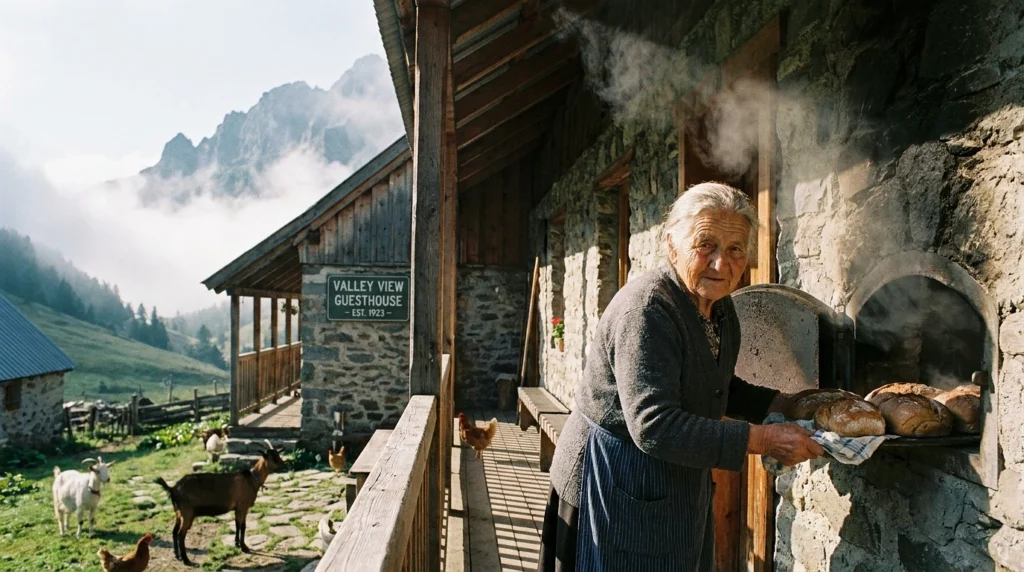
There’s a guesthouse account I’ve followed for about a year, a family place in a mountain valley that no tourism campaign has ever mentioned, and watching it is like watching a small revolution in real time. A year ago it posted blurry photos of breakfast, twice a month, to an audience of relatives. Now it posts a polished thirty-second clip most days: mist rolling off the ridge, the grandmother making bread, a guest’s face at the viewpoint, captioned in three languages. Bookings, per the owner’s delighted updates, have followed. Nothing about the valley changed. What changed is that one person with a phone got access to the kind of editing that used to require an agency, and the tool doing that editing is an AI clip generator.
That’s the good half of this story, and it’s genuinely good. There’s also a dark twin, one this article would be dishonest to skip, involving an elderly couple, a three-hour drive, and a cable car that never existed. Both halves are true at once, both run on the same technology, and the line between them turns out to be one simple rule. Let’s take them in order.
The Gap Tourism Boards Leave, By Design
First, the vacuum these tools are filling, because it’s structural, not accidental. Tourism marketing budgets concentrate ferociously on flagships. A national board funds the capital, the famous coast, the one UNESCO site, because those deliver measurable arrival numbers, and everything else, the second valley, the fishing town without a landmark, the region whose name tourists can’t pronounce, gets a page on a website nobody visits. It’s not malice, it’s arithmetic: boards answer for visitor statistics, and flagships move statistics.
Which leaves the long tail of genuinely wonderful places marketed by exactly no one except the people who live there, people who run guesthouses and lead hikes and cook, and who have neither the budget nor the hours to also become video production houses. Until roughly now, that was the end of the story. The places without marketing money stayed invisible, not because they lacked appeal but because appeal without distribution doesn’t exist online.
What Clip Generators Actually Changed
The tools at the center of this shift are unglamorous by AI standards. A clip generator takes long raw footage, an hour of walking a trail, a whole cooking demonstration, a rambling phone video of market day, and does the work an editor used to charge for: finds the strong moments, cuts them into platform-length shorts, adds captions, reframes for vertical, and increasingly translates those captions into the languages of the travelers you’d want to reach. One filmed afternoon becomes two weeks of daily posts.
Understand what that collapses. The old cost of destination video wasn’t really the camera, phones solved that years ago. It was the editing hours and the posting cadence, because platform algorithms feed accounts that publish constantly, and constancy was precisely what a person running a twelve-room guesthouse could never sustain. The clip tools turn cadence from a staffing problem into a subscription, and the effect lands hardest exactly where the tourism boards aren’t: a small operator in an ignored region can now look, in a feed, indistinguishable from a funded campaign. Add the translation layer, and a valley in the Balkans or a village in the Andes is suddenly pitching itself, fluently, to viewers in four countries at once.
And the platform economics quietly favor the offbeat. Feeds reward novelty, and the four-thousandth video of a famous landmark competes with the other three thousand nine hundred ninety-nine, while the first good clip of an photograph waterfall competes with nothing. Small operators sit on a supply of exactly what the algorithm is starving for. The pattern of obscure destinations exploding through short video, entire national tourism booms have been credibly traced to it, was already established before AI tools arrived; what the clip generators did is hand the means of production to the people the booms used to happen to, rather than around.
The Dark Twin: When the Destination Itself Is Generated
Now the half that keeps this article honest, because the same year these tools empowered real places, they also started inventing fake ones.
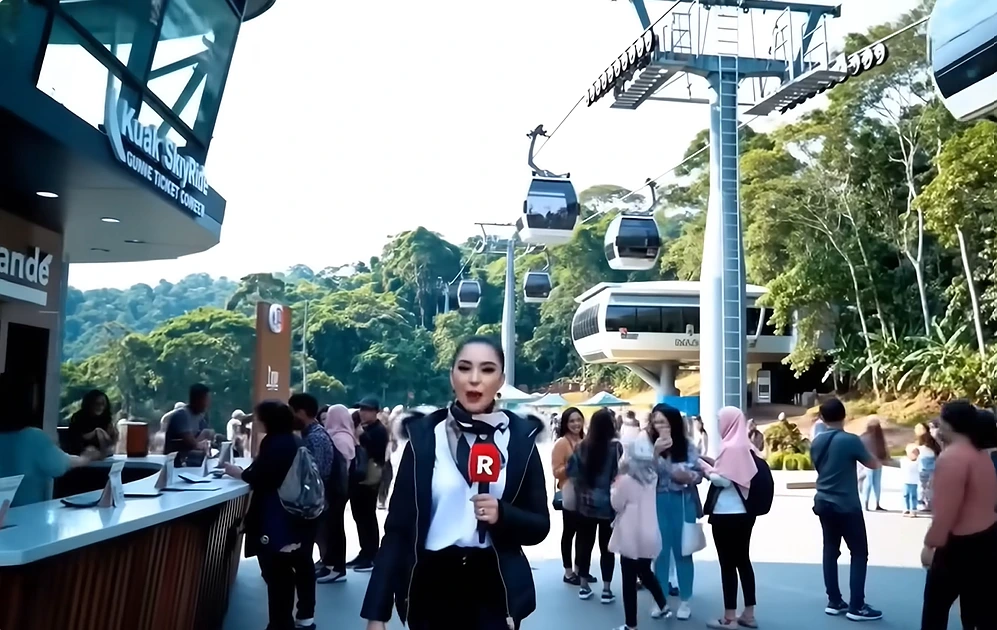
In mid-2025, an elderly Malaysian couple drove more than 300 kilometers from Kuala Lumpur to ride a scenic cable car called the Kuak Skyride, which they’d seen in what looked like a legitimate TV news segment: a polished reporter, interviews with happy tourists, ticket queues, mountain views. At their hotel, a staff member had to explain that no cable car existed, and neither did the reporter; the entire segment, channel and all, had been generated with AI video tools. The wife’s response, relayed by the hotel worker, was the question that should be printed above every editing suite: “Why do they do this to people?”
And it wasn’t a one-off. The reporting since has documented a small illusion economy of destinations that don’t exist: travelers hunting a pink lotus lake with a Bangkok skyline that was digitally stitched from two real places hundreds of kilometers apart, a Tasmanian tour company admitting its blog had promoted AI-invented hot springs after outsourcing its content, tourists in Peru searching for a “Sacred Canyon” no map contains. The pattern is identical every time: the fabricated place is always gorgeous, always uncrowded, always slightly cheaper-feeling than the famous alternative, because the fake destination is engineered to look exactly like the authentic offbeat find that travel have been trained to hunt for. The illusion economy is parasitic on the real one this article celebrates, and that’s precisely what makes it dangerous.
The Line That Matters: AI as the Editor, Not the Camera
So here’s the rule that separates the guesthouse from the ghost cable car, and it’s clean enough to hold onto. In every success story, the AI is the editor: the footage is real, the valley is real, the grandmother’s bread is real, and the tools are doing what assistants and agencies used to do, cutting, captioning, translating, distributing. In every scandal, the AI is the camera the place itself came out of the model. Real footage assembled by AI promotes a destination. Generated footage invents one, and no amount of polish converts the second into the first.
For small operators and creators, that translates into a durable competitive strategy, not just an ethical one shoot everything yourself, let the tools handle the assembly, and lean into the specifics no model can generate, your actual staff, your actual weather, this morning’s actual light, because as generated content floods the feed, verifiable reality is becoming the scarce asset. Disclose any AI-enhanced elements plainly audiences are learning to punish the discovered fake far harder than they ever rewarded the gloss. And for travelers, the counterpart habits are quick: before building a trip around a clip of somewhere you’ve never heard of, check that the place exists on an actual map, look for recent posts by ordinary visitors rather than one polished account, and treat any attraction that appears only in beautiful videos and nowhere in boring official information as unconfirmed. The Kuak Skyride had spectacular footage and zero boring paperwork. Boring paperwork, it turns out, is what real places have.
The valley guesthouse posted again this morning, incidentally: frost on the ridge, steam off the bread, forty seconds, three languages. Every frame of it exists. That’s the whole revolution, and the whole rule, in one clip.

