


Online homeschooling California options have gained traction among families seeking flexible and personalized learning alternatives to traditional schools. In California, about 4.9% of K–12 students were homeschooled in 2022–23, reflecting growing interest in non-traditional options. Advances in education technology and shifts in family needs, accelerated by the pandemic, have made virtual learning more viable than ever. Today, accredited programs and charter schools offer structured online curricula with certified teachers and support. California law recognizes homeschooling as a form of private education, permitting enrollment in charter and independent-study programs.
Parents can design schedules and select materials tailored to each child’s needs. Below are the key reasons this approach is a compelling alternative in California.
TL;DR:
- Flexible learning schedules and locations.
- Personalized, self-paced instruction.
- Rich online resources and 24/7 access to coursework.
- Safe, supportive home learning environment.
- Active community networks and extracurricular opportunities.
Flexible Learning Schedules
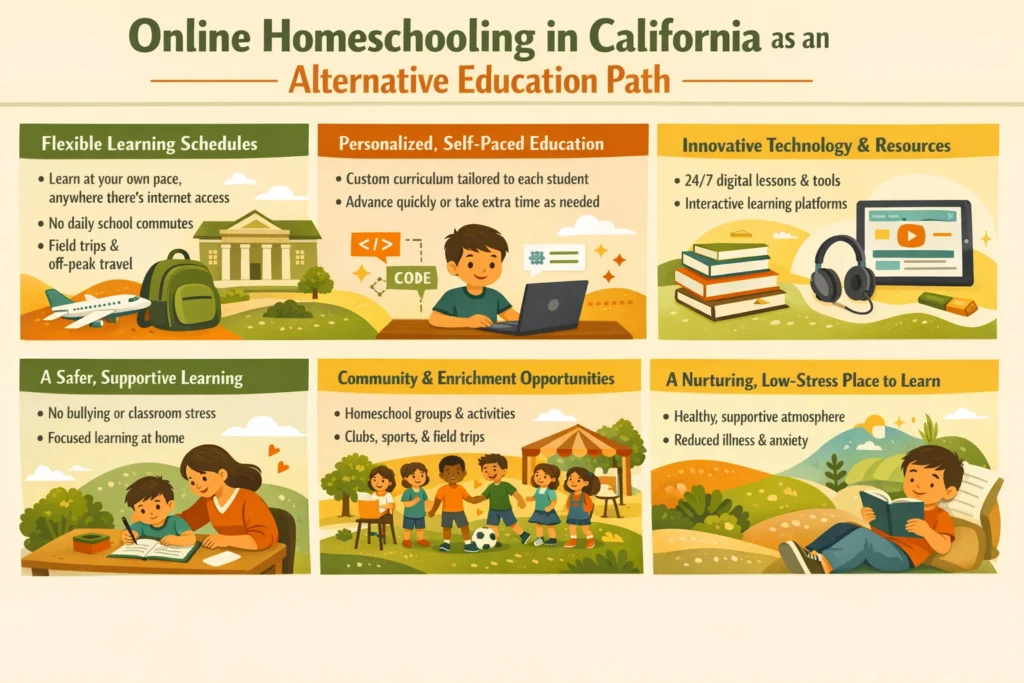
Online homeschooling offers exceptional schedule flexibility, letting students learn on their own timelines. Unlike a rigid school day, pupils can “determine how much time is necessary to spend” on lessons and work at their own pace. With distance learning, education can occur “wherever there’s an internet connection” — at home or in a library. Many families note that this model “eliminates the need to travel back and forth to school”, freeing up time for other pursuits. For example, some families take field trips or museum days during the week without falling behind. Others use off-peak vacations to combine travel with learning, saving money on travel costs.
This flexibility can reduce stress and improve family balance. California law requires only teaching broad subjects; no fixed hours or state tests are mandated, making flexible schedules easy to implement.
Personalized, Self-Paced Education
Personalized instruction is at the heart of online homeschooling. California law mandates teaching certain subjects, but parents select all curriculum and methods, so lessons suit each child’s interests. Advanced students accelerate, while others take extra time where needed. One source notes this model works well for those “not succeeding in traditional schools”. Many parents praise putting curriculum “back into the hands of parents”, allowing each student’s program to align with their passions and pace.
For example, a student passionate about coding might follow an intensive computer science track, while another focuses on literature. Such customization keeps students engaged, making education truly individualized.
Innovative Technology and Resources
Modern online curricula leverage technology to enrich learning. Students have “instant access to learning and other resources at any time”, including recorded lessons, interactive simulations, and digital libraries available 24/7.
These platforms adapt to different learning styles — for example, an auditory learner can use podcasts or audio lessons, while a visual learner benefits from videos and graphics.
If a student doesn’t understand a topic, they can replay lessons or use supplementary tutoring tools until they master it. Engaging apps and gamified quizzes keep lessons interactive. Parents and teachers can monitor progress through online dashboards and provide timely help. This technology-driven approach ensures education is more engaging and accessible than a conventional classroom often is.
A Safer, Supportive Learning Environment
One of homeschooling’s biggest advantages is a safer, more supportive setting. Many parents turn to virtual schooling to “remove their children from negative social environments. including bullying”. At home, students receive more one-on-one attention. Learning “in the home environment. allows them to be more focused on their courses and provides fewer distractions” than a crowded classroom. This focus can reduce stress and boost confidence, especially for children who feel anxious in large groups. Parents note that homeschooled students often avoid many common illnesses and stressful rush-hour commutes. For example, a shy student may answer questions at home without embarrassment, building confidence. Overall, the home classroom can be a more nurturing, low-stress place to learn.
Community and Enrichment Opportunities
- Contrary to a common myth, homeschooling does not mean social isolation. Many online programs provide built-in communities.
- For example, numerous virtual schools host parent-led support groups and online forums, and families often join local co-ops or homeschool meet-ups.
- In California, these networks run sports teams, science clubs, art classes, and volunteer projects designed for homeschoolers.
- Flexible schedules actually make participation easier: teens might intern at a museum or take weekend college courses, while younger children attend art or music classes during the day.
- State organizations also hold conventions and fairs for homeschoolers.
- Through these activities, students gain social interaction and leadership skills similar to those in traditional schools.
Comparison of Online Homeschooling vs. Traditional Public Schooling
| Aspect | Online Homeschooling | Traditional Public School |
| Schedule | Fully flexible, self-paced learning | Fixed daily schedule (e.g. 8:00 AM–3:00 PM) |
| Curriculum | Customizable by family or online program | State-mandated curriculum |
| Learning Environment | Home/online with parent or teacher guidance; fewer distractions | In-person classroom with many students; more distractions |
| Social Opportunities | Virtual classes plus local co-ops and clubs | Daily in-person peer interactions and school events |
| Parental Involvement | Parents often serve as learning coaches or facilitators | Mostly limited to homework help and volunteering |
Embracing the Alternative Path
California’s online homeschooling model combines flexibility, personalization, and modern technology to meet diverse student needs. It operates within the state’s homeschooling framework and through accredited online programs to deliver a full curriculum outside traditional classrooms. Families report reduced stress and higher engagement as children learn at their own pace. Students can earn fully recognized diplomas via charter schools or transfer credit from accredited courses. Research indicates many online homeschoolers perform as well as or better than their peers, thanks to individualized support. Ultimately, this alternative path provides a state-approved way to educate on flexible terms. For parents seeking an effective substitute for conventional schools, online homeschooling in California is a persuasive and practical choice.

