


Ask a burglar what stops him and he’ll tell you about dogs. Ask him what he looks at, which is a different question, and the camera comes up. Two sets of convicted burglars have been asked both, 422 of them by criminologists at UNC Charlotte in 2012 and 86 by a Portland TV station that mailed a questionnaire into an Oregon prison, and the answers only make sense once you notice they’re answering the second question when people think they’re asking the first. Nobody said a camera scared them. Half of them said they looked for one.
In the UNC Charlotte survey, 50.3% of 422 burglars said outdoor cameras and surveillance equipment figured in whether they’d attempt a house. Alarms, 53.3%. A security sign on its own, 24.7. Outdoor lighting, 15.8. They decide from the street, so a camera that can’t be seen from the street isn’t in the decision.
The Decision Is Made In The Forty Feet From The Sidewalk To The Door
All 86 of the Oregon inmates said they knocked first. If someone answers, they ask for a name that doesn’t live there. If no one answers, the house is empty and they’ve touched nothing. That’s the whole approach, and everything that counts as a deterrent has to be visible somewhere along it, from the road, the driveway or the porch. A camera under the back eave is evidence. Useful later. Not a deterrent.
The UNC Charlotte team, led by Joseph Kuhns, asked their 422 respondents in three states how they chose, and the full report ranks what they were looking at: people nearby, traffic, a way out, and then signs of security, alarm, dog, camera. The security measures come after the escape route. That ordering is worth more than any single percentage in the report.
What Each Thing On The House Did To Them
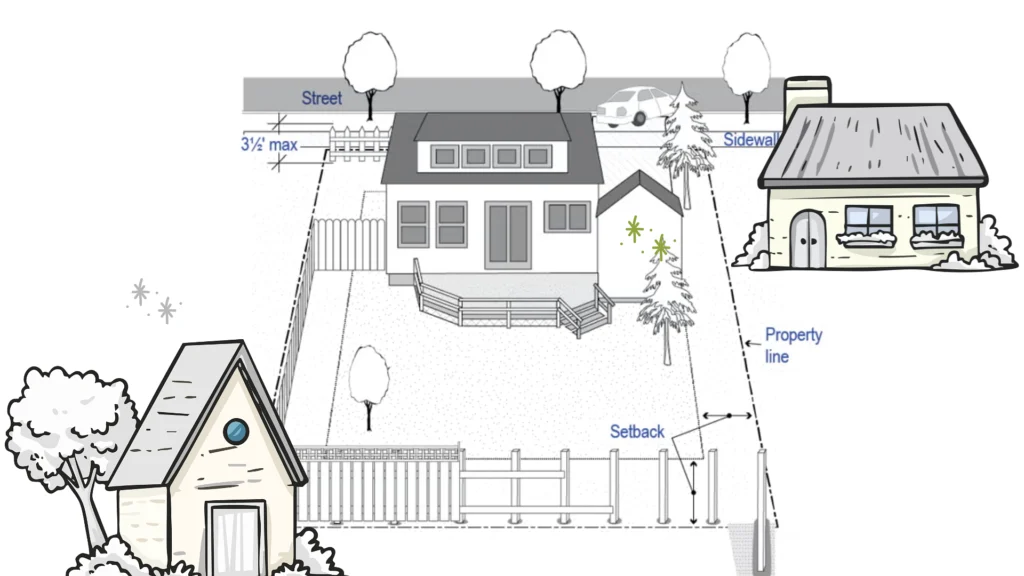
Take the house the way the Oregon letters describe walking up to it, one feature at a time.
The hedge. Tall fences, big shrubs and trees were what they wanted, because cover means time. A house they couldn’t see into from the road was a house the neighbors couldn’t see into either.
The lights. 15.8% in the Charlotte survey. One Oregon inmate said his favorite target was a porch light on with every blind drawn, since that’s a house pretending. Lights on their own did close to nothing.
The sign. One in four. Split opinions in Oregon: some ignored them, some said they knew how to work around the system the sign advertised.
The camera. Half. Most of the Oregon group called a visible one a reason to go elsewhere. A few said the reverse, that a camera told them there was something inside worth the risk, which is the one answer in both surveys that argues against the headline, and it belongs here.
The car. Nearly all of them would walk past a car in the driveway. A radio or television they could hear through the door: most would leave. “A sure-fire sign of someone being home,” one wrote.
The dog. Big and loud, and most of them were gone. “Dogs are a deal breaker for me.” Small dogs, nothing.
The alarm. 83% would try to find out if there was one before going in. 60% would pick another house if there was. Of those who found one only once inside, half stopped, 31% sometimes, 13% kept going regardless.
One in eight burglars keeps going whatever he finds. For the other seven, a camera in plain view, a car in the drive, sound inside and a dog at the door are four separate reasons to try the next street, and the Oregon letters say most of them take the first reason offered.
Where The Camera Goes If The Point Is To Be Seen
Most people buy a camera to record and then hope it deters. The burglars are describing the other order. So the first camera goes on the front face of the house, head height or a little above, pointed down the approach, with nothing in front of it: not the hanging basket, not the porch light fixture, not the shadow of a deep eave. The hedge comes down to window height for the same reason, since that also removes the cover the Oregon group said they were shopping for.
The doorbell camera is visible and covers the knock. It covers the knock. The entry, in both surveys, usually happened at a side or back door that was unlocked or could be forced quietly, which the doorbell can’t see, so a second camera on the side gate or rear door is the one that records the actual break-in. Some of the Oregon men kicked doors rather than break windows. “Loud bangs are better than loud glass breaking.” In the Charlotte sample about one in eight picked a lock or had a key. The rest didn’t have to.
Keeping A Visible Camera Out Of Reach
A camera that can be seen can be reached, so the trade mounts the exposed ones higher than the head-height rule above and lets the housing do the rest. Firms that fit CCTV security systems in Brisbane and other cities put the side and rear cameras around nine or ten feet up in a vandal-rated dome or a metal housing, angle them to catch faces at the gate instead of hair, run the cable inside conduit or the wall rather than along the siding, and give them infrared or a light, because a camera that goes blind at dusk is a daytime deterrent and nothing else. The recorder goes somewhere a stranger won’t find it in the first two minutes. Otherwise the footage leaves with the laptop.
What The Camera Does The Morning After
If the walk-up doesn’t end at the sidewalk, the camera has a second job, a face for the police and a timeline for the insurer, and that only works if someone has been looking after the thing. Lens wiped. Night view checked. Recorder still writing. Those three go on the same monthly walk around the house as the gutters and the loose step, the one in the list of home maintenance jobs that save money when done early, and the walk is also when the hedge gets cut and the dead porch bulb gets swapped.
The same walk, done before the weather turns, is most of what people are doing when they’re getting a house ready for storm season. And anyone still deciding where to live can ask a street the burglars’ questions before signing: can the front door be seen from the road, are there cars in the driveways at two in the afternoon, would a neighbor notice a stranger. The things that make a block feel right when you’re choosing a neighborhood are the things 508 convicted burglars, between the two surveys, said sent them somewhere else.

