


Maintaining a comfortable and safe home environment is crucial, especially for seniors and family caregivers who rely on consistent temperatures for health and well-being. If you are asking, “why is my ac leaking water inside,” you are not alone. An ac unit leaking water can be a stressful discovery, but understanding the causes and solutions can help you protect your home and ensure your loved ones remain comfortable during the hot summer months.
Is It Normal for an AC Unit to Leak Water?
It is normal for an air conditioner to produce some condensation as it cools the warm air in your home. This moisture is typically drained away safely outside. However, finding your ac leaking water inside the house is not normal and requires immediate attention. Ignoring this issue can lead to water damage, mold growth, and a breakdown of the cooling system, which can be particularly dangerous for older adults who are sensitive to heat. For professional assistance, visit https://affordablehvacpa.com/service-areas/philadelphia-pa/ to ensure your system is running safely and efficiently.
Why Is My AC Leaking Water? The Most Common Causes
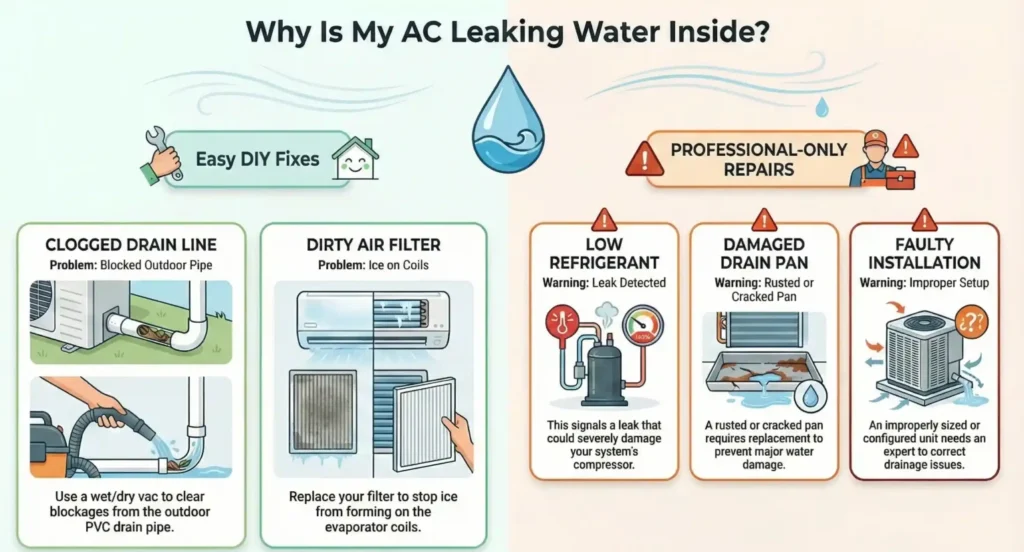
If you are wondering, “why is my ac unit leaking water,” there are several potential culprits. Understanding these common causes can help you or a family caregiver identify the problem quickly.
A Clogged Condensate Drain Line
The most frequent reason for an ac unit leaking water is a clogged condensate drain line. Over time, dust, dirt, algae, and mold can build up inside the pipe, blocking the flow of water. When the water cannot exit the home, it backs up and overflows into your living space, causing an unexpected mess.
A Dirty Air Filter Restricting Airflow
A dirty air filter restricts the airflow over the evaporator coil. Without enough warm air blowing over it, the coil can freeze. When the ice eventually melts, it produces more water than the drain pan can handle, leading to your ac leaking water inside.
Regularly changing the filter is a simple task that family caregivers can do to prevent this issue.
A Damaged or Overflowing Drain Pan
Older air conditioning units may have drain pans that have rusted or cracked over time. If the pan is damaged, the water will simply leak right through it. Additionally, if the drain line is clogged, the pan will overflow, causing water to pool around the indoor unit.
Low Refrigerant and a Frozen Evaporator Coil
Similar to a dirty filter, low refrigerant levels can cause the evaporator coil to freeze. When the system is turned off and the ice melts, the excess water can overwhelm the drainage system. If you suspect a refrigerant leak, it is essential to contact professionals like Affordable Fixes, as handling refrigerant requires specialized training.
What to Do When You Notice AC Water Leaking Inside
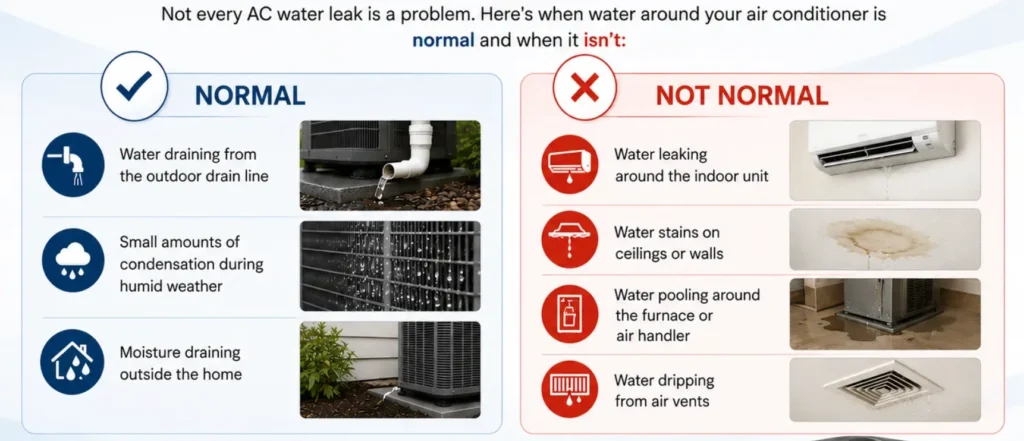
The moment you notice your ac leaking water inside, the first step is to turn off the system immediately. This prevents further water damage to your floors, walls, and ceiling. Next, clean up the pooled water to prevent slip hazards, which are a major concern for seniors. Once the area is safe, you can begin to investigate the source of the leak or call a trusted technician for help.
How to Fix a Leaking AC Unit Step by Step
While some issues require a professional, there are steps you can take to address a simple clog. First, locate the condensate drain line, usually a PVC pipe near your indoor unit. Check for visible blockages. You can use a wet/dry vacuum to suction out the clog from the outside end of the pipe. Additionally, check and replace the air filter if it is dirty.
If these steps do not resolve the issue, or if you are uncomfortable performing them, it is best to rely on the expertise of Affordable Fixes to safely repair the system.
How to Prevent Future AC Water Leaks
Prevention is key to avoiding the stress of an ac unit leaking water. Schedule regular HVAC maintenance with Affordable Fixes before the summer heat arrives. A professional tune-up includes cleaning the drain line, checking the drain pan, and ensuring refrigerant levels are correct. For family caregivers, setting a reminder to change the air filter every 1 to 3 months is a simple yet highly effective way to keep the system running smoothly and protect the health and comfort of aging loved ones.

