

Everyone who’s struggled with their weight has a set of excuses they lean on, and they tend to be the same eight. This walks through each one and what actually holds up against it, including the two that most people get flat wrong: that diets don’t work, and that if obesity runs in your family, the outcome is already decided. Neither is true in the way it feels true.
Every one of these ran through my head at some point, usually right before I reached for something I shouldn’t. They’re the little stories you tell yourself to make the next bad choice feel reasonable, and I got very good at all eight before my health finally forced the issue. Here they are, and here’s what actually holds up once you stop letting them win.
“I’ll Start Tomorrow”
You’ve said it. I said it constantly. And the trouble with tomorrow is that it arrives and immediately becomes today, at which point there’s a fresh tomorrow to push everything onto, and round it goes.
There’s nothing to fix here except the timing. Not the plan, not the willpower, just the day. The old line about a journey of a thousand miles beginning with one step is worn out from overuse, but it’s worn out because it’s true. The single step is the whole thing. Today, not the imaginary clean-slate version of you that supposedly shows up in the morning.
“Diet Plans Don’t Work”
This one’s half true, which is what makes it dangerous. Plenty of diets genuinely do produce weight loss. The catch is that most of them work through the same underlying mechanism, you end up eating less than you burn, and the difference between them is mostly which one you can actually stick to.
So the honest version isn’t “diets don’t work,” it’s “I didn’t follow them.” Once you see it that way the question changes. You stop hunting for a magic plan and start hunting for the one you can live with for years, because the best diet in the world does nothing the week you quit it. For me that turned out to be keto with intermittent fasting, not because it’s superior on paper, but because it was the one I didn’t abandon.
“I’m Having A Bad Day”
We’ve all reached for food to feel better. It’s genuinely soothing in the moment, and there’s a reason for that, so I’m not going to pretend it’s pure weakness.
Here’s what’s actually going on, though. When you’re stressed, your adrenal glands push out cortisol, and elevated cortisol tends to nudge up both appetite and cravings for sugary, fatty food specifically. So you eat the cookies, your blood sugar spikes and then crashes, and you often end up feeling worse than before you started, now with the added guilt on top. The comfort is real but it’s short, and it borrows against how you’ll feel an hour later.
What worked for me was swapping the coping tool, not trying to white-knuckle the feeling. A brisk walk when a bad day hit did two things at once, it moved me physically away from the kitchen, and the movement itself took the edge off the stress better than the sugar ever did. Not always. But often enough that it became the new reflex.
“I Deserve A Treat”
Careful with this one. It sounds kind and generous to yourself, and it’s usually the excuse wearing its nicest coat.
Think about it sideways for a second. You wouldn’t let your boss pay you in something worthless after a hard week’s work, you earned real wages. So why, after a week of eating well and moving more, would you reward that effort by handing your body the exact thing it was working against? The logic eats itself. What I found, once I stopped equating “treat” with “sugar,” was that there were plenty of genuinely enjoyable foods I could have that didn’t quietly undo the week. The reward stayed. It just stopped being self-sabotage in a wrapper.
“I’m Already Overweight, So What’s The Point”
This one’s heavy because it feels like a verdict instead of an excuse. When you’re already there, the distance to fixed looks so far that starting feels almost pointless.
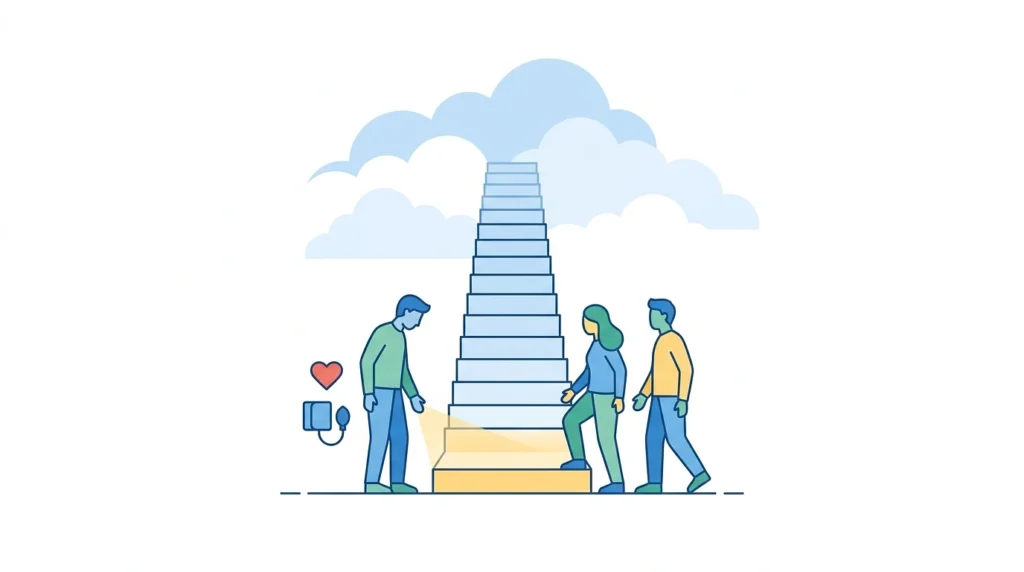
But being overweight now says nothing about being overweight forever. The only question that matters isn’t how you got here, it’s what you do from this exact moment. And the science backs the smaller version of this too, you don’t need to hit some goal weight to get the health payoff, even modest weight loss meaningfully improves blood pressure, blood sugar, and heart risk. You don’t have to see the whole staircase. You start where you’re standing, and surrounding yourself with people who are doing the same helps more than any burst of motivation.
“It Says Low-Fat, So It’s The Healthy One”
This is less a lie you tell yourself and more one the supermarket tells you, and I fell for it for years.
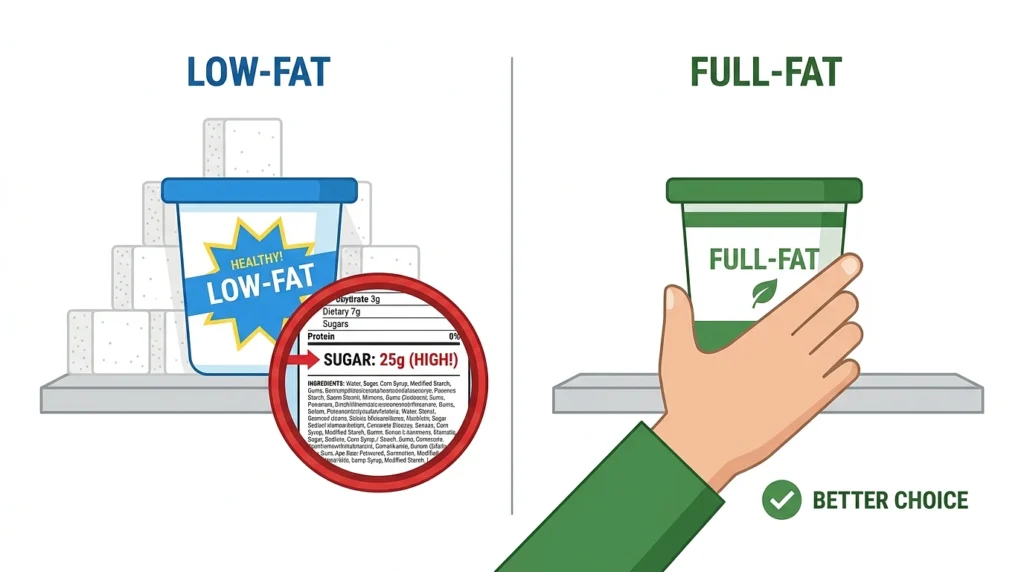
The thing to know is what happens when a manufacturer strips the fat out of a product. Fat carries flavor, so when it goes, the taste goes with it, and it usually gets replaced with sugar or a list of additives to make the thing palatable again. So the “low-fat” version can quietly carry more sugar than the full-fat one it’s sitting next to on the shelf.
On keto I started reaching for the higher-fat option deliberately, but honestly the lesson is broader than any one diet. Before anything goes in the trolley, a quick check of the two things that actually matter tells you more than the marketing on the front ever will:
- The sugar figure, especially on anything wearing a “low-fat” or “diet” label.
- The ingredients list, where the additives that replaced the fat are hiding.
Become a label reader. It’s the single most useful habit I picked up.
“I’m Overweight Because It’s Genetic”
Now this is the one I have to handle carefully, because the popular advice on both sides gets it wrong, and I nearly did too.
The dismissive version, just snap out of it, genetics is a myth, is flat wrong. Obesity is genuinely, substantially heritable. Twin studies put somewhere between forty and seventy percent of the variation in body weight down to inherited factors, and some estimates run higher. So if you’ve felt like your body fights harder than other people’s, you may not be imagining it. That’s real.
But here’s the part that actually matters, and it’s the more hopeful truth. Genes load the odds, they don’t seal the result. There’s a striking twin study where the heritability of BMI was much higher for kids in unhealthy home food environments than for kids in healthier ones, which is a fancy way of saying the environment you build can genuinely buffer the genes you were dealt. Your DNA sets the difficulty level. It doesn’t play the game for you. Families also pass down eating habits, not just genes, so the plate you grew up with matters alongside the code. Knowing the odds are stacked isn’t a reason to fold. It’s just information about how hard you’ll have to play.
“Life’s Too Short, So I’m Going To Eat What I Want”
The final one, and there’s a grim little joke buried in it. Life’s too short, sure, and eating this way is one reliable method of making it shorter still.
I flipped it to “eat to live” instead of “live to eat,” and I won’t oversell that as some profound philosophy, it just reframed food as fuel rather than the main event. What I can tell you is what changed. My energy came back, my joints stopped aching, the headaches faded, and a pre-diabetic reading moved back the right way, though I’ll add the same thing I always do, that last part happened alongside real changes and with a doctor keeping an eye on the numbers, not off a blog’s say-so. The moment it became real for me was petty and perfect, I ran up four flights of stairs because I’d forgotten my keys, didn’t think about it, just ran, and only halfway back down realized I couldn’t have done that a year earlier without stopping to wheeze on the landing.

