


Real quick, let me tell you about my buddy Dale. Dale ate oatmeal every single morning for a year straight proud of it, told everybody went to the doctor for his checkup, and his cholesterol hadn’t budged. Not a point. He was furious. “I did the healthy thing! Every day!” And I had to break it to him: Dale, my man, you were eating the maple-brown-sugar instant packet with the little cartoon on it. You didn’t eat oats. You ate warm candy that was shaped like oats.
That’s the whole problem with “eat oats every day” advice. It’s true. Oats work. But they work like a lock works only if you turn the right key. Get it wrong and you get Dale’s result: a year of effort, a flat cholesterol panel, and a grudge against breakfast.
You Need 3 Grams Of Beta-Glucan The Actual Number, Not The Vibe
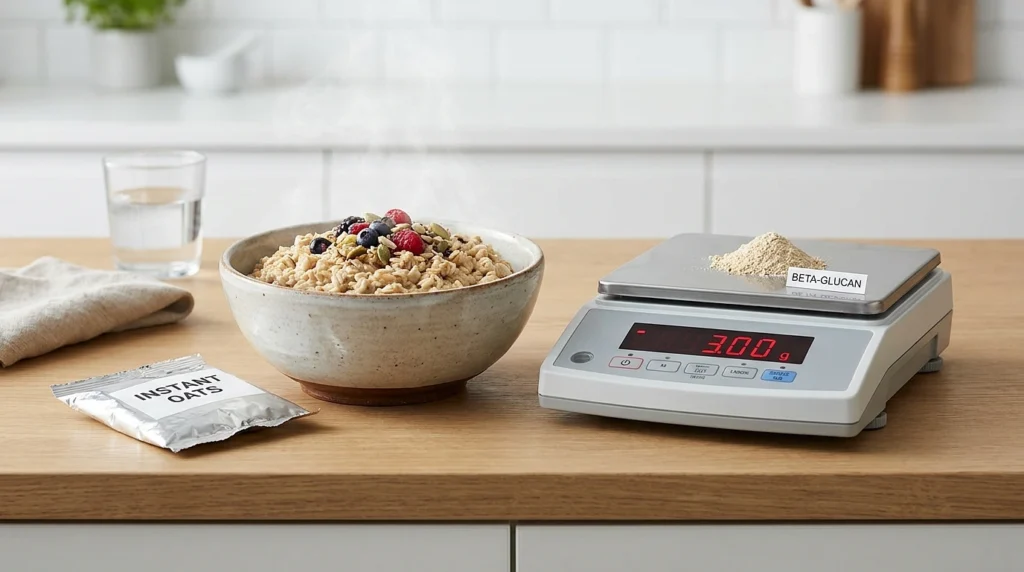
Oats don’t lower cholesterol because they’re “wholesome.” They lower it because of one specific soluble fiber called beta-glucan, and this is the part that matters it has a threshold. Below a certain dose, nothing much happens.
That dose is 3 grams a day. A meta-analysis of randomized controlled trials landed on it clean: hit at least 3 grams of oat beta-glucan daily and your LDL the bad cholesterol drops by about 0.25 mmol/L, roughly a 5 to 7% cut, without dragging down your good cholesterol along with it. That’s a legitimate, measurable win for your heart.
But here’s what nobody tells you standing in that grocery aisle: three grams is more oats than you think. You’re looking at somewhere around a cup of cooked rolled oats to get there. A dinky little instant packet? Often under a gram and a half. So half the people “eating oats every day” are dosing themselves at a level the research says does close to nothing. They’re not wrong to eat oats. They’re just not eating enough of the thing that does the work.
The Oats Have To Still Be Intact Because Processing Straight-Up Kills The Effect
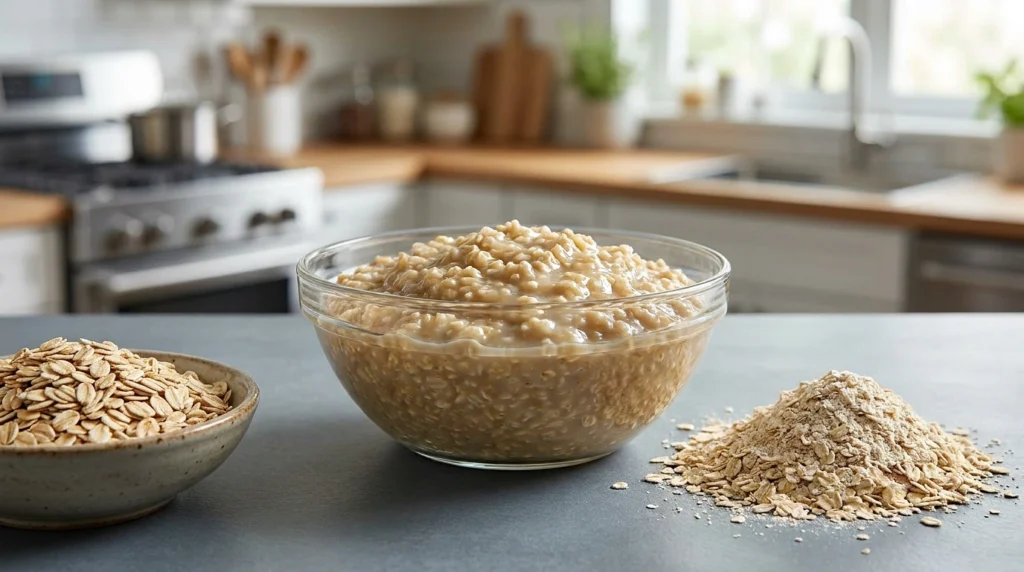
This is the one that made me put my coffee down when I first read it, and it’s the thing that got Dale.
You’d assume beta-glucan is beta-glucan that as long as the label says you got your 3 grams, you’re golden. Nope. A beautiful multicenter trial with 367 people put different kinds of oat beta-glucan against each other. The high-quality, high-molecular-weight version at 3 grams a day dropped LDL by 5.5%. The low-molecular-weight version the kind you get after oats have been processed, ground, and pre-cooked half to death at basically the same dose?
Nothing. No significant drop. Same fiber on the label, zero result in the body.
Why? Because the whole trick is viscosity. Intact beta-glucan turns thick and gel-like in your gut, and that goo is what physically traps cholesterol and drags it out of you. Shred the oat into instant flakes and the molecule loses its structure it can’t get gluey, so it can’t do its job. You can hit your 3-gram target on a spreadsheet and still get robbed in real life. That’s not a loophole in the science. That’s the science telling you to buy less-processed oats and quit letting a factory pre-digest your breakfast.
Rrolled or steel-cut, yes. Flavored instant packet, that’s your Dale trap.
How You Eat It Decides Your Blood Sugar And Instant Oats Spike Like White Bread
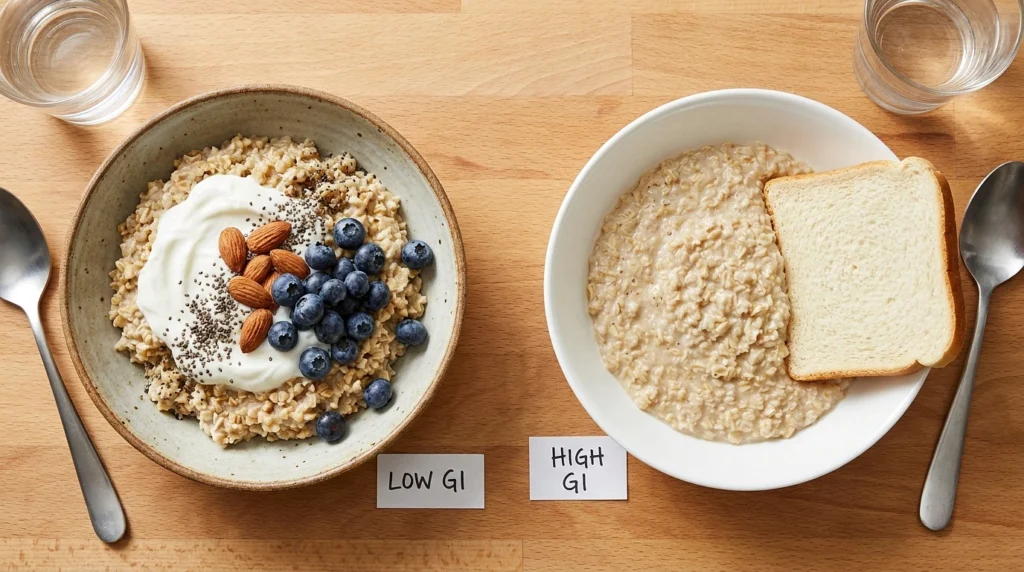
Alright, cholesterol’s handled. Now the blood sugar side, because this is where the “healthy breakfast” reputation gets genuinely misleading.
We picture oatmeal as the mellow, steady, slow-burn breakfast. And it can be if it’s the right oat. Steel-cut oats sit at a glycemic index around 42 to 55, which is comfortably low. But instant oats climb all the way up to 79 to 83, and a 2019 clinical trial found instant oatmeal spiked blood sugar about the same as refined white bread, while steel-cut raised it roughly 28% less.
Same grain. One’s a slow release, the other’s a sugar rush. The difference is pure surface area the more an oat’s been chopped and flattened, the faster your enzymes rip into the starch. And when you get the whole-oat version right and keep it up? Regular whole-oat eating has been tied to lowering HbA1c your three-month blood sugar average by around 0.4 to 0.5%, which is honestly in the ballpark of some mild diabetes meds.
The move that seals it: don’t cook your oats to mush (the more they gelatinize, the higher that glycemic hit climbs), and pile on protein or fat nuts, seeds, a scoop of Greek yogurt plus berries instead of banana or raisins. That combo flattens the curve even further. Nail the topping and you’ve turned a good breakfast into a great one.
So, What Actually Happens To Your Body?
Get all three right enough beta-glucan, intact oats, smart prep and here’s your realistic month: LDL cholesterol down 5 to 7%, breakfast blood sugar that stays level instead of crashing you by 10 a.m., fuller for longer thanks to that same gel-forming fiber, and, kept up, a small but real nudge to your long-term blood sugar. Fair warning the trials are honest about: the cholesterol effect runs stronger in folks who started with higher numbers, and most studies took 4 to 6 weeks, so anyone promising results by the weekend is lying to you.
And if you get it wrong instant packet, half a gram of dead fiber, a fistful of brown sugar you get Dale. A whole year, a flat panel, and a totally undeserved grudge against a grain that never got a fair shot.
The commodity version of this article ends with “so start your day with a healthy bowl of oats!” and waves you off. But that advice is exactly what failed Dale. Oats aren’t magic and they aren’t a scam. They’re a lock with three tumblers. Turn all three the dose, the form, the prep and the thing genuinely opens. Now you’ve got the key.

