


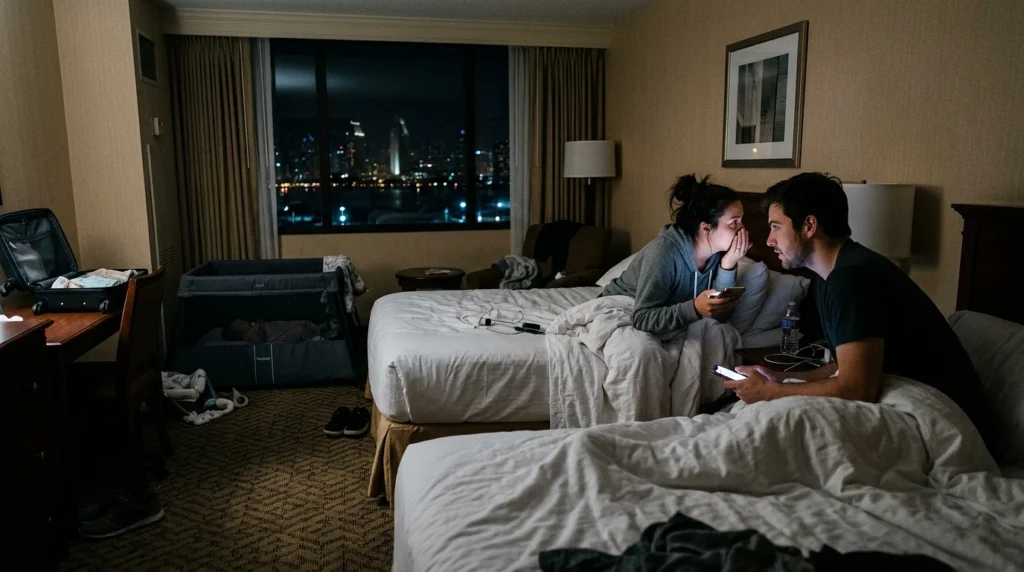
I became a short-term rental person at exactly 7:42 p.m. in a hotel room in San Diego, sitting in the dark. Our toddler had gone down in the travel crib, which meant the lights went off, the TV went off, and my wife and I spent the next three hours whispering to each other from opposite beds and scrolling with our screens dimmed like teenagers hiding phones. We’d paid a very reasonable nightly rate to be prisoners in a beige room by quarter to eight. The next trip we booked a small apartment with a door between the bedroom and everything else, and the door cost roughly the same as the beige room. The door changed everything.
It’s rarely about which is “better,” and almost always about which specific problem you’re traveling with. Hotels solve some problems brilliantly. Rentals solve others, and after years of watching who books them and why, I’ve noticed the same five people keep showing up at the self-check-in lockbox. See if you’re one of them.
1. The Family With Small Kids (It’s About the Door)
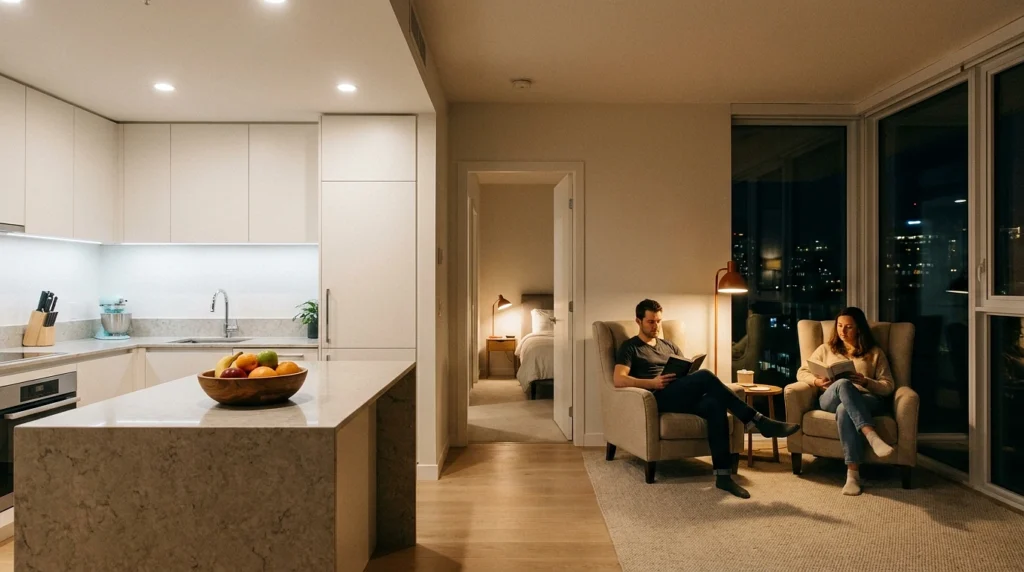
Start with my people, because we’re the most loyal converts in the entire category, and the reason is not the extra square footage the listings advertise. It’s separation after bedtime. A rental with a bedroom door means the adults‘ evening survives the child’s bedtime, and anyone who has whispered through a hotel dusk knows exactly what that sentence is worth.
The kitchen runs a close second, and not for gourmet reasons. It’s for the 6 a.m. milk without a room-service tray, the picky eater’s one acceptable pasta, the fruit that isn’t nine dollars. And the washing machine, unglamorous hero of family travel, converts a week-long trip’s luggage from four suitcases to two, because you’re no longer packing an outfit per catastrophe per day. Families don’t book rentals for luxury. They book them because a rental lets the family keep operating like a family, just with a different view.
2. The Group Trip (It’s About the Math and the Kitchen Table)

The bachelor weekend, the college reunion, the three-couples trip, the cousins convening for a wedding. Groups prefer rentals for a hard reason and a soft one, and both matter.
The hard reason is arithmetic. Six adults in a hotel is three rooms at full nightly rate each; six adults in one house splits a single price, and the per-person number routinely lands at a fraction of the hotel math while buying more space. For any group past four people, the spreadsheet usually decides before anyone discusses it.
The soft reason is the one people feel but don’t name: in a hotel, a group has nowhere to be a group. The lobby is public, the rooms hold two, and the trip fragments into text threads about where to meet. A house has a kitchen table, and the kitchen table at midnight is where the actual trip happens, the card game, the debrief of the wedding, the conversation that becomes the story everyone retells. Groups aren’t renting bedrooms. They’re renting the common room the hotel never had.
3. The Remote Worker Settling In (It’s About Week Three)
The remote worker booking a month somewhere is barely a tourist at all, and their needs invert the hotel’s whole design. A hotel is engineered for arrival and departure, spectacular at night one, increasingly absurd by night twelve, when you’re eating your thirtieth consecutive restaurant meal and handing your laundry to strangers at dry-cleaning prices.
The long-stay traveler needs the boring infrastructure of an ordinary lifestyle a real desk with real Wi-Fi, a kitchen that makes week three affordable, a washing machine, a grocery store they start having opinions about. Rentals price for them too, with weekly and monthly discounts that hotels structurally can’t match. And there’s a quieter pull that the category’s marketing has always oversold but never entirely invented: living in a neighborhood, even briefly, feels different from staying at an address. The remote worker isn’t buying accommodation. They’re renting a temporary version of their own life, and hotels don’t stock that.
4. The Pet Owner (It’s About Not Negotiating)
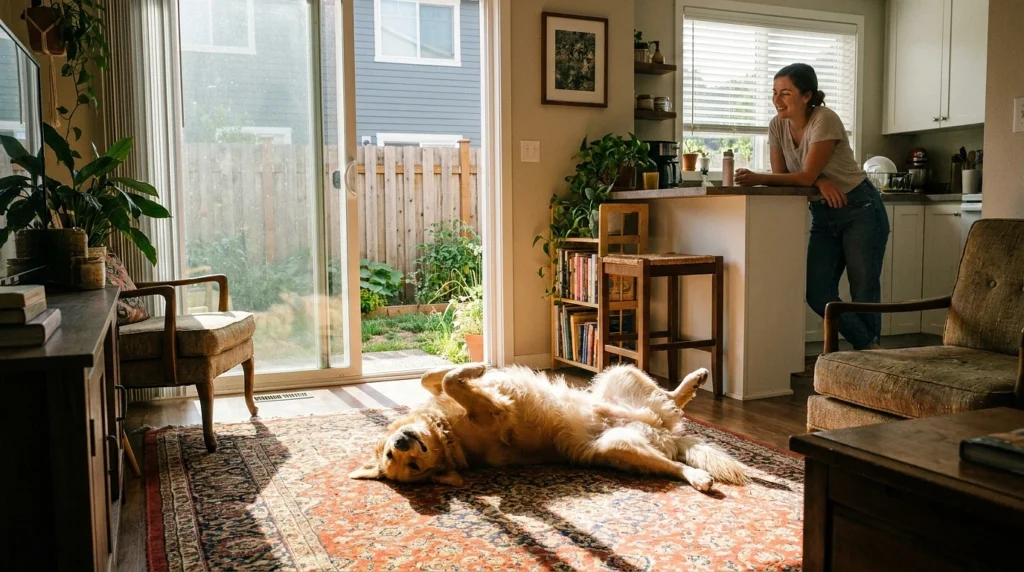
Anyone traveling with a dog knows the specific weariness of hotel pet policies the breed rules, the weight limits, the nightly pet fee that costs more than the dog’s food, the four-elevator-rides-a-day bathroom logistics, the anxiety about barking echoing down a corridor of strangers.
Pet-friendly rentals dissolve most of it at once. A ground-floor door to a yard replaces the elevator ritual. A host who says yes to dogs has usually actually planned for dogs, rather than tolerating them at a price. And the dog itself, this is the part owners notice most, behaves like a different animal in a house than in a corridor of unfamiliar sounds and smells. Pet owners don’t prefer rentals ideologically. They prefer arriving somewhere their whole household, fur included, is simply allowed to exist without a surcharge and a waiver.
5. The Self-Sufficient Introvert (It’s About the Lobby)
The fifth type is the least discussed and the most devoted the traveler for whom the hotel’s signature feature, being surrounded by staff and services and other humans, is precisely the problem. The lobby small talk, the housekeeping knock mid-thought, the breakfast room’s social geometry, the performance of being a guest.
For this person the rental’s pitch is one word: nobody. Self-check-in via lockbox, coffee made in silence in their own temporary kitchen, an evening unobserved. They’ll happily trade daily housekeeping for the guarantee that no one knocks. If you read that trade and felt a little flare of longing, you’re the fifth type, and you probably already knew.
The Honest Flip Side: Who Should Stick With Hotels
Fairness requires the other list, because rentals lose plenty of matchups and pretending otherwise would make this an ad. The one-or-two-night solo stay is usually hotel territory, since cleaning fees flatten a rental’s price advantage on short stays and check-in friction isn’t worth it for thirty hours in town. The traveler who genuinely loves daily housekeeping, on-demand towels, and a front desk that fixes problems at 2 a.m. is describing a hotel and should book one without apology. And the consistency-needer, the person for whom the joy of rentals, every one different, is actually the dread of rentals, every one different, gets real value from a chain where room 412 is the same in every city. A rental is a bet on a specific listing; a hotel is a bet on a brand, and knowing which bet relaxes you is the entire decision.
The beige room in San Diego, I should say, was a perfectly good hotel. It just wasn’t built for the problem we brought it, and neither of us knew that yet. Five trips a year later, we book by the problem: door and kitchen for family trips, one house for the group weekends, and, on the rare solo overnight, a hotel, checked into gladly, where somebody else makes the bed and nobody expects me to whisper.

