


The idea of having a cat in their house runs headlong into one nagging issue; the smell. Be it the lingering stench of a litter box, the occasional odor of something less than fresh, or simply the generalized cat smell that appears to seep into some homes, odor is one of the most often cited reasons why people are hesitant before adopting a feline companion.
The good news is the following: not every cat is a creation equal in terms of odor. Through a mix of coat type, grooming habits, skin chemistry, and other maintenance needs, some breeds are much less likely to emit the odors that have such a bad reputation on the owners of cats. And even some of the most popular, such as the Sphynx cat, can shock potential owners with the amount of control these could have in this domain.
This guide explores the best cat breeds that don’t smell, what actually causes cat smell in the first place, and how to create a genuinely fresh-smelling home while enjoying everything that comes with feline companionship.
Why Do Some Cats Smell More Than Others?
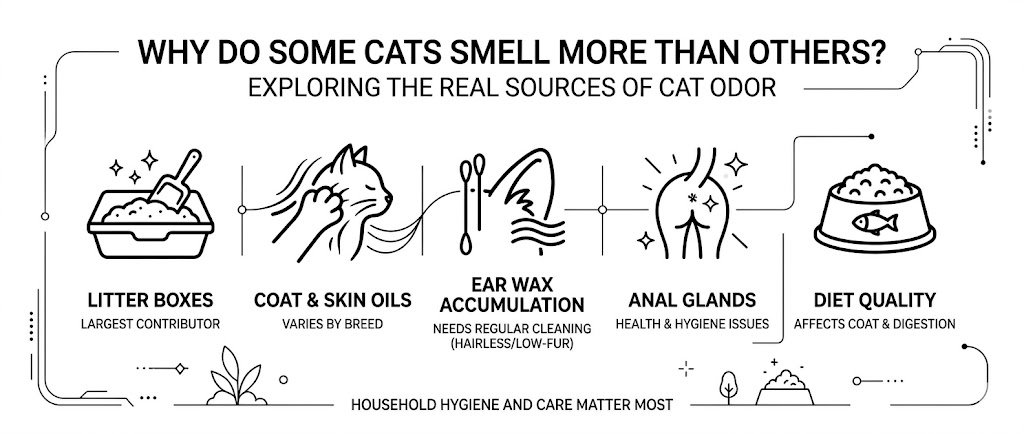
The Real Sources of Cat Odor
It is best to get an idea of what makes cats smell before getting into which breeds smell less. However, the cat itself is seldom the main culprit cats are one of the most hygienic of all self-groomers in the animal kingdom. The actual causes of odor of cats in the house are usually:
- Litter boxes: by far the biggest contributor, regardless of breed
- Coat and skin oils: heavier in some breeds, minimal in others
- Ear wax accumulation: more pronounced in hairless and low-fur breeds if not regularly cleaned
- Anal glands: occasionally expressed and pungent if there’s a health issue
- Diet: a poor-quality diet can significantly affect both coat and digestive odor
Breed choice has a direct effect on some of these factors, in particular the production of coat and skin oil. However, general household cleanliness, litter box cleanliness, regular grooming, and the quality of the diet of which breed an individual chooses are of great importance.
How Coat Type Affects Odor
The relationship between type of coat and its odour is greater than one can comprehend. A long, dense coat entraps oils, dander and environmental odors much more effectively than does a short, sparse or absent coat. This is the reason why for longhaired breeds kept in less-than-ideal grooming schedules are able to develop noticeable odors, whereas short-coated or hairless breeds even without frequent bathing routines cannot develop perceivable odors.
The Best Cat Breeds for Odor-Sensitive Households
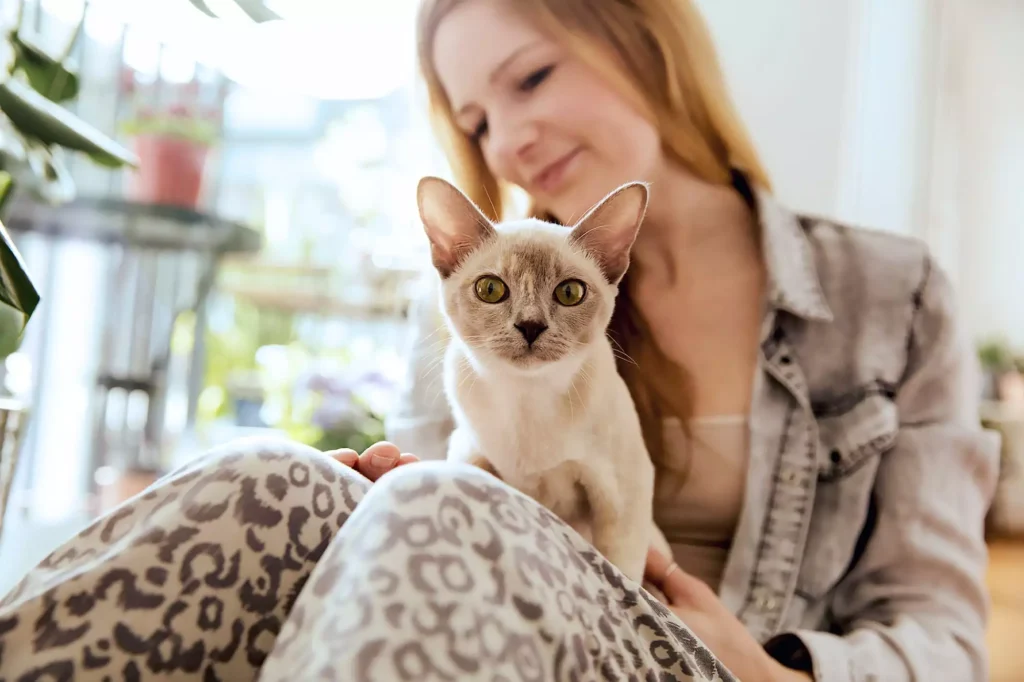
Sphynx Cats for Odor-Free Pet Owning
The Sphynx cat is probably the first breed that comes to mind when people think of unusual or low-allergen cats.
Do Sphynx cats smell?
The odor of sphynx cats has no more smell than other cats, nor in most aspects as much smell. Since there is no coat, there is no fur to trap odors, no dander to accumulate in hidden layers and no oils to soak into a thick pelt in days between grooming sessions. All the Sphynx has, however, is skin. and that skin gives out oils the same oils that any cat gives out, but which in a coated breed are absorbed into the fur. On a Sphynx, those oils lie on the surface of the Sphynx which means that the cat will need to be bathed on a regular basis, say once a week, which will prevent the oils accumulating.
A carefully bathed Sphynx owner will be amazed to find his cat incredibly sten-free.
The person who fails to take care of it will observe a waxy and slightly musky odor building up on the skin. The breed is also likely to contain ear wax as there is no ear hair hence it is also important that ear is also clean.
Beyond the maintenance conversation, the Sphynx is one of the most compelling cats a person can share a home with. They are extraordinarily social following their owners from room to room, seeking warmth and physical contact with an almost dog-like devotion. They are highly intelligent, endlessly entertaining, and completely lacking in the aloofness often associated with the feline species. According to theInternational Cat Association (TICA), the Sphynx consistently ranks among the most popular registered breeds worldwide. a testament to how thoroughly the breed wins over those who live with them.
Devon Rex: Low Coat, Low Odor, High Personality
Another excellent option that would be suitable to odor sensitive cat lovers is the Devon Rex. The coat of this breed is very sparse indeed, and that thin, short, and wavy, without any good undercoat in it that can hold the odours in other breeds. What it has given rise to is a cat that requires minimal grooming to remain fresh and the production of very little dander and oil build up that is given off by heavier coats.
Devon Rex cats, too, are quite active and playful with big ears, wide eyes and an almost pixie like look that makes them immediately distinctive.
They are warm-seeking animals, their diminished coat making them run a little colder than most, and they burrow under blankets, and lie close to their favorite humans to keep themselves warm. The Devon Rex is difficult to resist, to the person who wants an affectionate, low-odor companion, which is, in fact, fun to live with.
Cornish Rex: The Silk-Coated Option
Similar in many ways to the Devon Rex, the Cornish Rex offers another low-shedding, low-odor option. The Cornish Rex coat consists only of the fine undercoat layer there is no guard hair or awn hair. The resulting texture is extraordinarily soft, almost silk-like, and lies close to the body.
Such a bare coat system implies much less surface to develop odors, and much less shedding than most other breeds. Cornish Rex cats are also known to be playful and gregarious often described as permanently kitten-like in their energy and enthusiasm making them a truly happy addition to a home.
Siamese: Clean, Short-Coated, and Naturally Fresh
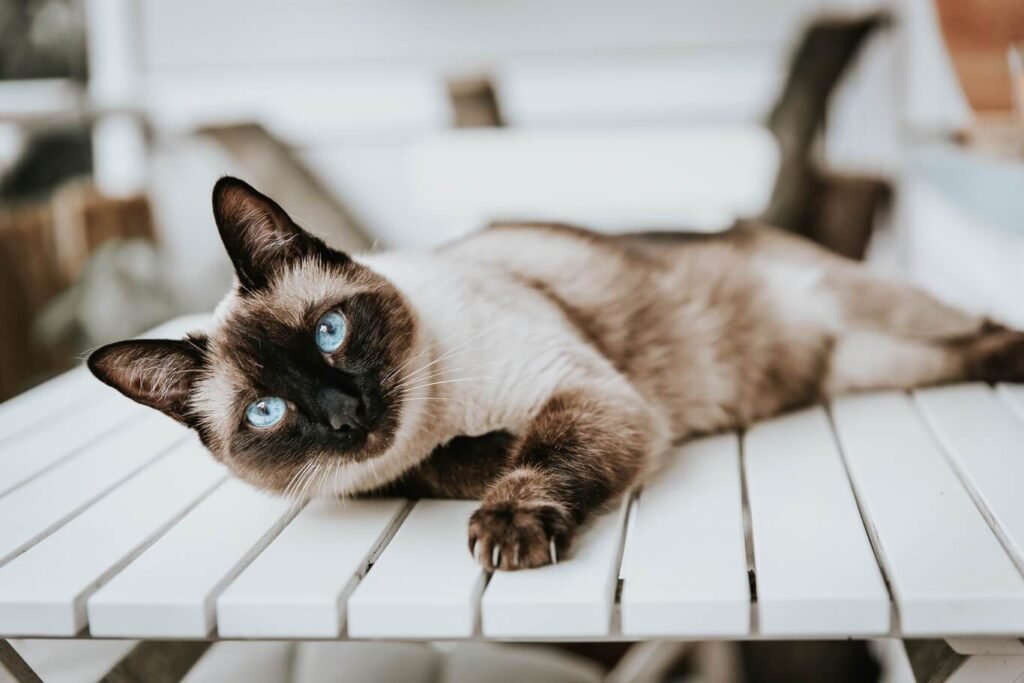
It may not be the first breed that is immediately included in a list of cats that do not smell, but it surely deserves a place in the list. The short, coarse, low-lying coat causes a small amount of oil to accumulate and necessitates practically no grooming, except the occasional light brushing. They are a naturally sturdy cat with fastidious grooming habits, and have a short coat that simply does not retain odors the way a medium or longhaired coat does.
- The personality the Siamese also possesses that draws many owners so much that more independent breeds are not is vocal.
- Deeply bonded, and interactive in a manner that more independent breeds is not.
- To a person seeking a comparatively lesser maintenance odor profile along with an authentic experience in companionship, the Siamese is a perfect option.
Russian Blue: Minimal Shedding, Minimal Odor
The Russian Blue may seem like an unlikely inclusion here given its dense double coat, but this breed is notable for producing lower levels of the Fel d 1 protein — the primary allergen in cat dander — than many other breeds. Lower protein production generally correlates with lower overall odor output, and the Russian Blue’s famously meticulous self-grooming habits compound this advantage.
Their coat, while plush and thick, is also relatively low-shedding compared to other double-coated breeds. Regular weekly brushing keeps the coat in excellent condition and virtually eliminates any odor concerns. For an owner who loves the look and feel of a full-coated cat but wants to minimize smell, the Russian Blue is one of the most practical and beautiful choices available.
Breed Comparison: Odor Profile at a Glance
| Breed | Coat Type | Grooming Need | Odor Risk Level | Best For |
| Sphynx | Hairless | Weekly bath + ear cleaning | Low (with maintenance) | Devoted, hands-on owners |
| Devon Rex | Sparse, wavy | Minimal brushing | Very Low | Families, first-time owners |
| Cornish Rex | Ultra-fine undercoat only | Light brushing | Very Low | Active households |
| Siamese | Short, close-lying | Occasional brushing | Low | Social, interactive owners |
| Russian Blue | Dense double coat | Weekly brushing | Low | Those who love full coats |
Practical Tips for a Fresh-Smelling Home With Cats

Breed selection is only part of the equation. The following habits make a significant difference regardless of which cat shares a household:
- Clean the litter box daily. This single habit eliminates the vast majority of cat-related household odor. Covered boxes can trap smells; open boxes cleaned frequently are often more effective at managing odor overall.
- Feed a high-quality diet. Premium protein-rich food reduces digestive odor and supports healthier skin and coat condition.
- Brush or bathe regularly. Even low-maintenance breeds benefit from a grooming routine that removes surface oils and loose hair before they accumulate.
- Wash bedding and soft furnishings frequently. Cat beds, blankets, and favored cushions absorb oils and dander over time. Regular washing keeps the household environment genuinely fresh.
- Ventilate living spaces well. Good airflow prevents any odors from concentrating in enclosed rooms.
Choosing a Cat That Won’t Smell
The fact that cats and bad smells go hand in hand is not the truth at all – and the breeds with which this guide will be discussed will prove it convincingly. There are brilliant selections to every sort of cat lover, irrespective of how delicate they are to scent.
The trick is to have the right breed that matches the lifestyle and invests in the grooming and household routines to keep any cat, whether exotic or common, hairless or with full-coloured coat, smelling fresh. Having the right decision and the right routine, a perfectly odor-managed life with a feline companion is not only feasible. It is really affordable.
Frequently Asked Questions
1. Are short-haired cats less smelly than long-haired cats?
Generally, yes. Shorthter coats collect fewer scents, less dander build-up and are less cumbersome to clean up. This does not imply that longhaired breeds tend to be smelly all the time; a well-groomed longhaired cat may be perfectly fresh; however, it offers less margin of error.
2. Does cat diet affect how much they smell?
Significantly. A high-quality, protein-rich diet supports healthier skin, a better coat condition, and reduced digestive odor. Cats fed low-quality food with high filler content tend to have more noticeable litter box output and sometimes poorer coat condition, both of which contribute to household odor.
3. How often should a Sphynx cat be bathed?
Most Sphynx owners and breeders recommend a bath approximately once a week. This removes the skin oil buildup that can otherwise develop a slightly musky scent. It also helps prevent the oil from transferring to furniture and bedding.
4. Are hairless cats truly odorless?
Not entirely — no living creature is completely odorless. But hairless cats like the Sphynx, when bathed regularly and kept in good health, produce far less noticeable odor than most coated breeds. The absence of fur eliminates the primary vehicle through which cat odors typically build up and linger.
5. Can a cat’s litter box habits affect how smelly the cat seems?
Absolutely. A dirty litter box is the single biggest source of cat-related household odor — far more impactful than the cat itself. Daily scooping and regular full litter changes make an enormous difference in the overall smell of a cat-owning household, regardless of which breed is involved.

