


There’s a moment in every market where two lines on a chart cross, and everyone pretends they saw it coming. Men’s footwear just had its crossing, and the honest version is that almost nobody called the speed of it.
For most of the last decade the money was in standing still. Retro court shoes, the Air Force 1, the Jordan 1, the Dunk, flat-soled basketball silhouettes from the eighties, sold in colorways instead of innovations, ruled the category so completely that Nike built its revenue plan on them. Actual running shoes, the ones engineered for running, were the dad aisle.
Then the lines crossed. Hard. And the two numbers in the title are both real, sourced, and pointing in opposite directions, so let me run the two tapes side by side, because the gap between them is the whole story of what men are putting on their feet right now.
Tape One: The Running Boom, In Circana’s Numbers
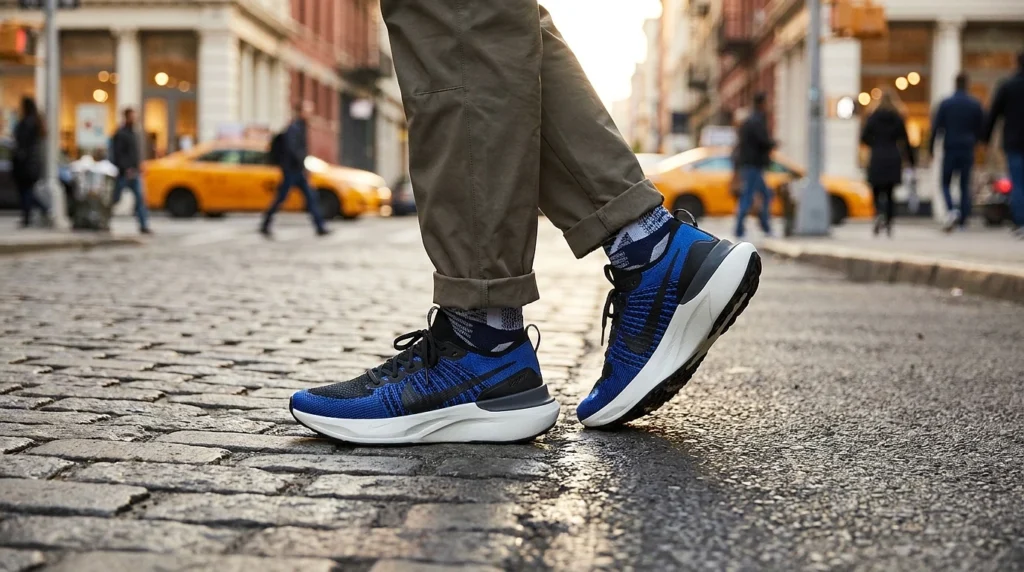
Start with the winner’s column. Circana’s full-year 2025 data has the overall U.S. footwear market dead flat at $90 billion, with units actually declining. Inside that flat market, running posted a 9% dollar increase for the year, the standout in a performance category that grew 6% while nearly everything else treaded water. Walking grew 9% too, with the strongest unit surge in the performance aisle, which tells you this isn’t just price inflation dressed up as demand. People are buying more pairs.
And it’s accelerating, not cooling. Circana’s first-quarter 2026 report shows the total market scraping out 1% growth while running delivered double-digit dollar and unit growth in the same quarter. Beth Goldstein, Circana’s footwear industry advisor, keeps landing on the same explanation across these reports: the categories tied to daily use, activity, and comfort are the ones capturing spending while consumers get selective about everything else.
Here’s the detail I find genuinely fascinating, though. Even inside the lifestyle category, the largest segment in footwear, the growth is coming from running-inspired silhouettes. The sneakers winning the fashion war are the ones shaped like running shoes. The running boom is so complete it’s winning categories it isn’t even entered in.
Tape Two: The Classics, Falling Off A Cliff
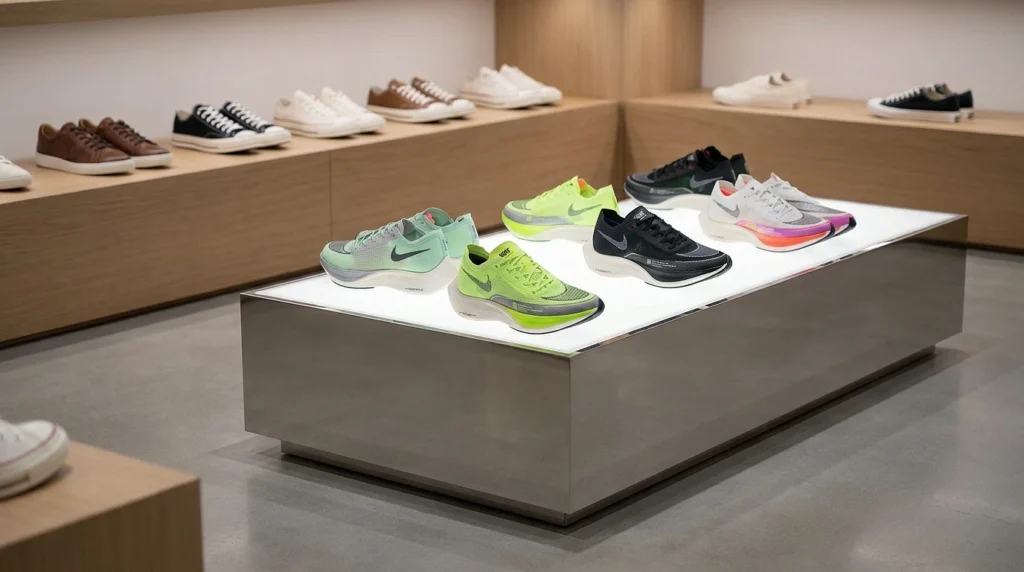
Now the loser’s column, and the numbers here are more brutal than “shrank” suggests.
Nike spent years overindexed on three franchises, the Air Force 1, the Jordan 1, and the Dunk, and by fiscal 2024 the Dunk alone was as big as the other two combined. Then demand rolled over. Nike’s own CFO told investors that those classic franchises declined more than 30% in a single quarter, creating nearly a $1 billion revenue headwind. And the part that should recalibrate how you read every sneaker headline: Nike isn’t fighting the decline. It’s accelerating it, deliberately cutting supply, in CEO Elliott Hill’s words, aggressively right-sizing all three franchises, with the reduction running about 10 percentage points of Nike’s entire footwear mix.
The projections on the Dunk specifically are the kind you rarely see attached to a shoe that was recently the hottest product in fashion. Piper Sandler analysts expect Dunk sales to plummet roughly 70% over two years. The warning signs were visible earlier, JD Sports’ CEO flagged dwindling Dunk demand to his investors back when the pairs first started lingering on sale racks, but the speed of the fall still caught the resale market, the boutiques, and honestly most of the commentary flat-footed.
One fairness note, because precision matters more than a clean narrative. Circana’s “sport lifestyle” category as a whole still grew about 4% in 2025 in dollars. But look under the hood and that growth came from running-inspired and soccer-inspired styles, the new blood, while the court classics that defined the segment for a decade did the sinking. The category survived. The thing everyone means by “lifestyle sneakers,” the retro court shoe, did not.
What Actually Happened Here
Two forces, and they compounded.
The first is oversaturation, the oldest story in fashion. The Dunk went from scarce grail to coffee-shop uniform, every third person in a Panda colorway, and scarcity was the entire value proposition. When a hype product becomes ubiquitous it doesn’t plateau, it inverts, because its function was signaling and the signal died. Nike flooding the market did to the Dunk what it did to every it-shoe before it, just at a larger scale than the industry had ever run the experiment.
The second is that running shoes stopped being a compromise. The modern super-trainer, the max-cushion daily shoe, the whole foam arms race that started on marathon courses, produced sneakers that are genuinely more comfortable than a flat leather court shoe from 1982, and, once the runners and the fashion crowd converged, just as wearable with everything else. The health-and-wellness turn in consumer spending, the same one Circana credits in report after report, gave men permission to buy the comfortable shoe and call it a lifestyle choice. When the comfortable choice and the fashionable choice merge, the shoe that’s neither gets abandoned fast.
Put the two together and the split isn’t a trend cycle, it’s a repricing of what a sneaker is for. For a decade the answer was “to be seen in.” The market just voted, at a 9-versus-minus-30 spread, that the answer is now “to move in.”
Reading The Split If You’re Just A Guy Buying Shoes
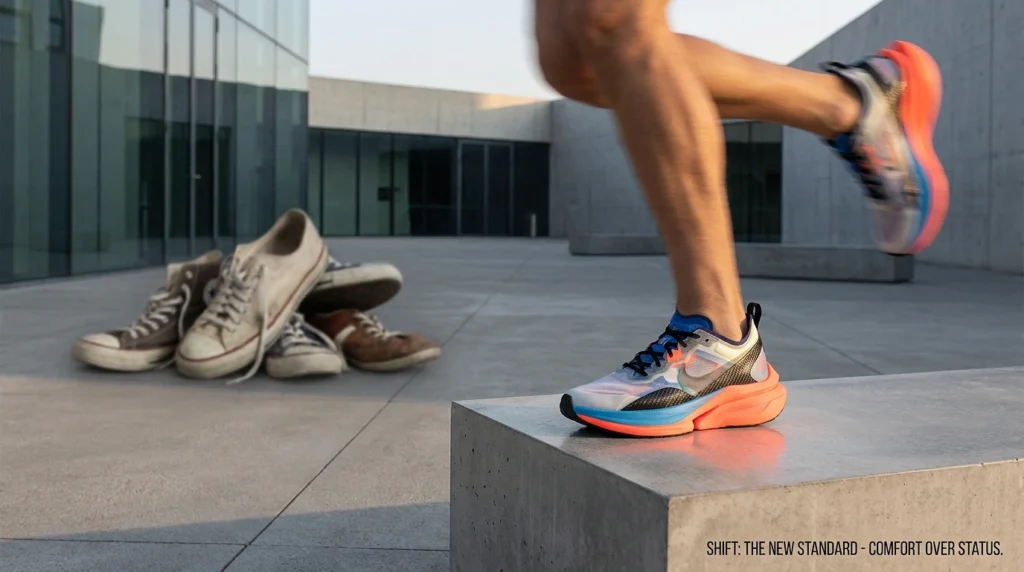
A few practical readings fall straight out of the data:
- If your rotation is built on retro court shoes, nothing about them stopped working. But their era as a status object is closing, and the resale premiums built on that status are deflating with it. Buy them because you like them, not as an investment.
- The running-shoe-as-daily-shoe thing is not a fad the data can find. Double-digit growth in a flat market, two years running, across dollars and units, is a durable behavior shift.
- Scarcity is coming back on purpose. Nike cutting Dunk and Air Force supply means fewer colorways and thinner restocks, which is the company trying to rebuild the desirability it accidentally spent. Whether that works is the most interesting open question in the industry.
The thing I keep coming back to is how fast a decade of certainty unwound. The retro sneaker wasn’t dethroned by a competitor. It was dethroned by comfort, worn down by its own ubiquity, and then had its supply cut by its own maker, which might be the first time in fashion history that the king was quietly escorted off the throne by his own accountants.

