

Let me start with the number that explains everything else, because it genuinely surprised me. UK reporting now puts more than half of filler patients under 35, with the 26-to-34 bracket the single biggest group. The stereotype of the filler patient, a woman in her fifties chasing back lost volume, is well out of date.
And here is the part that matters for how the work is actually done. This younger crowd walking into clinics does not want the thing the old filler playbook was built to deliver. They do not want fuller, sharper, more obviously enhanced. They want to walk out looking like they have had nothing done at all.
That goal has a name now, the “undone” look, and it has pulled two trends to the centre of the consultation room: prejuvenation and facial balancing. I’ll take them one at a time, and explain at the end why all of this is colliding with a big change in the law this year.
The Overfilled Era Is Genuinely Over, And Clinics Will Tell You So
For years the whole point of filler was that you could see it. Bigger lips, cheekbones you could set a drink on, a before-and-after with no ambiguity. That look has had its day.
What patients ask for in 2026 is the opposite: a result nobody can detect, an enhancement that still looks like your own face on a good day rather than someone else’s. And this is not just softer marketing copy, it changes the actual technique at the needle.
The clearest proof is what people are doing to old work. A lot of clients who chased the dramatic look a few years ago are now having that filler dissolved, paying to look like they have had less done. Once you have seen that happen in a clinic a few times, the shift stops feeling like a trend and starts feeling like a correction. The previous decade, undone on purpose.
Prejuvenation: Filler Before The Lines, Not After
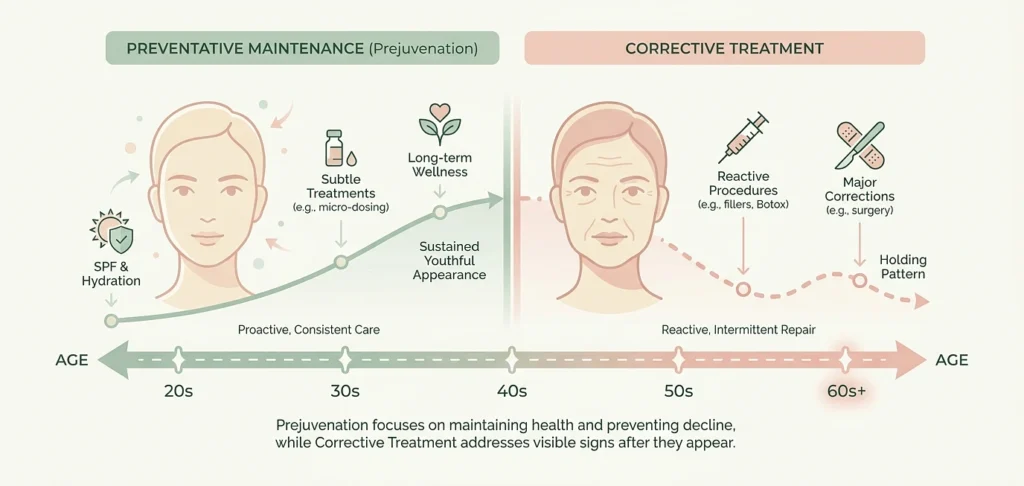
Prejuvenation is the reason those under-35 numbers keep climbing. It is a clumsy word, a mash-up of “prevention” and “rejuvenation,” but the idea behind it is simple enough: treat early and lightly to slow the visible signs of ageing, rather than waiting twenty years and correcting them.
In practice it looks deliberately tiny. We are talking about clients in their late twenties or thirties having very small doses, the aim being to maintain the face they have with the minimum amount of product, topped up gently over time. Not a transformation. A holding pattern.
There is one caveat the responsible clinics keep firmly attached to this, and it is not optional. Prejuvenation is for adults. When practitioners talk about treating younger patients preventatively, they mean over-18s, full stop. The same social-media pressure that makes the trend popular is exactly what can push it somewhere it has no business going, towards people far too young for it, and that worry is a big part of why the law has just tightened around who can be treated at all. More on that shortly.
Facial Balancing: Reading The Whole Face, Not One Feature
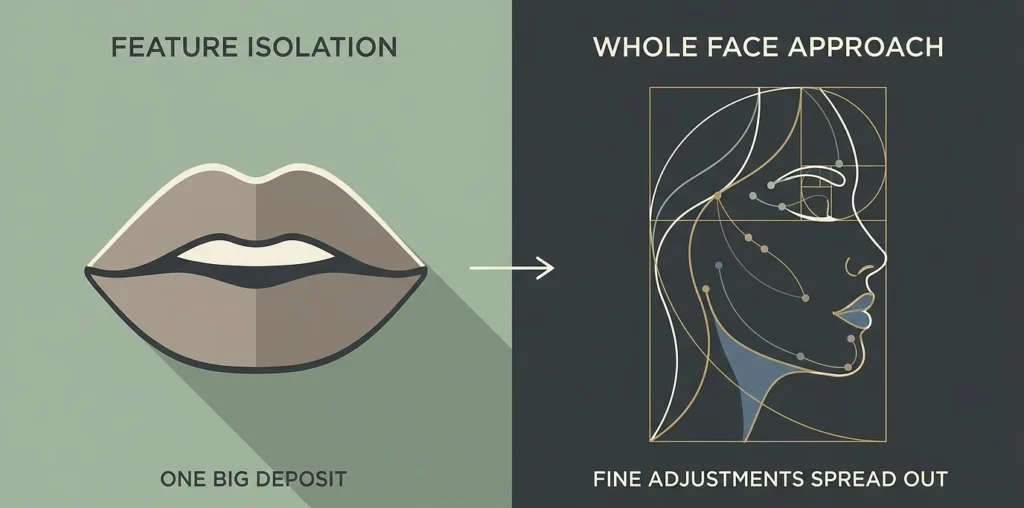
If prejuvenation is the answer to “when,” facial balancing is the answer to “how.” Instead of plumping one area on its own, a good injector reads the face as a single composition and works to keep everything in proportion.
The classic example is lips, and it is the one that made the idea click for me. Plumping the lips in isolation can throw out the whole profile. So a balancing approach might add a small amount to the chin at the same time, to keep the side view in proportion, so the lips do not suddenly arrive ahead of the rest of the face.
Underneath this sits a real change in method, called microdosing. Rather than putting a full syringe into one spot, the injector places very small amounts across several points, a hint under the eyes to soften a hollow, a whisper into the mid-cheek. Fine adjustments, spread out, instead of one big deposit. It is genuinely a different way of working from how filler used to be placed, and it asks a lot more of whoever is holding the needle.
The Twist: The “Undone” Look Is Pushing Filler Out Of Some Appointments Entirely
Here is the bit the gentle “less is more” framing does not quite prepare you for. For some areas of the face, the natural-results trend is not just using less filler. It is replacing the filler with something else altogether.
The bigger move in 2026 is away from using hyaluronic acid purely to add volume, and towards what gets called regenerative treatment, the idea being to make your own skin do more of the work rather than just filling a gap.
The treatment getting the most traction has a deeply unglamorous name polynucleotides. These are injectable bio-stimulators, derived from purified DNA fractions, and they do not add artificial volume. Instead they nudge the skin’s own fibroblasts to make more collagen and elastin. They have become particularly popular for the tricky spots, dark circles and crepey under-eye skin, and in some clinics they are directly displacing filler bookings for those areas.
There is a safety logic to that swap, not only a cosmetic one. Polynucleotides generally carry a lower risk of vascular occlusion than filler, though, and I want to be clear about this, they are still medical injectables and still need a medically qualified person putting them in. “Lower risk” is not “no risk.”
Why All This Is Meeting New UK Law In 2026
None of this is happening in a vacuum. The “undone” trend is arriving in the same year UK regulation of injectables is tightening, and the two are linked a younger, much larger patient base is precisely what is driving the push for tighter rules.
The clearest move came from Scotland. In March 2026 it passed the Non-surgical Procedures and Functions of Medical Reviewers Bill, requiring high-risk procedures such as dermal fillers to be carried out by, or under the supervision of, designated healthcare professionals in registered premises, and making it illegal for under-18s to have these procedures at all. That under-18 protection is tied explicitly to the same social-media pressure driving the prejuvenation boom.
England is mid-transition. The age rule there is already firm, and has been for a while: since 1 October 2021 it has been illegal in England to inject filler for cosmetic purposes into anyone under 18, and arranging those appointments is an offence too. The wider licensing scheme is still being built, with Botox, lip fillers and facial dermal fillers all set to come under a stricter local-authority licensing system, where practitioners have to meet safety, training and insurance standards before they can legally operate.
For a trend built on subtlety and skill, this regulatory direction is honestly almost a tailwind. A microdosed, full-face balancing approach needs an injector who properly understands anatomy. The cheap, heavy-handed work is exactly what the new rules are designed to push out.
If You Are Booking This Year, Read This Part
The practical upshot is that choosing your practitioner now matters more than choosing your treatment. The entire appeal of the “undone” look falls apart if it is done badly, and the same delicate areas that benefit most from balancing, the under-eyes especially, are the ones that carry the highest risk if something goes wrong.
Two checks do most of the work.
First, confirm qualifications and registration. While the full rules are still being finalised, the government’s own advice is to check the provider’s qualifications and insurance before you book anything.
Second, treat a rock-bottom price as a red flag, not a find. Very low pricing, in particular anything under about £150 per ml, can point to unregulated product or an unqualified injector. A bargain on your face is rarely a bargain.
I’ll put it plainly, because it is the whole point. The face you are trying to keep looking effortless is the same face a vascular complication can damage. The most on-trend decision you can make in 2026 is not which filler to choose. It is making sure the person holding the needle is genuinely qualified to give you the “undone” look without undoing something you would rather keep.

