

Let me start with the uncomfortable part, because it matters more than the rest of the article. The lemon-and-tomato face masks all over the internet for shrinking pores are not just useless, one of them can actually burn you.
Lemon juice on facial skin, followed by any sun exposure, can trigger phytophotodermatitis, a genuine chemical reaction between the citrus compounds and UV light that leaves blistering and dark patches which can last for months. Dermatologists see it every summer. So before we talk about what works, throw out the lemon. It’s the worst possible thing to rub on your face and walk outside.
Now the good news, which is that three ingredients genuinely do improve how enlarged pores look, all three are cheap, all three are backed by real dermatology rather than kitchen folklore, and none of them requires you to believe nature has a secret. Here’s what each one does, and what it’ll actually cost you a month.
First, The Thing No Remedy Can Do, So You Can Spot The Liars
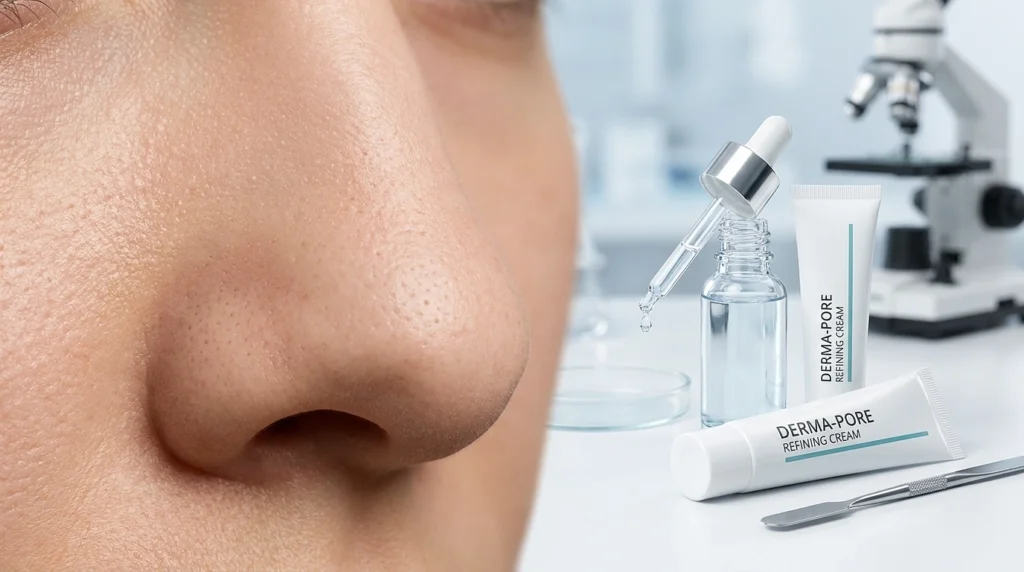
One honest fact reframes this whole category. You cannot permanently shrink a pore. Pore size is set mostly by your genetics, your oil production, and how much collagen has broken down around the opening, and no cream, mask, or toner physically closes it for good.
Anything promising to “shut” or “erase” pores is lying to you, and the original version of this advice, the one promising a natural remedy that works “like magic” to close “gigantic” pores, was lying too, just with fruit. What the real ingredients do is make pores look smaller by emptying them, calming the oil that stretches them, and thickening the skin around them. That’s a real, visible improvement. It’s just not the same as changing the pore itself, and the difference is exactly how you tell honest skincare from a scam.
Pores look bigger for three reasons: they’re clogged with a plug of oil and dead skin that stretches the opening, they’re pumping out too much sebum, or the skin around them has lost firmness. Each of the three ingredients below attacks a different one of those.
Salicylic Acid (2% BHA): It Cleans The Pore Out From The Inside
Start with the one that works fastest, because a clogged pore is the most common reason yours look large.
Salicylic acid is a beta-hydroxy acid, and its trick is that it’s oil-soluble. Most exfoliating acids are water-based and work on the surface. Salicylic acid dissolves in oil, which means it can get down inside the sebum-filled follicle and break up the compacted plug of dead cells and oil that’s physically stretching the pore wall. Empty the plug, and the pore visibly relaxes. It’s the single most effective ingredient for the specific problem of clogged, blackhead-prone pores, which is why the American Academy of Dermatology lists it among the most effective acne ingredients for penetrating oil and unclogging pores.
You want it at 1% to 2%, which is where the drugstore versions already sit. A CeraVe or La Roche-Posay salicylic cleanser or leave-on runs somewhere around ten to twenty-five dollars for a bottle that lasts a couple of months, so call it under ten dollars a month. Used a few times a week, not daily to start, because it can dry you out if you get enthusiastic.
Niacinamide: It Turns Down The Oil And Firms The Edges
Niacinamide, vitamin B3, comes at pores from a completely different direction, and it’s the gentlest of the three by a wide margin.
Two things happen with regular use. It reduces how much oil your skin pumps out, which matters because excess sebum is one of the three things that stretch a pore, and it strengthens the skin barrier by boosting ceramide production, which firms up the skin around the opening so the pore looks tighter. A randomized, double-blind, split-face study found that 4% niacinamide significantly reduced the appearance of pores after eight weeks, and it did it with essentially zero irritation, which is the reason it’s the one ingredient here that almost any skin type can use daily from day one.
Two caveats keep it honest. It works best when your big-pore problem is driven by oil, and it does less for pores stretched mainly by age or sun damage. And it doesn’t “shrink” anything physically, the studies measure appearance, roughly a fifth less noticeable with consistent use, not a change in the actual pore. A 5% niacinamide serum from The Ordinary is famously about six to eight dollars and lasts months, making it the cheapest genuinely-evidence-based thing in this entire article. Under five dollars a month, comfortably.
Retinoids: The Strongest Option, And The One Dermatologists Actually Rank First
If salicylic acid cleans the pore and niacinamide calms it, retinoids rebuild the skin around it, and they’re the heavyweight of the three.
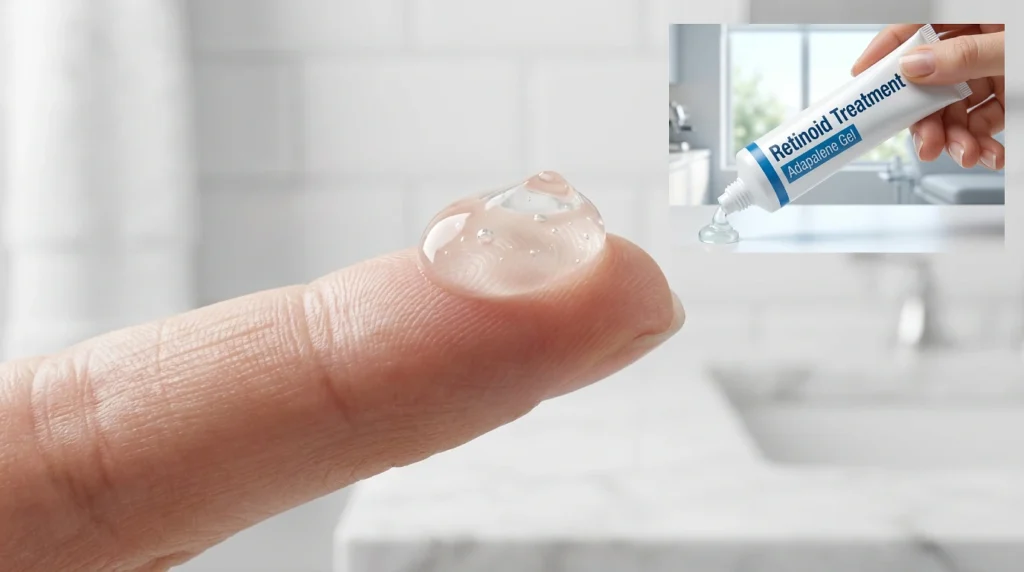
Retinoids, the vitamin A family that runs from over-the-counter retinol and adapalene up to prescription tretinoin, work by speeding cell turnover so pores don’t clog in the first place, and, over months, by stimulating collagen production that firms and thickens the skin around the pore opening. That collagen piece is why they’re uniquely good for pores enlarged by age and sun damage, the kind niacinamide struggles with. The evidence here is the strongest of the lot. In a Delphi consensus study published in the Journal of the American Academy of Dermatology, a panel of 62 cosmetic dermatologists reached consensus that retinoids are a recommended ingredient specifically for large pores, one of the few ingredients to earn that nod for this exact concern, backed by high-grade evidence.
The tradeoff is tolerance. Retinoids can irritate, flake, and redden while your skin adjusts, so you start low, a couple of nights a week, and build up, always with sunscreen the next morning because they make you sun-sensitive. On cost, adapalene (the OTC retinoid, sold as Differin) runs roughly fifteen to thirty dollars for a tube that lasts ages. Prescription tretinoin is the wildcard, it can be a few dollars with insurance or considerably more without, so that one genuinely depends on your coverage.
How To Actually Use The Three Together Without Wrecking Your Face
You don’t pick one. The clever part is that these three hit the three different causes of big-looking pores, so they layer, but you can’t just pile them on at once or you’ll end up red and peeling.
A sane routine that dermatologists broadly land on:
- Morning: niacinamide serum, then sunscreen. Niacinamide is gentle enough for daily AM use, and the sunscreen protects the collagen you’re trying to keep.
- Evening: the retinoid, a few nights a week to start. This is the collagen and cell-turnover engine.
- A few times a week: salicylic acid, worked in on the nights you’re not using the retinoid, so you’re not stacking two irritating actives on the same evening.
Introduce them one at a time, a couple of weeks apart, so if something stings you know which one to blame. Give the whole thing eight to twelve weeks before you judge it, because every study that found a benefit measured it over that kind of window, not overnight.
And the part the original article got right, even while pushing the wrong remedies: if your skin gets worse, or the pores come with painful cystic acne, or nothing shifts after a couple of honest months, see a dermatologist rather than layering on more. They have tools that genuinely outperform anything on a drugstore shelf, prescription-strength retinoids, in-office chemical peels, micro needling, and lasers that stimulate collagen more aggressively than a cream can. There’s even solid recent work on treating enlarged pores with tiny injections of botulinum toxin and hyaluronic acid, though that’s firmly a “go to a professional” conversation, not a home remedy.
The whole real routine, the two drugstore serums and an OTC retinoid, comes in under thirty dollars a month once you’re set up, and unlike the lemon mask, it’s built on studies instead of hope. It won’t give you poreless glass skin, because nothing will and nobody honestly can. It’ll make the pores you have look clearer, calmer, and less like the open pits the marketing keeps telling you to panic about.

