


The quote was $13,800. I want you to picture my cousin, a man who once drove forty minutes to save eleven dollars on a power drill, sitting in a consultation chair hearing a dentist say fourteen thousand dollars, out loud, about his mouth. He had one chipped front tooth and a small gap he’d stopped noticing in 1997. The treatment plan on the printout said eight porcelain veneers, “for symmetry.”
He called me from the parking lot. I’m the family’s designated over-researcher, so I spent the next week neck-deep in dental fee schedules, which is not how I’d planned to spend it, and what I found made me a little angry on his behalf. There’s a one-visit procedure that fixes chips, gaps, and single ugly teeth for a few hundred dollars a tooth. Most people have never heard it priced. And the consultation where you might learn about it is frequently the same appointment where somebody’s sliding a five-figure printout across the desk.
His final bill ended up just under $900. Same smile. Same reaction from his wife. I’ll get to where the other thirteen grand went at the end.
The Procedure Nobody Prices For You
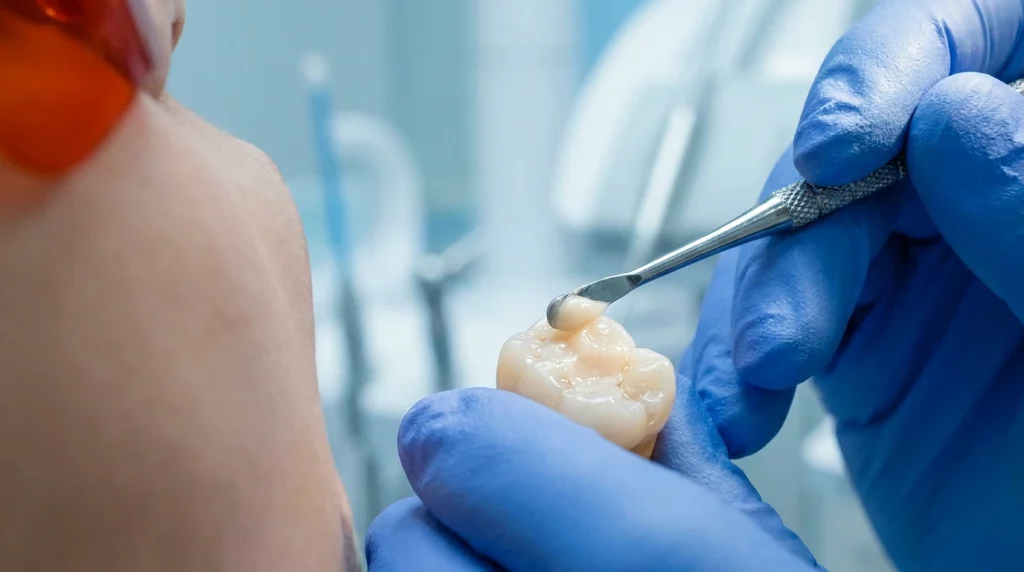
Composite bonding is resin, tooth-colored, sculpted straight onto the tooth by hand and cured with a light. One visit, usually 30 to 60 minutes, usually no drilling, usually no needle. The dentist is doing miniature sculpture on your enamel while you lie there listening to whatever playlist dentists listen to.
What it costs depends on the size of the job, and the current fee data is pretty consistent somewhere between $150 and $700 a tooth, averaging a bit over $400. A small chip repair sits at the cheap end. My cousin’s gap cost more than his chip, which confused him until the dentist explained that closing a gap means building up two teeth, not one, so you’re paying for both edges. Made sense once we heard it. Nobody volunteers it beforehand.
Two things surfaced during my research week that I’d never have guessed, and the first one saved him actual money. Insurance sometimes covers bonding, but only when it’s fixing damage. His chipped tooth was damage, a genuine crack from a genuine bottle cap incident, so his plan treated that tooth as a repair and paid a chunk of it. The gap was cosmetic, born with it, paid every cent himself. Same material, same visit, two different billing codes, and the difference was a few hundred dollars. Ask about the codes before anyone starts. The second thing: the resin can’t be whitened later. Ever. If you bleach your teeth next year, everything brightens except the bonded one, which sits there like a souvenir of your old shade. So he whitened first, waited the two weeks, and had the dentist match the new color. Cheap insurance against a two-toned smile.
What the $13,800 Would Have Bought, To Be Fair
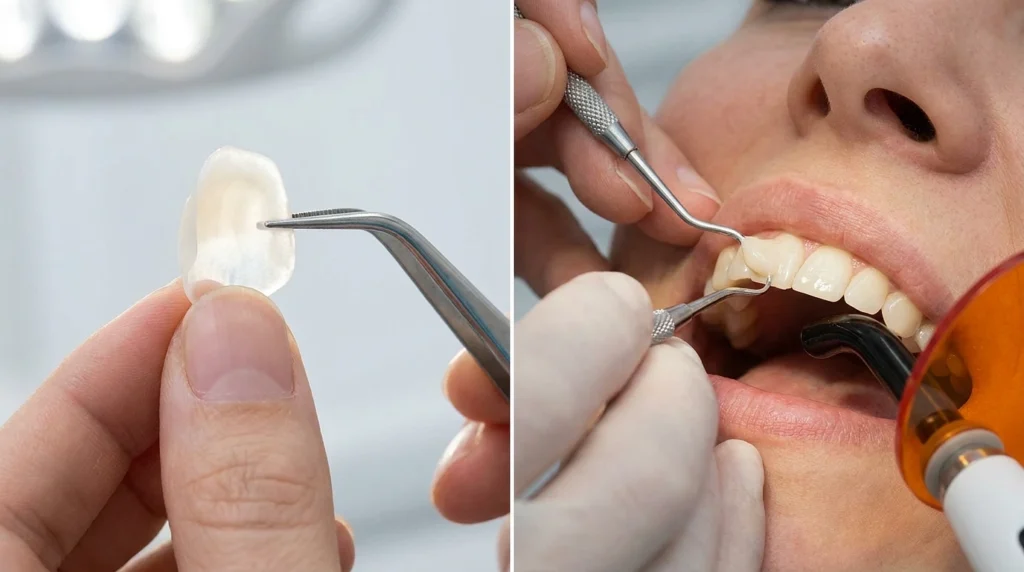
I don’t want to write this like veneers are a scam, because they aren’t, and the dentist pushing them wasn’t lying either. He was just answering a bigger question than my cousin had asked.
Porcelain veneers are custom shells made in an outside lab, and the honest version of the price is that a lot of it is real cost: a ceramist layering and shading actual ceramic, impressions, temporaries, two or three visits. The comparison data puts them around $1,000 to $2,500 per tooth, and a six-to-eight tooth smile commonly runs into five figures. Insurance treats all of it as cosmetic and pays nothing. For that money you get things resin genuinely can’t do. Porcelain doesn’t stain. It holds its polish for a decade or two. Bonding, meanwhile, drinks coffee right along with you, dulls and yellows over the years, and typically needs redoing somewhere in the five-to-ten year range, sooner on a biting edge.
And here’s the part where the dentist’s pitch was half right, because I ran his math and it holds under one condition. If you’re redoing a whole smile, six teeth, eight teeth, and you go the cheap route, you’re not buying it once. You’re buying it every six or seven years, forever, and three rounds of composite across eight teeth can quietly cost more over twenty years than the porcelain that never needed replacing. Spread over their lifespans, the per-year costs of the two options overlap so much that neither side of the dental internet likes to print it. The catch, the thing that made his pitch wrong for my cousin specifically, is that this math only turns on at scale. For one chipped tooth and one small gap, bonding wins by thousands and it isn’t close.
There’s also a sentence the printout didn’t include, and it’s the one I’d want a family member to hear before signing anything. Fitting traditional porcelain veneers means grinding off a layer of enamel first, permanently. Enamel doesn’t come back. A tooth prepped for a veneer wears a veneer, or eventually a crown, for the rest of your life. Bonding adds material and takes basically nothing, which is why people sometimes run bonding for a few years as a live preview and upgrade to porcelain later if they still want to. You can walk back one of these decisions. Not the other.
The Question That Saved $12,900
Looking back, my cousin’s whole detour came down to one missing question, and it wasn’t about price. In the second consultation, the one at a different office, he asked “could bonding handle this?” and the new dentist looked at the chip, looked at the gap, and said sure, probably forty minutes. That was the entire negotiation. The first office never mentioned bonding because he never asked, and “what does my situation need” is a different consultation from “what is the most complete thing you sell.”
So if you’re headed into that chair: ask the bonding question straight out and pay attention to how it’s answered. Ask how much enamel comes off under any veneer plan, in plain words, before anything whirrs. And if the answer to “do I grind my teeth at night” is yes, bring that up too, because grinding chews through bonding fast and veneers aren’t thrilled about it either, and a nightguard changes the arithmetic for both. Prices swing a lot by city and by the skill of the person holding the resin, cosmetic work on front teeth is closer to portraiture than plumbing, and none of what I’ve written replaces someone actually looking in your mouth. Get the second quote. It cost my cousin one afternoon.
Three years on, his bonding has held up fine. The 1997 gap is gone. He still tells the story at family dinners, every time, with escalating detail, and the thirteen grand he didn’t spend became a used fishing boat that he loves more than most of his relatives. The tooth looks great. The boat, honestly, also looks great. I’ve stopped arguing with his math.

