


Is your own inner critic the harshest voice you hear all day? What if the secret to quieting that voice wasn’t about faking confidence, but about connecting with yourself on a deeper, more practical level?
Forget religion or mysticism for a moment. When discussing self-improvement, this kind of spiritual growth is simply the inner work required to boost self-confidence by paying attention to your thoughts without judgment. It’s the foundational skill of self-awareness.
This awareness then allows for true self-connection, aligning your actions with what you value. Think of the difference between needing compliments on an outfit versus feeling confident just because it reflects your personal style. The first is fragile and external; the second is robust, internal self-worth.
Building this unshakable confidence doesn’t require grand gestures. It begins with the simple act of paying attention, turning inward to find a strength no one can give you or take away.
Your First Step: A 60-Second Practice to Calm Self-Doubt Instantly
Self-doubt isn’t just a mental game; it’s a physical one. Your heart might race, your shoulders tense up, and your breathing can become shallow. This physical alarm makes it almost impossible to think clearly, feeding the cycle of anxiety and leaving you feeling powerless.
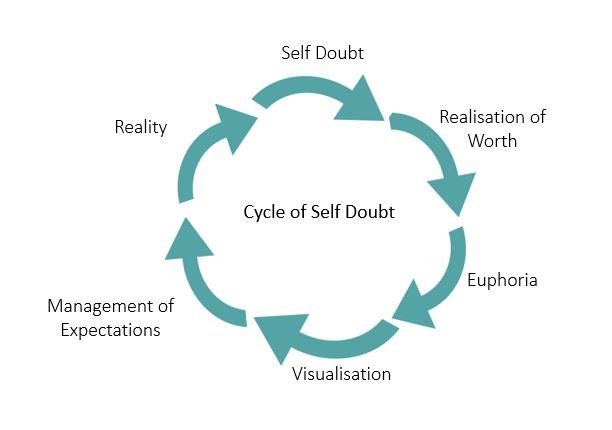
Instead of trying to fight those spiraling thoughts, you can use your breath as an anchor to ground yourself. This simple act gives your mind a concrete job to do, pulling your focus away from the inner critic and back into your body. l
Here’s a simple technique called “Box Breathing” you can do anywhere. It’s one of the easiest exercises for spiritual self-awareness:
- Inhale slowly to a count of four.
- Hold your breath for a count of four.
- Exhale slowly to a count of four.
- Hold at the bottom of the exhale for four.
Repeating this cycle for just one minute physically interrupts your body’s stress response. It sends a signal to your brain that you are safe, creating a pocket of calm. This space allows you to see your thoughts more clearly without being controlled by them.
How to Detach From Your Inner Critic: You Are Not Your Thoughts
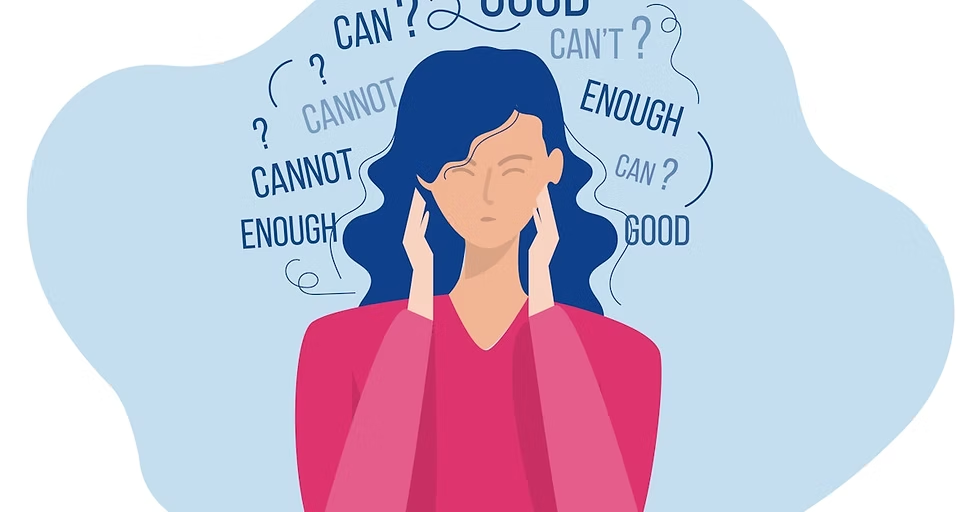
That moment of quiet you created with your breath is powerful. But inevitably, the inner critic pipes up again with its familiar script: “I’m going to fail,” or “I’m not good enough.” The crucial shift is realizing this isn’t a fact; it’s just a mental event. A thought is a fleeting cloud, not the entire sky.
This introduces one of the most liberating meditation techniques for self-assurance: seeing yourself as the Observer. Imagine your anxious thoughts are clouds drifting by. Too often, we get swept up in the storm, forgetting that we are the vast, stable sky that holds them.
This “sky” is your deeper awareness -the calm, steady part of you that can simply watch the thoughts pass without becoming them.
You can practice this by mentally labeling your thoughts. When your mind says, “You’re not good enough,” don’t argue with it. Just notice the thought and gently label it: “Worrying” or “Judging.” This simple act creates a powerful gap between you and the thought, preventing it from hijacking your emotions.
This consistent practice is central to overcoming self-doubt with spiritual awakening. It weakens the grip of the inner critic, which fuels low self-esteem. By observing your thoughts instead of obeying them, you create space for a more authentic confidence to emerge, one rooted not in avoiding criticism, but in connecting to what truly matters.
The Ultimate Confidence Boost: Connecting Your Actions to Your Core Values
Once you create that quiet space by observing your thoughts, the next step is to fill it with purpose. This is where many people hear about connecting with a “higher self,” but a more practical way to think about it is simply aligning your actions with what you truly care about—your core values. This is the foundation of genuine, spiritual self-acceptance.
This powerful shift moves your focus from the ego’s anxious question, “How do I look?” to a more meaningful one: “How can I contribute?” When your motivation comes from a desire to express kindness, share knowledge, or create something beautiful, your self-consciousness starts to fade.
You’re no longer seeking approval; you’re focused on making a small, positive impact.
For instance, think about speaking up in a meeting. If your goal is to avoid looking foolish, anxiety will be high. But if your goal is to share an idea that could help the team, your focus is on the value you’re offering.
This sense of purpose becomes an anchor, generating a deep feeling of self-worth that isn’t dependent on praise.
Confidence that comes from this place is unshakable because it’s not based on external validation. It’s an authentic strength you build from the inside out, one value-driven action at a time.
Your Spiritual Toolkit for Building Lasting, Authentic Confidence
You now possess the fundamental tools to manage your inner world. Where self-doubt once felt like an uncontrollable storm, you can now use your breath to find calm, your awareness to observe the inner critic without believing it, and your values to guide you toward meaningful action.
This guide to spiritual self-acceptance begins with a single step. To turn knowledge into skill, try this 7-Day Confidence Kickstart:
- Days 1-3: Practice one minute of Box Breathing whenever you feel stressed.
- Days 4-5: Add ‘thought-labeling’ for your top 1-2 negative thoughts.
- Days 6-7: End each day by noting one action that aligned with a core value.
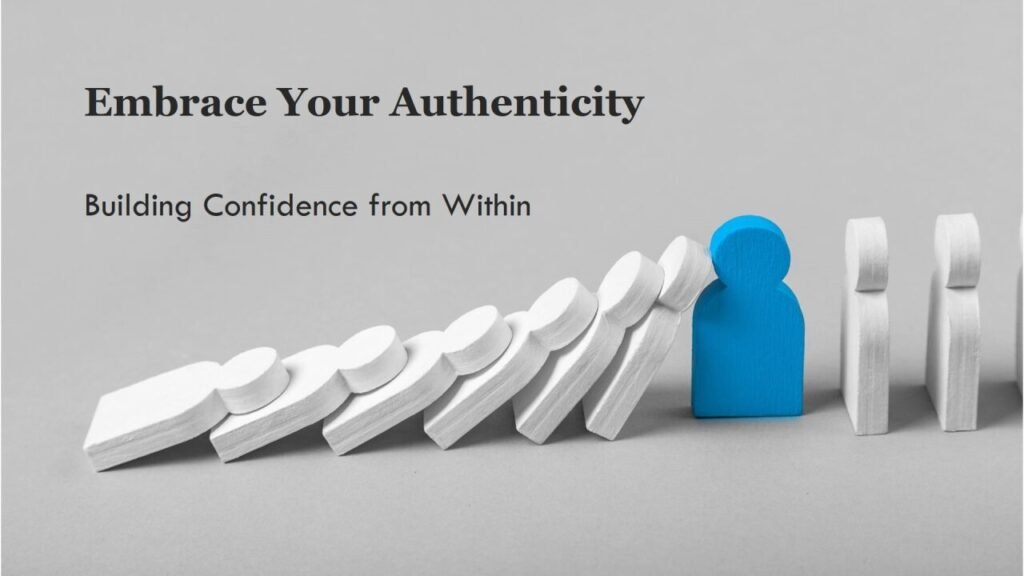
Building confidence is not about becoming someone different; it’s a practice of connecting with the steady, capable person you already are. These spiritual practices for self-esteem are simply the exercises. Each time you practice, you are proving to yourself that you have the power to feel secure from the inside out.

